Quick Guide
- The Natural Diet: What Orchid Mantis Eat in the Wild
- Feeding Your Orchid Mantis in Captivity: A Stage-by-Stage Guide
- What You Should NEVER Feed an Orchid Mantis
- Common Feeding Problems and Solutions
- Nutrition and Gut Loading: It's Not Just About the Bug
- Frequently Asked Questions About What Orchid Mantis Eat
- Putting It All Together: A Simple Feeding Checklist
I remember the first time I saw an Orchid mantis. It was in a friend's terrarium, looking less like an insect and more like a piece of fallen flower. Absolutely stunning. My first thought wasn't about its beauty, though. It was a much more practical one: what on earth does this thing eat? If you're here, you're probably wondering the exact same thing. Maybe you're thinking of getting one, or you already have this pink and white marvel and are staring at a fruit fly culture with uncertainty. Let's cut through the mystery.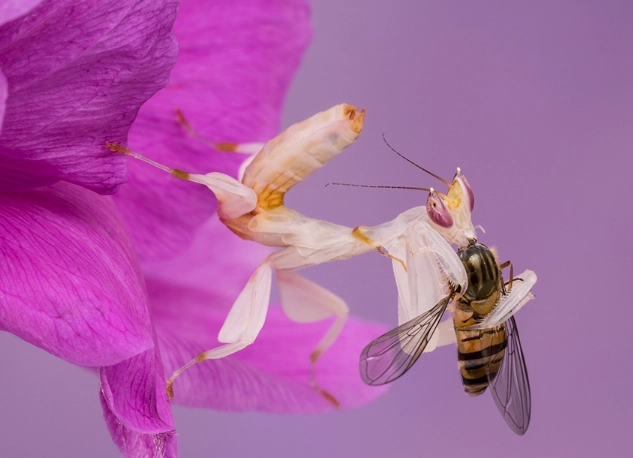
What do Orchid mantis eat? In the wild, they are aggressive ambush predators. Their menu is almost exclusively other flying insects. We're talking flies, moths, butterflies, bees, and the occasional unlucky beetle. In captivity, their diet needs to be carefully replicated. This means flightless fruit flies for the tiny nymphs, graduating to house flies, blue bottle flies, moths, and small crickets as they grow. The key is movement and size. They are visual hunters. If it doesn't move like prey, it doesn't register as food. I've watched one ignore a dead cricket right in front of it for hours, only to strike with lightning speed the moment a live fly buzzed past.
It sounds simple, right? Just give it bugs. But there's a surprising amount of nuance that can mean the difference between a thriving mantis and one that struggles. I've made a few mistakes myself over the years – we'll get to those – and I've learned what truly works.
The Natural Diet: What Orchid Mantis Eat in the Wild
To understand how to feed them at home, you need to picture where they come from. Orchid mantises (Hymenopus coronatus) are native to the rainforests of Southeast Asia – think Malaysia and Indonesia. They don't live on flowers, per se, but they perch on or near them, using their incredible camouflage to become virtually invisible.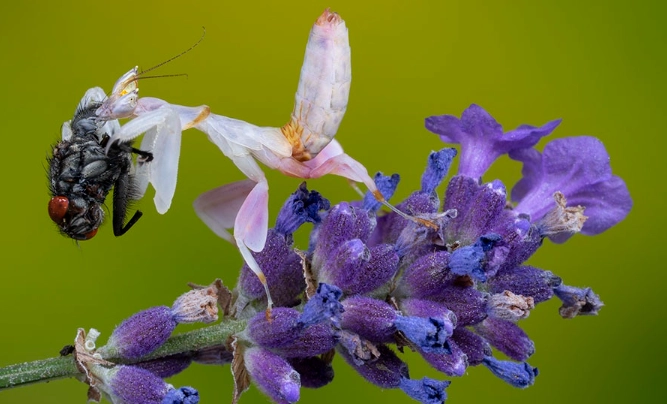
Their hunting strategy is pure patience. They sit perfectly still for hours, legs folded in that classic praying position, waiting. Their target? Primarily pollinators. The colors and shapes that make them look like orchids are a deadly lure for bees, butterflies, and flies seeking nectar. When one gets close enough – BAM. Those spiny forearms snap out faster than you can blink, grabbing the prey in an inescapable grip.
This wild diet gives us crucial clues for captivity. First, the prey is almost always flying. Second, it's often attracted to flowers (colors). Third, it's soft-bodied. A hard-shelled beetle isn't the ideal meal, though a large adult mantis might take one. Their natural diet is high in moisture and relatively low in hard chitin. This is why, in my opinion, a steady diet of only crickets for a captive mantis isn't perfect. Crickets can be a bit tough and are not natural flyers. Flies are better.
A study published on JSTOR examining mantis predation patterns supports this, noting that flower-mimicking mantises have a significant predation success rate on pollinators compared to other insects. It's a specialized niche.
The wild menu is simple: if it flies and visits flowers, it's probably on the list.
Feeding Your Orchid Mantis in Captivity: A Stage-by-Stage Guide
This is the part you're really here for. How do you translate that wild diet into a feeding schedule for a pet in a container? It all depends on the life stage. A newly hatched nymph (called an L1) is the size of an ant, while a full-grown adult female can be as long as your finger. Their food needs change dramatically.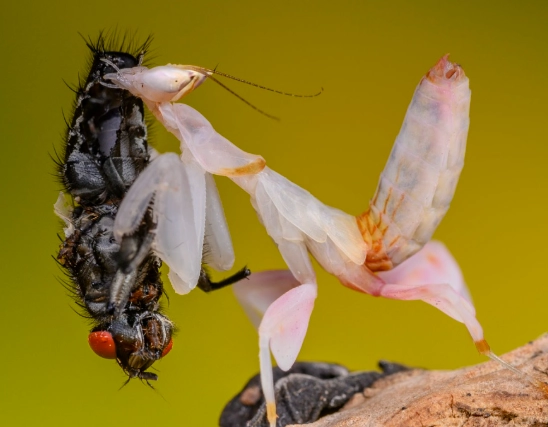
Hatchlings and Small Nymphs (L1-L3)
These guys are incredibly tiny and delicate. The only suitable food is flightless fruit flies (Drosophila melanogaster). You can buy cultures online or from reptile shops. Don't even think about pinhead crickets at this stage; they're often too big and aggressive. The fruit flies are the perfect size and provide enough movement to trigger a feeding response.
How many? Don't just dump the whole culture in. I add 3-5 fruit flies to the enclosure every other day. The nymph will eat one or two and ignore the rest. Leaving too many flies in can stress the tiny mantis. A common question is: what if my baby orchid mantis isn't eating? First, make sure it's had at least 48 hours to settle in after a molt. They are very vulnerable and inactive before, during, and after molting. Second, ensure the flies are active. Lethargic flies won't get attention.
Medium Nymphs (L4-L6)
As your mantis grows, it will graduate from fruit flies. This is where options open up. Here’s a quick comparison table of suitable prey for this stage:
| Prey Type | Pros | Cons | How Often to Feed |
|---|---|---|---|
| Green Bottle Flies / Blue Bottle Flies | Excellent size, high activity, great trigger for hunting. Very nutritious. | Can be noisy. Pupae need refrigeration. Escaped flies are annoying. | 2-3 flies, every 3-4 days. |
| House Flies | Good size, very active. Easier to culture than bottle flies. | Slightly less meaty than bottle flies. | 3-4 flies, every 3-4 days. |
| Small Crickets (1/4 inch) | Readily available, easy to gut-load (feed nutritious food to the cricket before offering it). | Can bite or harass a molting mantis. Less natural prey item. Can be fatty. | 1 cricket, every 4-5 days. |
| Wax Moths / Small Moths | Fantastic natural prey. Soft-bodied and nutritious. Great for variety. | Harder to source consistently. Can infest your home if escaped. | 1-2 moths, once a week as a treat. |
My personal favorite for this stage is blue bottle flies. The movement is irresistible to the mantis, and they seem to thrive on them. I buy pupae online, keep them in the fridge, and take out a few to hatch as needed. It's less gross than it sounds, I promise!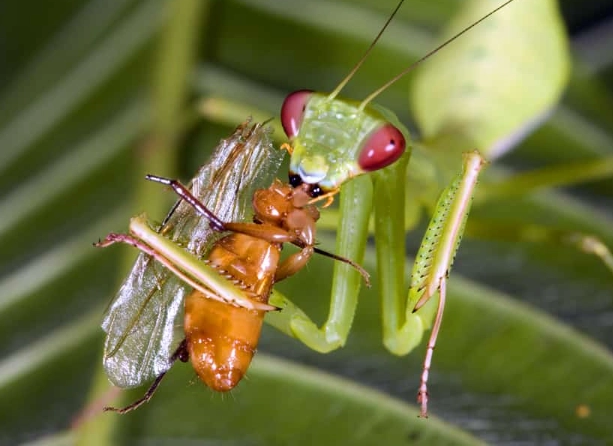
Sub-Adults and Adults
A large female Orchid mantis is an impressive predator. She can handle larger prey, but the principle remains: offer flying insects where possible.
Excellent food choices include:
- Large Blue Bottle Flies: Still the staple. They provide great exercise and nutrition.
- Moths: An excellent source of variety. Silkworm moths or wax moths are perfect.
- Butterflies: If you can source them ethically (e.g., from a butterfly garden's end-of-life cycle), they are the most natural prey.
- Large Crickets or Dubia Roach Nymphs: Use these sparingly. They are good for bulk but are not the ideal nutritional profile compared to flies. Always supervise feeding with crickets, as they can fight back.
How much and how often? An adult female orchid mantis might eat 2-3 large flies every 4-5 days. Males, being smaller, eat less. The abdomen is a good gauge. You want it to look plump, but not so swollen it looks like it's about to burst. After a big meal, it may not eat for a week. That's normal. Overfeeding is a real risk and can shorten their lifespan.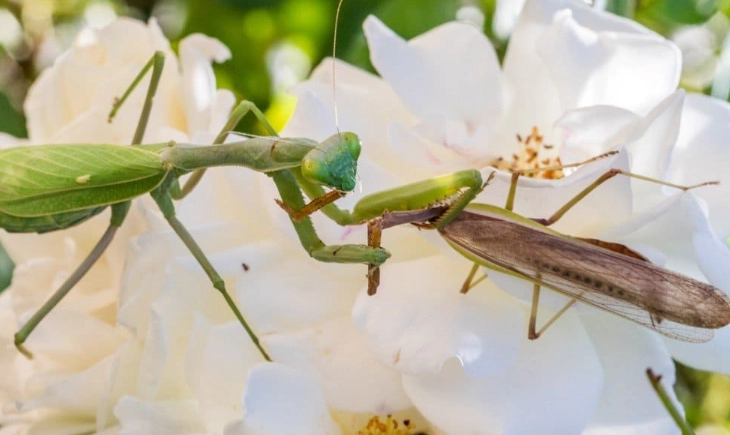
I made the mistake of overfeeding my first adult female. I thought a fat mantis was a happy mantis. She became sluggish, had difficulty molting, and her lifespan was definitely shorter than my subsequent ones. Lesson learned the hard way.
What You Should NEVER Feed an Orchid Mantis
Just as important as knowing what to feed is knowing what to avoid. This isn't just about preference; some foods can be harmful or even fatal.
Never feed wild-caught insects from your garden or near roads. This is my number one rule. Why? Pesticides and parasites. A wild bee or moth could have been exposed to insecticides that will kill your mantis. It could also carry internal parasites that your pet has no defense against. It's just not worth the risk.
Avoid hard-bodied beetles and large, aggressive insects like dragonflies or wasps. The hard shell can damage the mantis's mandibles or insides, and a wasp can sting and kill your mantis. I've seen horror stories online.
Do not feed them dead, non-moving prey. As I mentioned, they are visual hunters. They will starve to death with a pile of dead crickets in front of them. The prey must be alive and moving. The only exception is if you use tweezers to wiggle a dead insect in front of them, simulating movement – but this is a last resort for a mantis that won't eat.
Avoid feeding mammals (like pinky mice) or vertebrates. Some large mantis species can handle this, but for an Orchid mantis, it's inappropriate, messy, and can cause impaction. Stick to insects.
When in doubt, a commercially bred fly is always the safer bet.
Common Feeding Problems and Solutions
Even with the best plans, things can go wrong. Here are some frequent issues keepers face when figuring out what do Orchid mantis eat, and what you can do.
Problem: My mantis refuses to eat. This is the most common panic. First, check the abdomen. Is it still plump? It may just not be hungry. Second, and most likely, is it close to molting? For 24-48 hours before a molt, they will stop eating and become very still. Do NOT offer food during this time. The prey could injure the soft, vulnerable mantis while it's molting. Wait at least 24-48 hours after the molt is complete before offering food again. Other reasons could be stress (too much handling, a wrong enclosure setup), illness, or old age.
Problem: The prey is too big. A good rule is never to offer prey larger than the mantis's head or thorax. If the mantis struggles for more than a minute or two to subdue it, remove the prey. An overly large cricket can injure your mantis. When in doubt, go smaller.
Problem: Escaping flies in my house. Ah, the classic issue. Always feed in the enclosure, and if possible, move the mantis to a smaller, bare feeding container. I use a large, clear plastic cup. Put the mantis in, add the fly, and put a mesh lid on. Once the mantis has caught and is eating, you can gently return it to its main home. This contains the mess and the escapees.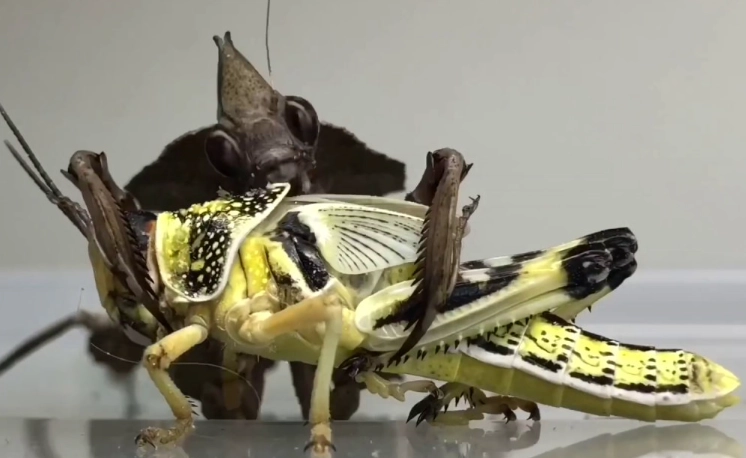
Problem: How do I provide water? Orchid mantis rarely drink from a dish. They get most of their moisture from their prey. However, you should mist the side of the enclosure with dechlorinated water once a day (more in dry climates). They will drink the droplets. This also helps with molting humidity. Don't spray the mantis directly.
Nutrition and Gut Loading: It's Not Just About the Bug
You are what you eat, and your mantis is what its prey eats. This concept is called gut loading. It means you feed the feeder insects (like crickets or roaches) a highly nutritious diet 24-48 hours before offering them to your mantis. This passes those nutrients up the food chain.
For flies, gut loading is trickier, but you can provide them with a honey-water solution. For crickets and roaches, feed them fresh vegetables like carrots, sweet potato, leafy greens, and commercial gut-load products. A well-fed cricket is a nutritious meal. A cricket that's been eating cardboard is not.
Some keepers also use light dusting with calcium or vitamin powders on the prey, especially for growing nymphs. This is debated in the mantis community. My stance? If you are using a varied diet of quality, gut-loaded flies and moths, supplementation is often unnecessary and can even be harmful in excess. The Mantid Forum, a great resource for experienced keepers, has many discussions on this topic. The consensus leans towards a good diet being more important than powder. However, if you are feeding primarily crickets, a light dusting once every few feedings might be beneficial.
Frequently Asked Questions About What Orchid Mantis Eat
The website Keeping Insects has a very practical care sheet that aligns with a lot of this advice, especially on the importance of flying prey. It's a good sanity check for new keepers.
Putting It All Together: A Simple Feeding Checklist
Feeling overwhelmed? Don't be. Here's a quick mental checklist to run through every time you think about feeding your orchid mantis.
- Check the abdomen. Is it slim? Time to feed. Is it plump? Wait.
- Check for molt signs. Is it hanging still, refusing food, looking dull? Don't feed. It's preparing to molt.
- Choose the right prey. Match the size. Prefer flies and moths over crickets when you can.
- Offer the prey. In a controlled way to prevent escapes.
- Observe. Does it catch it easily? If it struggles, remove the prey and try something smaller next time.
- Remove leftovers. Take out any uneaten live prey after 15-20 minutes to prevent stress or injury.
- Mist for water. Provide fresh water droplets daily by misting the enclosure.
Figuring out what do Orchid mantis eat is the first and most crucial step in keeping these amazing creatures healthy. It's not complicated, but it does require specific knowledge and a shift from how we think about feeding more common pets. You're not just dropping food in a bowl; you're providing a hunting opportunity that triggers their deepest instincts.
When you get it right, there's nothing quite like watching that beautiful, flower-like predator transform in an instant into a precise and efficient hunter. It's a stark and fascinating reminder of the reality behind the beauty. So, source those flies, watch that abdomen, and enjoy the unique experience of caring for one of nature's most perfect mimics. They rely on you to understand exactly what they need to eat, and now, you do.



Comments
Leave a Comment