Quick Navigation
- Getting the Basics Straight: What's a "Male" Jellyfish Anyway?
- The Step-by-Step Process: A Sperm's Journey
- Not All Jellies Are the Same: A Quick Comparison Table
- The Bigger Picture: It's Not Just About the Adults
- Common Questions (The Stuff You're Actually Wondering)
- Wrapping It Up: A Surprisingly Complex Dance
You know, I remember the first time I saw a jellyfish tank at an aquarium. They were just pulsing along, these ghostly, beautiful blobs. And a kid next to me asked his dad, "But how do they have babies?" The dad just shrugged. It got me thinking – it's not exactly obvious, is it? Unlike a dog or a cat, there's no... well, you know. The process is completely alien to our way of thinking about reproduction. So if you've ever wondered how do male jellyfish fertilize eggs, you're not alone. It's a fantastic question that gets to the heart of how wildly different life in the ocean can be.
Let's clear something up right away. When we ask how do male jellyfish fertilize eggs, we're often picturing the classic medusa – the umbrella-shaped, swimming adult stage. And for many common jellyfish, the answer involves a spectacular, almost careless-seeming dance of cells in the open water. But to really get it, you need to understand their whole, bizarre life cycle. It's not a simple story. Frankly, it makes our human biology look pretty straightforward.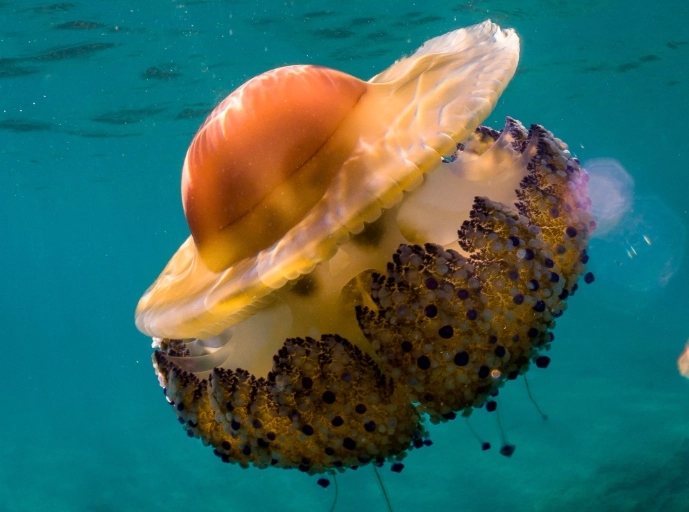
Getting the Basics Straight: What's a "Male" Jellyfish Anyway?
This might sound silly, but it's important. We call them "male" and "female" because they produce sperm and eggs, respectively. But they don't have separate reproductive organs like we do. There's no penis, no vagina. Their gonads – the organs that make the sperm or eggs – are usually just tucked into pouches or linings inside their bell-shaped body. You often can't even tell a male from a female by looking, unless they're ripe with gametes and the color gives it away (sometimes gonads are pink, yellow, or another shade).
So the core question, how do male jellyfish fertilize eggs, is really asking: "How do the sperm cells from one gelatinous blob find and unite with the egg cells from another?" The mechanisms are surprisingly varied.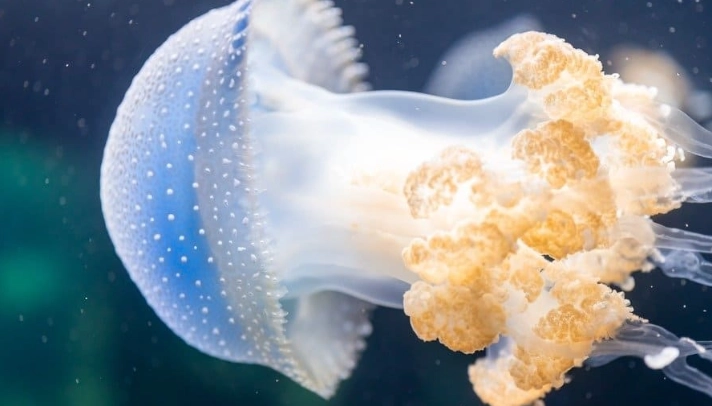
The Two Main Strategies: It's All About Location
Jellyfish reproduction boils down to two primary strategies, and understanding this split is crucial. The method directly dictates how do male jellyfish fertilize eggs.
- Broadcast Spawning (External Fertilization): This is the classic, "set it and forget it" approach. Both males and females release their gametes (sperm and eggs) freely into the water column. Fertilization happens entirely outside their bodies. It's a numbers game – release millions of sperm and hope some collide with the far fewer eggs. Think of it as a microscopic lottery in the plankton. Many moon jellies (Aurelia aurita) use a version of this.
- Brooding (Internal Fertilization): This is a bit more intimate, though still not in a way we'd recognize. Here, the male releases sperm, but the female captures it – usually through her mouth – and uses it to fertilize eggs that she then retains inside her body. The embryos develop in special pouches or on the arms before she releases them as larvae. This offers the offspring a bit more protection. Many sea nettles and related species brood.
I find the broadcast method kind of bleak, if I'm honest. The sheer waste of it. But evolution doesn't care about waste, only about what works often enough. And for drifting ocean creatures, it works.
The Step-by-Step Process: A Sperm's Journey
Let's walk through a typical scenario for a common brooding jellyfish, like the lion's mane or some sea nettles. This makes the sequence clearer.
- Gamete Maturation: As water temperatures and food availability become right, the gonads of adult jellyfish mature. In males, the gonads become packed with sperm packets or individual sperm cells.
- Sperm Release: The male jellyfish contracts its bell, pulsing water. This action often helps waft sperm out from the gonads. The sperm is typically released from openings near the mouth or from pores on the underside of the bell. It doesn't "swim out" actively at first; it's flushed out. So, the first part of how do male jellyfish fertilize eggs is simply: they expel them.
- The Watery Highway: The sperm is now adrift. Currents are everything. A jellyfish bloom, where thousands gather, increases the odds dramatically. The sperm cells are chemically activated by the seawater and begin swimming, guided by chemical cues (pheromones) that might leak from females. This part is pure chance.
- Capture and Fertilization: In brooding species, the female senses the sperm in the water. She uses her oral arms and mouth to actively pump water, capturing the sperm along with her plankton food. The sperm then swims to her ovaries, which are often located in the lining of the stomach or in special pouches near the base of the arms. Here, fertilization happens internally.
- For Broadcast Spawners: The process is similar, but the female releases her unfertilized eggs into the same watery cloud of sperm. The magic meeting happens completely externally, and the resulting fertilized egg is on its own from that second.
A Personal Note on Complexity: I once tried to diagram this for a friend, and it looked like a Rube Goldberg machine. Sperm out the mouth, eggs in the stomach lining, larvae on the arms... it's gloriously messy and inefficient-looking. It reminds you that nature isn't an engineer; it's a tinkerer with whatever parts are lying around.
Not All Jellies Are the Same: A Quick Comparison Table
To really nail down the variations in how do male jellyfish fertilize eggs, it helps to see the differences side-by-side. This table breaks down a few common types.
| Jellyfish Type (Example) | Primary Fertilization Method | Male's Role | Female's Role | Where Development Starts |
|---|---|---|---|---|
| Moon Jelly (Aurelia) | Mostly External / Broadcast | Releases sperm strands from mouth arms. | Releases eggs from gonads; eggs may be held on oral arms briefly. | Eggs fertilized in water; planula larva forms. |
| Lion's Mane Jellyfish | Internal (Brooding) | Releases sperm into water column. | Traps sperm via feeding currents, fertilizes eggs internally. | Eggs develop in brood pouches on female's oral arms. |
| Upside-Down Jellyfish (Cassiopea) | Internal | Releases sperm packets. | Collects packets, fertilizes eggs internally. | Larvae develop inside female before release. |
| Box Jellyfish (some species) | Complex; can involve internal transfer | Uses tentacles or spermatophores to place sperm near female. | Receives sperm, internal fertilization. | Develops in mother or is laid as embryos. |
See? Even within the "simple" jellyfish, there's a range. The box jellyfish entry is particularly interesting – some evidence suggests a less passive, more direct transfer, which is wild to think about.
The Bigger Picture: It's Not Just About the Adults
If you stop the story at the fertilized egg, you're missing the weirdest part. The classic medusa (the jellyfish we picture) is often just one phase. To fully comprehend the reproductive strategy, you have to follow the offspring. This is where most casual explanations fall short.
The fertilized egg develops into a tiny, ciliated larva called a planula. It looks like a microscopic hairy grain of rice. It swims for a while, then does something astonishing: it settles onto a hard surface (a rock, a shell, a dock piling), attaches itself, and transforms into a completely different organism – a polyp.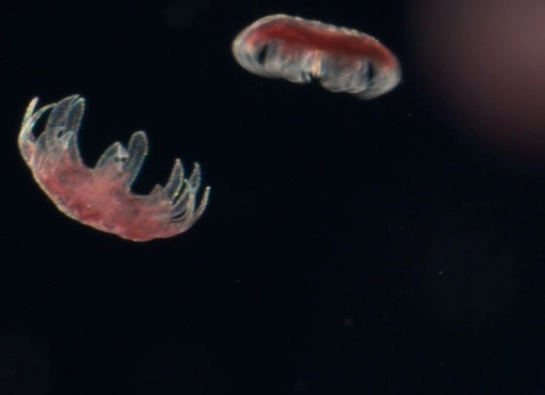
This polyp looks like a tiny sea anemone or a mini flower. It can sit there for months, even years, cloning itself and forming stacks of discs like coins. When conditions are perfect (temperature, light, food), each disc peels off in a process called strobilation and swims away as a tiny juvenile jellyfish (an ephyra), which then grows into the adult medusa.
The "Alternation of Generations" in a Nutshell:
1. Adult Medusa (male or female) → produces gametes (sperm/egg).
2. Fertilized Egg → develops into a swimming Planula Larva.
3. Planula settles → becomes a sessile Polyp.
4. Polyp clones itself and/or undergoes Strobilation.
5. Ephyra (baby jellyfish) buds off → grows into an Adult Medusa.
And the cycle repeats. The polyp stage is the secret weapon, allowing jellyfish to weather bad seasons and explode in numbers when it's favorable.
So when you ask how do male jellyfish fertilize eggs, you're really triggering a cascade that involves this whole shapeshifting life cycle. The fertilization event is just the spark.
Common Questions (The Stuff You're Actually Wondering)
How do they find each other in the huge ocean? This is the million-dollar question. Mass spawning events are key – they're synchronized by water temperature, lunar cycles, or time of day. When thousands spawn at once, the concentration of gametes in a local area makes fertilization possible. It's not romance; it's scheduling.
Do male jellyfish die after reproducing? Not necessarily immediately from the act itself, like some salmon or octopuses. But for many species, the adult medusa phase is short-lived—weeks or months. Reproduction is often their final biological act before succumbing to predation, disease, or simply running out of energy. The polyp is the perennial stage.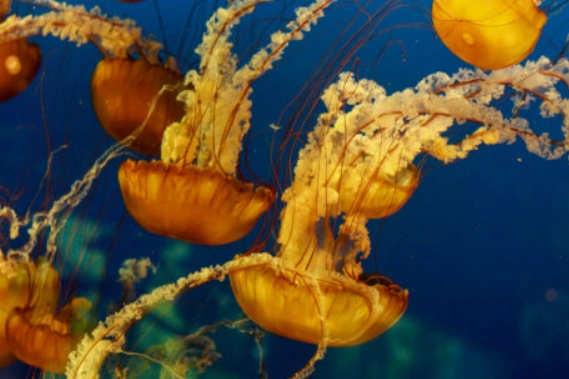
Why This Matters Beyond Curiosity
Understanding how do male jellyfish fertilize eggs isn't just trivia. It's critical for ecology. Jellyfish blooms are increasing in many parts of the world, sometimes clogging fishing nets, shutting down power plants, and disrupting ecosystems. Their reproductive efficiency – both the broadcast/breeding sexual phase and the relentless asexual cloning of polyps – is a major reason they can exploit environmental changes like warming waters and overfishing so well. Researchers studying blooms spend a lot of time looking at polyp habitats (like artificial structures on sea floors) because that's where the boom is really controlled.
If you want to dive deeper into the hard science, institutions like the Woods Hole Oceanographic Institution and the Monterey Bay Aquarium Research Institute (MBARI) have fantastic, accessible resources on jellyfish biology and life cycles. The NOAA Ocean Service also has reliable fact pages that ground this information in solid marine science.
Wrapping It Up: A Surprisingly Complex Dance
So, the next time you see a jellyfish, you'll see more than a drifting blob. You'll see a participant in an ancient, watery ritual. The answer to how do male jellyfish fertilize eggs is a tale of chance encounters in a vast blue desert, of chemical signals we can't smell, of a life cycle that bends through different forms, and of a reproductive strategy that is both wildly wasteful and incredibly resilient.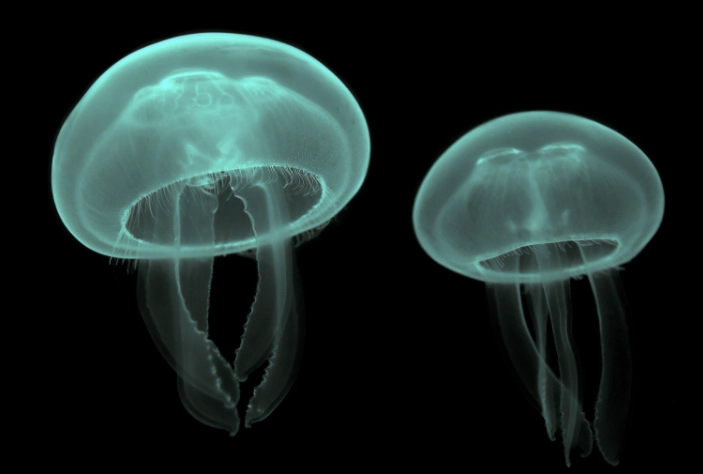
It's mostly not about direct contact. It's about timing, currents, and the silent, microscopic release of millions of possibilities. The male's job is to contribute to that cloud of potential. The rest is up to the ocean.
And honestly, after writing all this, I'm even more amazed by that kid's simple question. It opens a door to one of the ocean's most fundamental and strange stories.




Comments
Leave a Comment