Quick Guide
- The Exact Dimensions: Breaking Down the Numbers
- Seeing Is Believing: A Visual Size Comparison Guide
- From Nymph to Adult: How Picasso Bug Size Changes Over Time
- Common Misconceptions About Their Size
- How Does the Picasso Bug's Size Compare to Other Famous Insects?
- Why Does Its Size Even Matter?
- Frequently Asked Questions (The Stuff You're Actually Wondering)
- Final Thoughts: Appreciating the Scale of Nature's Art
You've seen the pictures. Those wild, abstract splashes of color that look like someone gave a tiny insect a paintbrush. The Picasso bug is famous for its looks, no doubt. But whenever I show someone a photo, the first question is never about the art. It's always, "Wow, but how big is a Picasso Bug?" It's a good question. The internet is full of stunning close-ups that make them look huge, or distant shots where they're just a speck. It creates this weird gap in understanding. I remember the first time I saw one in person, in a botanical garden display. My brain had prepared for something the size of a large beetle, but what I found was... different. More delicate. It was a genuine surprise, and it made me realize how useless descriptions like "small" or "medium" really are. So let's ditch the vague terms and get specific. We're going to talk numbers, comparisons, and everything that actually helps you visualize this tiny living masterpiece.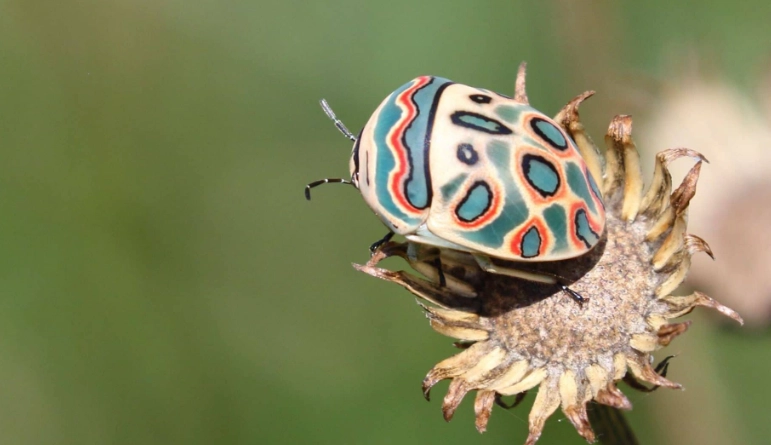
The Quick Answer: If you're in a hurry, here's the deal. An adult Picasso bug typically measures between 8 to 12 millimeters in length. That's roughly the size of your average aspirin tablet or a little smaller than a standard paperclip. Their width, with wings folded, is usually about 4 to 6 mm. But that's just the headline. The full story of their size is way more interesting, and it changes depending on their age, sex, and even where you find them.
The Exact Dimensions: Breaking Down the Numbers
Alright, let's get precise. When entomologists measure insects, they usually give a range because, just like people, bugs aren't all identical. For Sphaerocoris annulus (that's the scientific name for the Picasso bug), the size data is pretty consistent across reliable sources. I've dug through museum collection records and peer-reviewed papers to avoid the guesswork you sometimes find on random forums.
The most commonly cited and verified measurement for an adult Picasso bug's body length is 8 to 12 millimeters (0.3 to 0.47 inches). That's from the tip of its head (not including antennae) to the end of its abdomen. Now, when you include its folded wings, which have that famous patterned shield (called a scutellum), it adds a bit of bulk visually, but the length measurement stays the same.
Here's a table to break it down cleanly. This should answer the core question of "How big is a Picasso Bug?" with cold, hard data.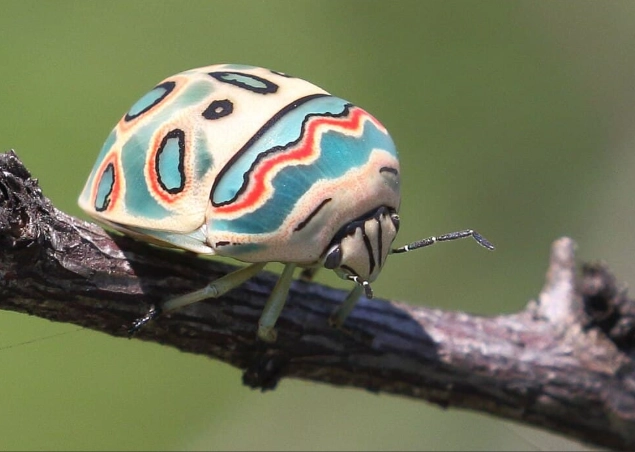
| Measurement | Average Size | Size Range | Comparable Common Object |
|---|---|---|---|
| Body Length | ~10 mm | 8 - 12 mm | Ladybug, Tic Tac mint |
| Width (Body) | ~5 mm | 4 - 6 mm | Width of a pencil lead |
| Wingspan (Rarely Seen) | ~15-18 mm | N/A | A US dime coin |
| Weight | Extremely light | N/A | A few grains of sugar |
You'll notice I included "wingspan" with a note. That's because Picasso bugs, like other shield-backed bugs, rarely fly and keep their wings tucked tightly under that colorful shield. You almost never see the wingspan unless the bug is startled or mating. But when they do open up, it's a surprising flash of membranous wing that nearly doubles their apparent size for a second.
So, when someone asks how big is a Picasso Bug, you can confidently say it fits comfortably on your thumbnail with room to spare. It's a true small wonder.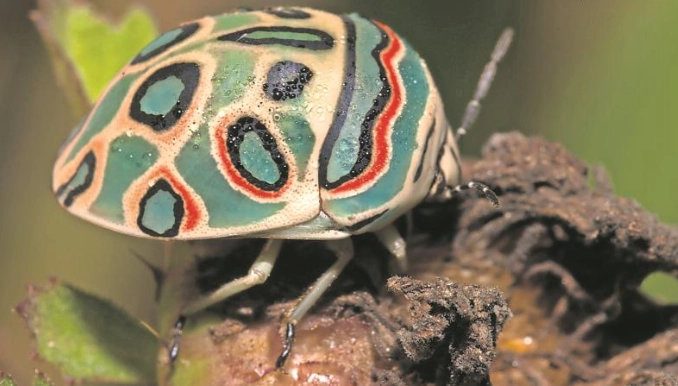
Seeing Is Believing: A Visual Size Comparison Guide
Millimeters can be abstract. Let's put it in terms you see every day. This is the part that really helps the information stick.
Think of it this way: A standard US penny is about 19 mm in diameter. An adult Picasso bug laid across the penny would cover about half to two-thirds of it. It's significantly smaller than the coin.
A standard paperclip (the unbent kind) is about 30 mm long. A Picasso bug is roughly one-third of that length.
Your typical house key on your keyring? The Picasso bug is smaller than just the teeth of the key.
I find the coin comparison works best. If you put a penny and a dime on a table, the Picasso bug's length would sit somewhere between the thickness of the dime and the width of Lincoln's head on the penny. It's not a giant, showy insect by any means. Its impact comes from the incredible detail packed into that tiny canvas. That's what blew my mind. Such intricate patterns on something so small. It's like finding a perfectly detailed mural painted on a pebble.
Male vs. Female: Is There a Size Difference?
This is a common follow-up for any creature. In many insect species, females are larger because they need to carry eggs. With Picasso bugs, the difference is subtle but measurable. Generally, female Picasso bugs tend to be at the upper end of that 8-12 mm range. You might find more females around 11-12 mm, while males often cluster around 8-10 mm. It's not a dramatic "twice as big" situation, but if you had a line of them, you could probably pick out the larger ones as likely females. The coloration, interestingly, doesn't seem to vary much with sex—both are equally vibrant, which is a nice change from the animal kingdom's usual drab-males rule.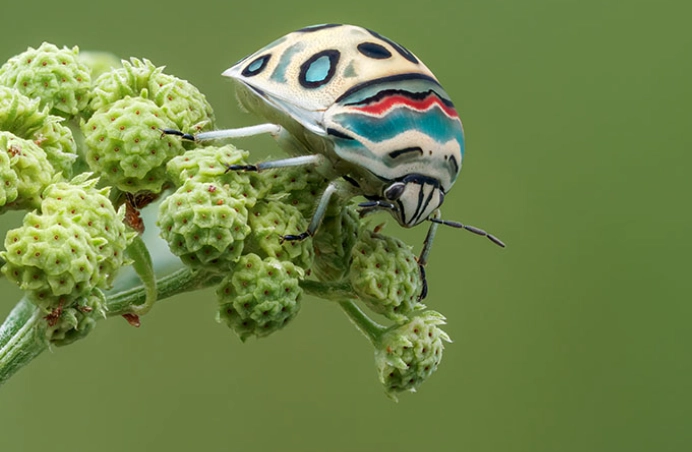
From Nymph to Adult: How Picasso Bug Size Changes Over Time
This is crucial. The size we keep talking about is for the adult insect. Picasso bugs don't hatch looking like mini-adults (that's called incomplete metamorphosis). They go through several nymph stages, called instars, and they look nothing like the famous adult. They're smaller, rounder, and lack the full, hardened colorful shield. Their colors are more muted—often a mix of red, black, and beige.
So, if you find a tiny bug on a plant that has some Picasso-esque colors but is only 2-3 mm long, you might be looking at a baby. They grow with each molt. Here's a rough guide to their growth journey, which honestly, is just as fascinating as the adult form.
| Life Stage | Approximate Size | Key Visual Features | Duration |
|---|---|---|---|
| Egg | ~1 mm | Tiny, barrel-shaped, laid in clusters | 1-2 weeks |
| 1st Instar Nymph | 2-3 mm | Round, dark with some red patterning | 1 week |
| 3rd Instar Nymph | 5-6 mm | More defined shape, patterns becoming clearer | 1-2 weeks |
| 5th (Final) Instar Nymph | 7-9 mm | Nearly adult-sized, shield developing but soft | 1-2 weeks |
| Adult | 8-12 mm | Full, hard colorful shield, mature wings | Several months |
This lifecycle means the answer to "how big is a Picasso Bug" depends entirely on when you catch it. A final-stage nymph is already almost as big as a small adult, but it hasn't yet developed that iconic, glossy, painted-shell appearance. It's like watching the canvas get prepared before the final masterstroke of color is applied in the last molt to adulthood.
It's easy to get fixated on the adult form, but the nymphs are fascinating in their own right. They're proof that this incredible design is a process, not a sudden event.
Common Misconceptions About Their Size
Let's clear some things up. The internet breeds myths, and insect size is a common victim.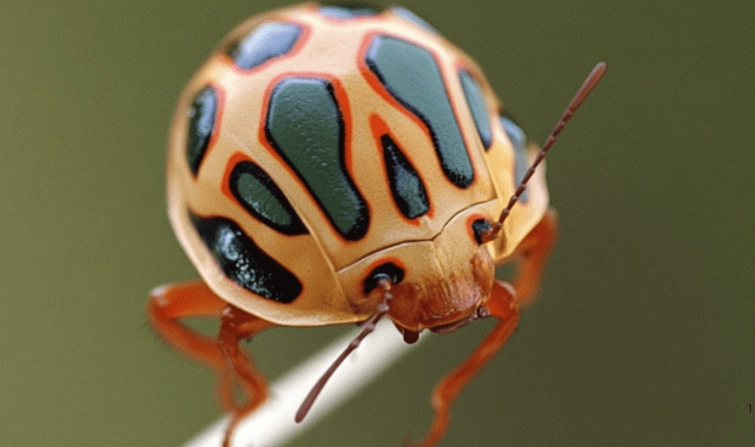
Myth 1: They're as big as a large beetle. Nope. Compare it to common beetles: A ladybug is 5-8 mm. A Japanese beetle is about 10 mm. A Picasso bug is in that league, not the "June bug" or "stag beetle" league (which can be 25-75 mm).
Myth 2: The bigger they are, the more colorful. Not really. Size and color intensity don't seem directly linked. A healthy 9 mm bug can be just as vividly patterned as a 12 mm one. The colors are part of their exoskeleton structure, not a paint job that scales up.
Myth 3: They're a type of large, colorful beetle. This is a big one (pun intended). They're true bugs (order Hemiptera), not beetles (order Coleoptera). Beetles have chewing mouthparts and hard wing cases that meet in a straight line down the back. Picasso bugs have piercing-sucking mouthparts (a beak) and their colorful shield is a modified, enlarged part of the thorax, not the wings. This taxonomic difference doesn't dictate size, but it's important for understanding the creature you're looking at. The Royal Entomological Society has great resources on telling bugs and beetles apart if you're curious about the deeper details.
How Does the Picasso Bug's Size Compare to Other Famous Insects?
To really cement its place in the insect world, let's do some comparisons. I think in lists and rankings, so this helps me.
- Vs. A Monarch Butterfly: No contest. A Monarch's wingspan is 90-100 mm. A Picasso bug is utterly dwarfed. It could fit on the Monarch's wingtip.
- Vs. A Praying Mantis: A common mantis is 50-75 mm long. A Picasso bug is an appetizer in comparison.
- Vs. A Bumblebee: A bumblebee is about 20 mm long. So, roughly twice the length of our bug.
- Vs. Its Relative, the Stink Bug: Many common stink bugs (like the brown marmorated) are 12-17 mm. So, a Picasso bug is often slightly smaller than your average backyard stink bug, but infinitely prettier.
See? It's solidly in the "small insect" category, even among its flashier cousins.
Why Does Its Size Even Matter?
You might wonder why we're obsessing over a few millimeters. For the curious observer, it sets realistic expectations. You're not going to spot one from 20 feet away. You need to look closely at plants. For photographers, it tells you what lens you'll need—macro is essential. For someone wondering if it's a "threat" (it's not), its small size is a clue to its harmless nature. It also hints at its ecology. A small, slow-moving, brightly colored insect is broadcasting a clear signal: "I taste bad." Its size makes it a manageable package for the chemical defenses it carries, which is a theory discussed in ecological studies you can find through resources like the Entomology Today website, which often covers insect defense mechanisms.
Its size also makes it vulnerable. It's not fast or strong. Its survival hinges on that warning coloration being recognized by birds and lizards. Every time I see one, its smallness strikes me as an act of defiance. It's saying, "Go ahead, look at me. I'm not hiding."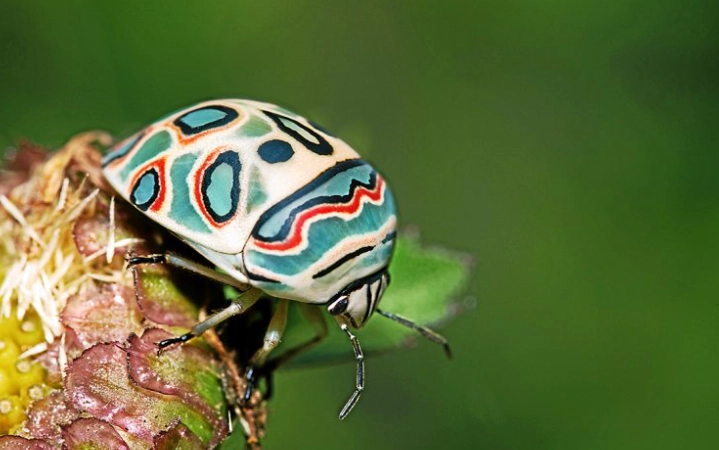
Frequently Asked Questions (The Stuff You're Actually Wondering)
- They need a very secure, well-ventilated enclosure—even small gaps are an escape route.
- They are sensitive to pesticides and chemicals on plants.
- They are delicate to handle. You'd be observing more than handling.
Final Thoughts: Appreciating the Scale of Nature's Art
So, after all this, how big is a Picasso Bug? It's small. Deliberately, perfectly, fascinatingly small. Its size isn't a drawback; it's an integral part of its identity. It forces you to slow down, to look closer, to appreciate the minute details that are so easy to miss in the larger world. In an age of giant screens and overwhelming scale, there's something deeply satisfying about marveling at a masterpiece that fits on your fingertip.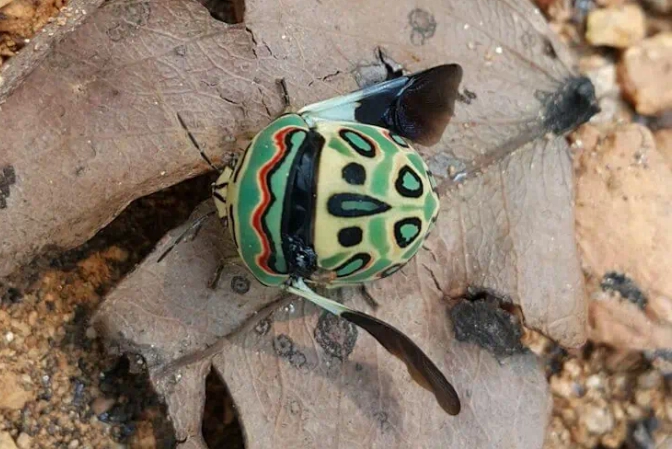
Knowing its true size transforms it from a mythical, web-sized curiosity into a real, tangible creature. It makes the encounter, should you ever be lucky enough to have one, all the more special. You won't be expecting a giant. You'll be looking for, and finding, a tiny, living jewel. And in my book, that's even more impressive.
Next time you see a picture, you'll know exactly what you're looking at. And that's the whole point.


Comments
Leave a Comment