Explore the Article
- The Nose: The "Trunk" That Started It All
- Sheer Size and Bulk: The Giants of the Pinniped World
- Beyond Looks: Behavioral and Ecological Parallels
- A Quick History of the Name
- Southern vs. Northern: A Tale of Two "Sea Elephants"
- Common Questions About Sea Elephants (Elephant Seals)
- Final Thoughts: More Than Just a Funny Name
You see a picture of this massive, blubbery seal with a weird, drooping nose on a beach in California or Argentina. Your first thought might be "what on earth is that thing?" Your second thought, if you hear its name, is almost certainly: why are they called sea elephants? I mean, it's a seal. It lives in the sea. But an elephant? That's a land animal with big ears and a trunk. The connection isn't immediately obvious to everyone, and honestly, I thought it was a bit of a silly name when I first heard it too. It seemed like someone just slapped two animal names together because they couldn't think of anything better.
But then I started reading, and watching documentaries, and the name began to make a lot more sense. It's not random at all. It's actually a pretty spot-on description if you know what to look for. The answer isn't just one thing; it's a combination of features that, when you put them together, scream "elephant of the sea." We're talking about their most famous feature, their sheer size, their behavior, and even the sounds they make. Let's break it down, because it's actually a fascinating bit of natural history and observation.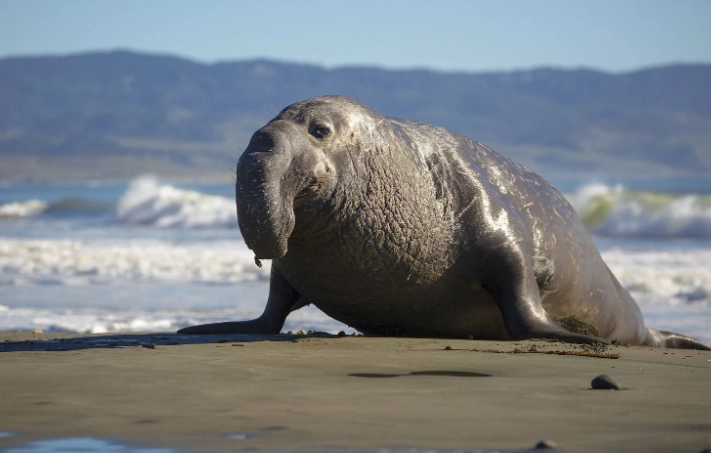
The Nose: The "Trunk" That Started It All
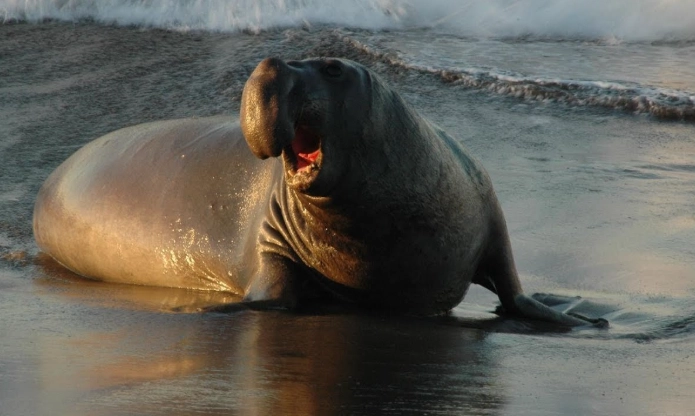
This is the big one. The most direct, in-your-face reason. If you ask a biologist or a seasoned wildlife photographer why are they called sea elephants, they'll point straight to the male's proboscis.
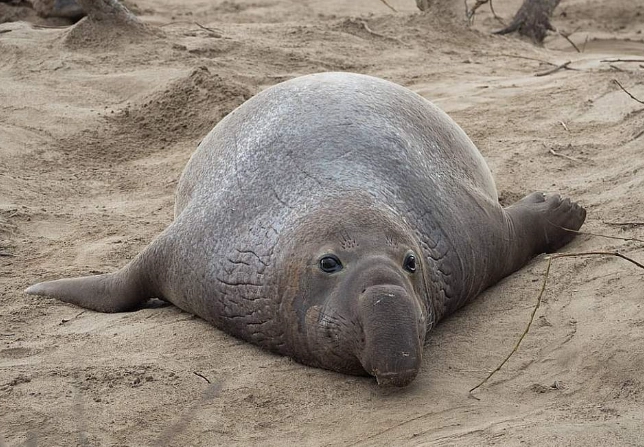
That fleshy appendage hanging over the mouth of a big bull elephant seal isn't just for show. It's an elongated nose that he can actually inflate with air. When relaxed, it droops down. When he's excited, threatening rivals, or trying to impress females, he rears up and inflates it, making it look even more prominent and... well, trunk-like. The similarity to an elephant's trunk is uncanny. It's not prehensile like an elephant's—it can't pick things up—but the visual parallel was enough for early explorers and whalers. They saw this giant creature with a distinctive nose hauling out on beaches, and the name just stuck.
I remember seeing my first one in a documentary. The bull inflated his nose and let out this roaring, guttural sound. My immediate thought wasn't "seal" anymore; it was "what is that elephant doing in the ocean?" The nose completely changes the profile of the animal. It's the signature feature.
But the nose does more than just look impressive. It's a built-in sound amplifier and a rebreather. When the bull makes those incredible roaring sounds to establish dominance, the inflated nose acts like a resonance chamber, making the noise louder and more intimidating. It can be heard for miles. Some research also suggests it helps conserve moisture during their long months fasting on land, by re-capturing water vapor from their breath. Pretty clever bit of anatomy, even if it looks a bit ridiculous to us.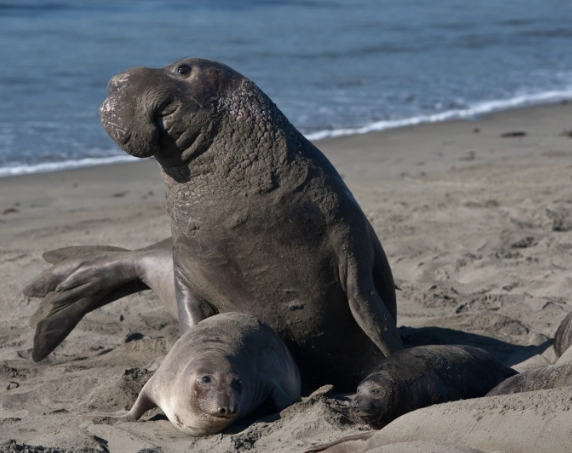
Sheer Size and Bulk: The Giants of the Pinniped World
If the nose is the first clue, the size is the confirmation. Elephant seals are, to put it simply, enormous. They are the largest pinnipeds (the group containing seals, sea lions, and walruses) on the planet. Let's get some numbers on the table, because they are staggering.
| Species & Sex | Average Length | Average Weight | Notes |
|---|---|---|---|
| Southern Elephant Seal (Bull) | 16 ft (4.9 m) | 6,600 lbs (3,000 kg) | The largest of all seals. Record bulls can be over 20 ft and 8,800 lbs. |
| Southern Elephant Seal (Cow) | 10 ft (3 m) | 1,300 lbs (600 kg) | Significant sexual dimorphism—males are much larger. |
| Northern Elephant Seal (Bull) | 13 ft (4 m) | 4,400 lbs (2,000 kg) | Slightly smaller than their southern cousins but still massive. |
| Northern Elephant Seal (Cow) | 10 ft (3 m) | 1,300 lbs (600 kg) | |
| African Elephant (For Comparison) | 19-24 ft (6-7.3 m) body & trunk | 13,000 lbs (5,900 kg) | Just to show why the "elephant" comparison holds weight. |
Look at those weights. A big southern bull can weigh as much as a large pickup truck. When they haul their bodies onto a beach, they move with a slow, heavy, lumbering gait that looks nothing like the agile sea lions you might see at a pier. It's a slow, deliberate, and powerful heave of mass. That ponderous movement on land is another trait they share with land elephants. In the water, they're graceful missiles, but on land, they are the undisputed heavyweight champions of the beach. Seeing a colony of them is like watching a landscape of living, snoring boulders. The scale is hard to grasp until you see it. The size alone justifies the "elephant" moniker.
It's the combination, really.
A big nose on a small animal is just a weird nose. A huge animal without a distinctive feature is just big. But a colossally huge animal with a trunk-like nose? That's an elephant. Even if it's swimming in the Pacific.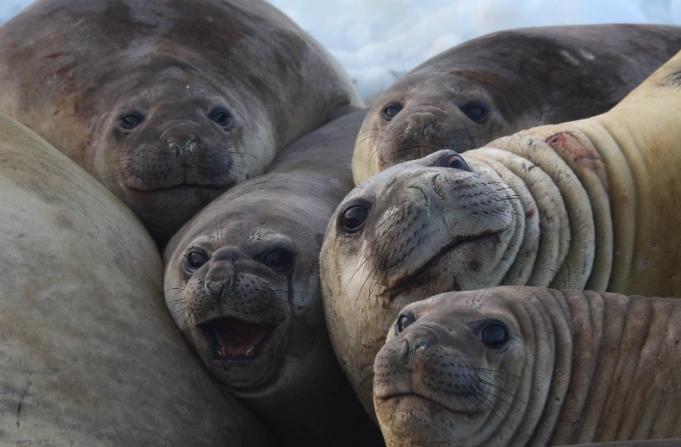
Beyond Looks: Behavioral and Ecological Parallels
The similarities go deeper than just appearance. When you look at how they live, more parallels to elephants emerge. It's not just a visual nickname; it hints at their ecological role.
Extreme Divers of the Deep
Elephants are known as ecosystem engineers on land, shaping their environment. Elephant seals are masters of the deep ocean, performing feats that are almost mythical. They are some of the deepest diving mammals on Earth. We're not talking about a quick dip.
- Depth: Southern elephant seals routinely dive to 1,500-2,000 feet (450-600 meters). The record is a mind-blowing 7,835 feet (over 2,388 meters) for a southern elephant seal—that's deeper than most military submarines go. Northern elephant seals also dive consistently to 1,500-2,500 feet.
- Duration: These aren't quick trips. A typical dive lasts 20-30 minutes, and they spend about 90% of their lives underwater, even when they're "sleeping."
- Purpose: They're hunting in the deep scattering layer, feeding on squid, fish, and deep-sea creatures. This deep-diving lifestyle makes them the ocean's long-distance truckers, covering vast distances and plumbing depths few other predators can.
This mastery of an extreme environment is akin to elephants' mastery of the savanna or forest. They are titans of their respective domains. The NOAA Fisheries page on Northern Elephant Seals has fantastic tracking data that shows just how far they travel, essentially making them living oceanographic sensors.
Social Structure and Vocalizations
Go to an elephant seal rookery during breeding season, and the noise is unforgettable. The air is filled with deep, resonant, rumbling roars and belches as the bulls challenge each other. That low-frequency roar, amplified by the proboscis, is their version of an elephant's trumpet. It's a display of size, health, and dominance meant to settle disputes without costly physical fights (though those happen too).
Their social structure is also based on a dominance hierarchy, with a large, prime bull (the "beachmaster") controlling a harem of females, much like a dominant bull elephant might have mating access to multiple cows. It's a brutal, physically demanding system where the biggest and strongest with the most impressive "trunk" wins the right to pass on his genes.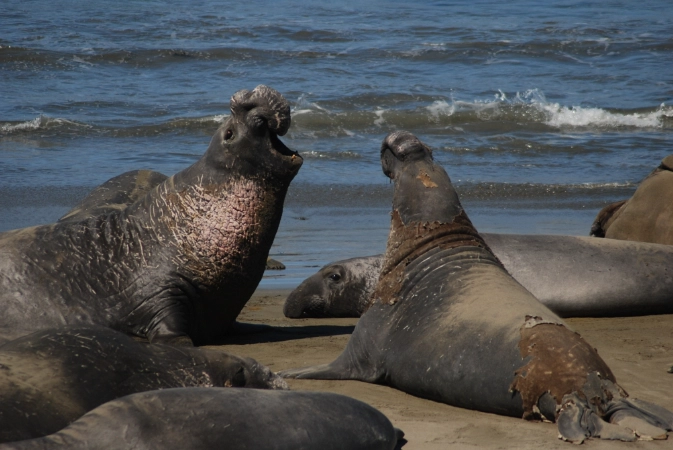
A Quick History of the Name
The name "sea elephant" is old. Really old. It predates modern scientific classification. Early European explorers, sealers, and whalers in the 18th and early 19th centuries encountered these beasts in the Southern Ocean and on sub-Antarctic islands. They didn't have biology degrees; they had practical eyes for describing things. "Sea elephant" was a perfectly logical common name for them. The scientific genus name, Mirounga, is derived from an Australian Aboriginal name for the animal. But the common name in English stuck because it was so descriptively accurate for the people who saw them most.
Interestingly, the name caused some confusion later. When the northern species was discovered on the Pacific coasts of North America (it was hunted to the brink of extinction and later recovered), it was recognized as a close relative of the southern "sea elephant." So it became the "northern elephant seal." The "sea elephant" name is still used interchangeably, especially for the southern species, but "elephant seal" is now the more universally accepted common term. It's the same animal. So, when you're wondering why are they called sea elephants, you're really digging into the original, folk-taxonomy name that started it all.
Southern vs. Northern: A Tale of Two "Sea Elephants"
It's worth noting there are two species, and while the naming reason applies to both, there are differences. The southern elephant seal (Mirounga leonina) is the bigger, more "elephantine" of the two. Its proboscis is even more pronounced and trunk-like. The northern elephant seal (Mirounga angustirostris) has a slightly narrower proboscis. Both are incredible, but if you want to see the most dramatic example of why are they called sea elephants, the southern species takes the crown. The IUCN Red List entry for the Southern Elephant Seal provides detailed conservation status and range information, highlighting their circumpolar distribution around Antarctica.
Common Questions About Sea Elephants (Elephant Seals)
Final Thoughts: More Than Just a Funny Name
So, after all that, why are they called sea elephants? It boils down to a perfect storm of characteristics observed by practical-minded sailors centuries ago: the male's trunk-like nose, the absolutely staggering size and bulk, the lumbering land movement, the deep, resonant roars, and their dominant presence on the beaches they inhabit. It's a name born of direct observation, not scientific jargon, and that's why it has endured.
I think the name does them a service. It immediately sets them apart from other seals and hints at their grandeur. Calling them just "big seals" doesn't cut it. They are a spectacle of nature, champions of deep-sea diving, and survivors of near-extinction (the northern species was thought to be extinct in the late 1800s before a tiny remnant population was found). Their recovery, documented by organizations like Point Reyes National Seashore in California, is one of marine conservation's quieter success stories.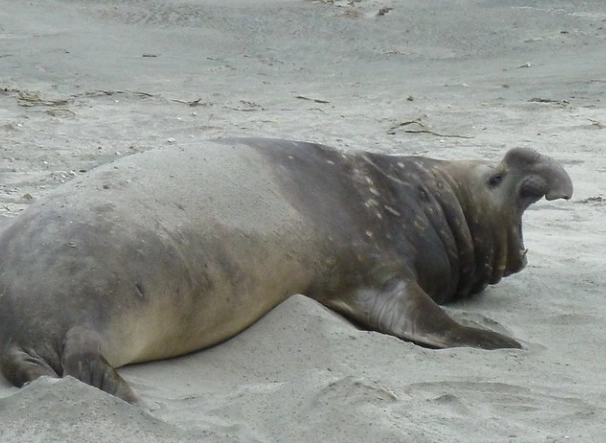
The next time you see a photo or video of one, you won't just see a weird-looking seal. You'll see the trunk, you'll imagine the sheer weight of it, and you'll understand exactly why that name, "sea elephant" or "elephant seal," is one of the most fitting in the animal kingdom.
It's not silly. It's perfect.




Comments
Leave a Comment