Quick Navigation
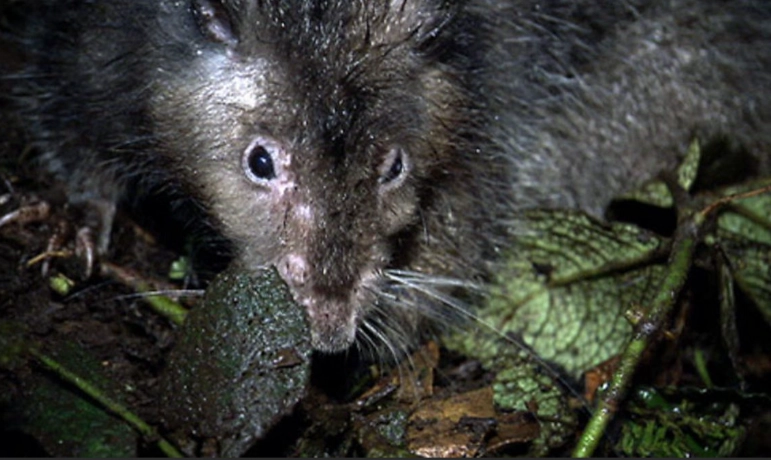
So you've heard about the Subalpine woolly rat. Maybe you saw a picture of this fluffy, almost guinea-pig-like creature and wondered what it was. I know I did. It's not your typical city rat, that's for sure. This thing looks like it's wearing a dense, plush coat meant for a much colder climate than you'd expect in Papua New Guinea. That's the first clue about its strange life.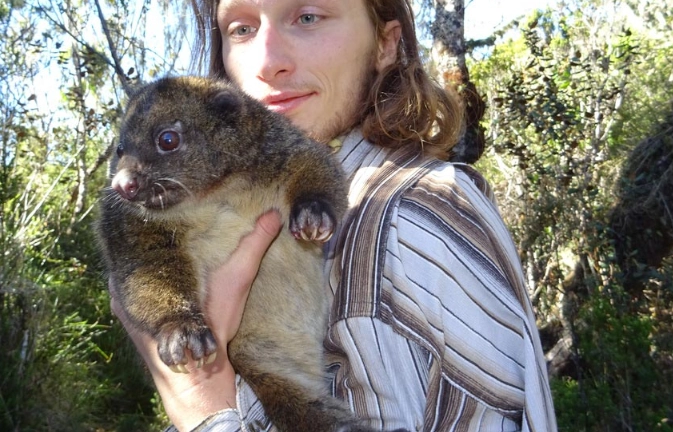
Let's clear something up right away. Its official, scientific name is Mallomys gunung. You'll sometimes see it called the "alpine woolly rat" or just "gunung" which means mountain in Indonesian. But most folks, and the scientific community, stick with Subalpine woolly rat. It's one of those animals that lives in such a specific, remote place that even many wildlife enthusiasts haven't heard of it. It's a giant among rodents, but a ghost in terms of public awareness.
I remember first reading about it in a niche mammalogy journal. The photos were grainy, taken in misty conditions. It looked more like a stuffed toy than a living animal. That sense of mystery is a big part of its appeal. But there's real substance behind the fluff. What does it eat up there? How does it survive the cold? And why should anyone care about a rat on a distant mountain?
Home Sweet Home: Life Above the Clouds
The habitat of the Subalpine woolly rat isn't just a detail—it's the core of its identity. We're talking about the subalpine and alpine zones of the Central Range of New Guinea. This means places like the Sudirman Range and the Star Mountains. If you look at a map, it's the spine of the island, a rugged, often impassable world of peaks and valleys.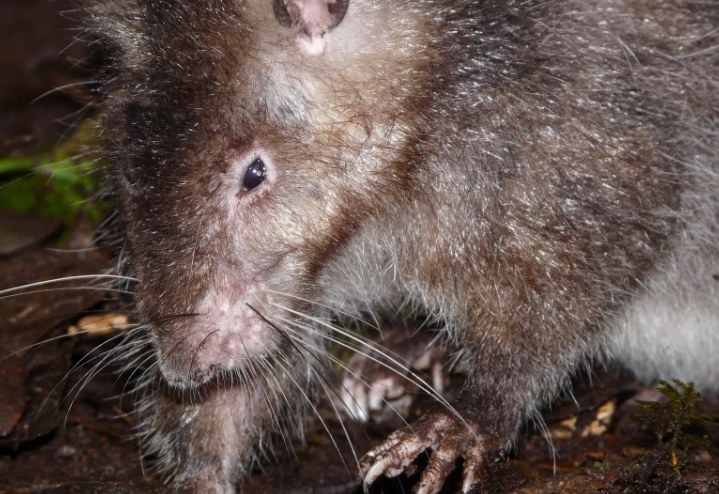
This isn't a tropical paradise of beaches and palm trees. Think more... mossy, windy, and cold. The environment is often called "elfin woodland" or "moss forest." Stunted trees, thick layers of moss and lichen covering every rock and branch, and frequent mist and rain. Temperatures can drop near freezing at night, even close to the equator. It's a harsh, beautiful, and incredibly fragile place.
The Subalpine woolly rat is built for this. Its "woolly" name is no joke. That fur is dense and long, providing crucial insulation. Its relatively small ears and limbs help reduce heat loss. It's a classic case of adaptation. They create runways through the thick moss and tussock grass, and are believed to nest in burrows or among rock crevices. You won't find them lower down. They are true high-altitude specialists, which is cool but also puts all their eggs in one very specific, vulnerable basket.
Turns out, the landscape isn't barren at all. It's a salad bar for a specialist. Their diet is primarily herbivorous, focusing on the leaves, stems, and seeds of the alpine grasses and herbs that tough it out at that altitude. They've also been recorded eating mosses and fungi. Some researchers think they might supplement this with the occasional insect, but the evidence isn't strong. They are basically the cows of the alpine meadow, slowly munching on the tough, low-nutrient vegetation. It's not a glamorous diet, but it's what's available.
The Nuts and Bolts: Subalpine Woolly Rat Biology
Let's get into some specifics. This is where the "giant rat" label really means something.
| Feature | Description | Why It Matters |
|---|---|---|
| Size & Weight | Head-body length: 30-40 cm (12-16 inches). Tail: 30-38 cm. Weight: 0.5 - 1.0 kg (1.1 - 2.2 lbs). | It's one of the largest true rats in the world. For comparison, a common brown rat weighs about 0.3 kg. |
| Fur | Extremely long, dense, and soft. Grey-brown to dark brown, often with a silvery sheen. | Critical insulation against constant cold and damp. The "woolly" adaptation is its key survival trait. |
| Ears & Tail | Small, rounded ears. Tail is furred but not bushy, dark in color. | Small ears minimize heat loss. The tail is likely used for balance in its steep, rocky habitat. |
| Activity | Mostly nocturnal (active at night). | Helps avoid some daytime predators and perhaps extreme weather. |
| Reproduction | Poorly known. Likely has small litters, typical for slow-living, high-altitude mammals. | Low reproductive rate makes populations slow to recover from decline. |
Looking at that table, you start to see the picture of a slow-paced, energy-conserving animal. It's not scurrying around frantically. It's probably moving deliberately, conserving heat and energy. Life is hard up there, and everything about the Subalpine woolly rat's biology reflects that.
Something that doesn't get talked about enough is how little we know. The reproduction bit? A guess based on similar animals. Their social structure? Unknown. Their exact lifespan? Unknown. Most studies are based on a handful of trapped specimens or fleeting observations. This lack of knowledge is a huge problem for conservation.
The Looming Shadow: Threats and Conservation Status
Here's the part that worries me, and should worry anyone interested in unique wildlife. The Subalpine woolly rat is classified as Endangered on the IUCN Red List of Threatened Species. That's a serious category, just two steps away from Extinct in the Wild.
The IUCN Red List is the global authority on the conservation status of species. You can find the detailed assessment for Mallomys gunung on their website: IUCN Red List entry for Subalpine Woolly Rat. It's a sobering read, but it's the definitive source for its endangered status.
Why is it endangered? The threats are interconnected and, frankly, daunting.
- Climate Change: This is the big one, the threat multiplier. The Subalpine woolly rat's entire existence is tied to a narrow band of cold temperature on mountain peaks. As global temperatures rise, that band shrinks and moves uphill. The rat can only go so high before it runs out of mountain. There's nowhere left to go. It's literally being pushed off the top of its world.
- Habitat Loss & Degradation: While its immediate habitat isn't being clear-cut for agriculture, lower-altitude forests are. This fragmentation can isolate populations. More directly, increased human activity in the highlands for mining, trekking, and even scientific research can disturb its fragile home. A single new road can open up previously inaccessible areas.
- Limited Range: It only lives in a few mountain ranges. A disease, a natural disaster, or a surge in a predator population in one of these areas could wipe out a significant chunk of the entire species.
Let's be real for a second. Conservation efforts for an obscure rat on remote New Guinea mountains aren't exactly front-page news. Funding is scarce. Local awareness might be low. It competes for attention with pandas, tigers, and whales. But that doesn't make it less important. In fact, its obscurity might be part of the problem.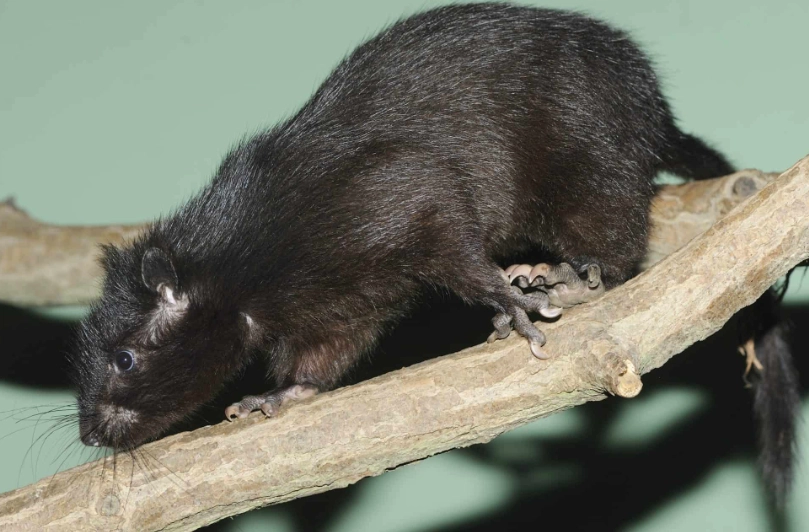
What's Being Done? (And What Can Be Done?)
It's not all doom and gloom. Some things are happening, though progress is slow.
First, research is the foundation. Groups like the New Guinea Mammal Research group and scientists affiliated with the Papua New Guinea University of Technology and the University of Papua New Guinea are crucial. Every new bit of data on its population, diet, and range helps. The Smithsonian Institution has also supported biological research in New Guinea, highlighting the region's unique fauna.
Second, protected areas matter. Parts of its range fall within Lorentz National Park in Indonesia, a UNESCO World Heritage site. This offers some legal protection from large-scale development. Enforcement in such remote areas is always a challenge, but the designation is a vital tool.
So what can an ordinary person do? Awareness is step one. Just by reading this, you're helping. Sharing information about lesser-known endangered species shifts the conversation. Supporting broader conservation NGOs that work on habitat protection and climate policy indirectly helps every species, including the Subalpine woolly rat. You can also support scientific crowdfunding for specific field research projects—they exist for creatures like this.
Answering Your Questions: The Subalpine Woolly Rat FAQ
I've gotten a lot of the same questions from folks over the years. Let's tackle some of the big ones head-on.
Is the Subalpine woolly rat related to the giant rats found in other parts of the world?
Not closely. It's a great example of convergent evolution. The Mallomys genus is part of the Old World rat family (Muridae) native to Australasia. Giant rats in Africa (like the Gambian pouched rat) or South America (like the capybara, which isn't even a true rat) evolved their large size independently. The Subalpine woolly rat's gigantism is likely an adaptation to the cold (larger bodies retain heat better) and possibly a lack of competing mammals in its high-altitude niche.
Can you keep a Subalpine woolly rat as a pet?
Absolutely not. For several reasons. First, it's an endangered species. Trade and possession are illegal under international treaty (CITES). Second, it's a highly specialized wild animal. Its dietary and climate needs would be impossible to replicate in captivity outside of a major zoo with a specialized facility. Third, ethically, taking an animal from such a fragile wild population would be terrible. This is a creature that belongs on its misty mountains, not in a cage.
How many Subalpine woolly rats are left?
Nobody knows the exact number. Population estimates for elusive, remote animals are incredibly difficult. The IUCN states the population is declining but doesn't give a figure. It's certainly in the low thousands, possibly fewer, and spread across fragmented mountain tops. Each of those sub-populations is vulnerable.
What would happen if the Subalpine woolly rat went extinct?
This is the million-dollar question. As a herbivore, it likely plays a role in seed dispersal and nutrient cycling in its alpine ecosystem. Its grazing might help maintain the structure of the tussock grasslands. Its burrowing could aerate soil. The loss of any species, especially a unique one occupying a narrow niche, weakens the resilience of its entire ecosystem. It's a thread pulled from a tapestry. You might not see the immediate hole, but the structure is compromised.
More broadly, losing the Subalpine woolly rat would mean losing a unique piece of evolutionary history—a remarkable adaptation to an extreme environment. It would be a silent failure, a disappearance few would notice, and that's the saddest part.
Final Thoughts: Why This Odd Rat Matters
Look, I get it. It's a rat. A big, furry rat on a mountain far away. It's easy to dismiss.
But to me, the Subalpine woolly rat is a symbol. It's a testament to how life finds a way in the most unexpected places. It's a canary in the coal mine for high-altitude ecosystems worldwide, which are warming at twice the global average rate. Its struggle is a direct, tangible consequence of a changing climate.
Studying and protecting it isn't just about saving one species. It's about understanding how specialized creatures adapt, how fragile mountain ecosystems function, and what we stand to lose in a warmer world. The moss forests of New Guinea are a laboratory of evolution, and the Subalpine woolly rat is one of its most unique products.
So next time you think about endangered species, spare a thought for Mallomys gunung. This high-altitude giant, living its quiet, slow life above the clouds, has more to tell us about resilience and fragility than we might think. Its future, like that of so many obscure creatures, hangs in a delicate balance.



Comments
Leave a Comment