Key Sections
- Why Is the Bosavi Woolly Rat Lifespan So Hard to Pin Down?
- Comparative Lifespan Analysis: What Other Giant Rodents Tell Us
- Factors That Could Influence Their Longevity
- The Discovery and What It Means for Lifespan Research
- Your Bosavi Woolly Rat Lifespan Questions Answered (FAQ)
- Final Thoughts: The Living Mystery
Let's talk about one of the most fascinating creatures you've probably never heard of—the Bosavi woolly rat. I stumbled upon this animal years ago watching a documentary, and honestly, it blew my mind. A rat the size of a small dog, living in a remote volcanic crater in Papua New Guinea? It sounds like something out of a fantasy novel. But here's the thing that really hooked me, and probably why you're here too: how long does this incredible creature actually live? The Bosavi woolly rat lifespan is one of those zoological puzzles that doesn't have a neat, simple answer, and that's exactly what makes it so interesting to dig into.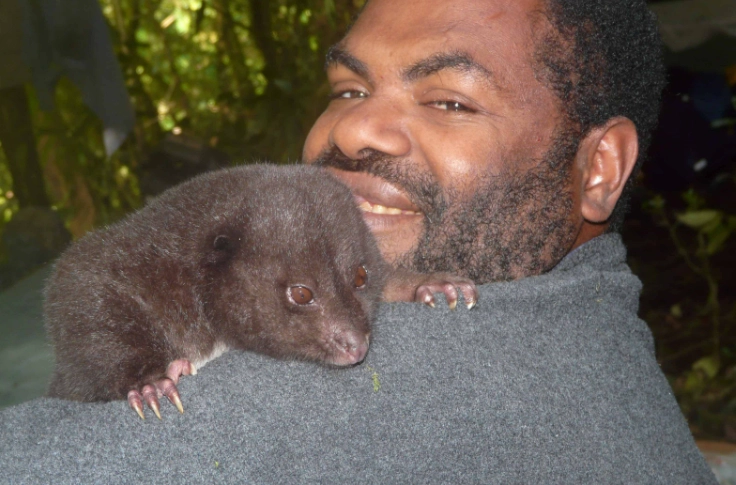
You won't find this information on a pet care sheet or in a common wildlife guide. This isn't your average city rat. We're dealing with an animal so isolated and recently discovered that much of its basic biology, including its lifespan, remains in the realm of educated guesses and scientific inference. So, if you're looking for a definitive "they live X years," I have to be upfront—we don't have that number locked down. But what we do have is a compelling story of discovery, ecology, and comparative biology that lets us piece together a very plausible picture. That's what we're going to explore.
Quick Context: The Bosavi woolly rat (Mallomys sp.) was discovered by a BBC film crew in 2009 inside the Mount Bosavi crater, an extinct volcano in Papua New Guinea's Southern Highlands. It's one of the largest living rodents in the world, measuring about 82 cm (32 inches) from nose to tail and weighing roughly 1.5 kg (3.3 lbs). Its thick, silver-brown fur gives it its "woolly" name.
Why Is the Bosavi Woolly Rat Lifespan So Hard to Pin Down?
This is the first question we need to tackle. You might think that in the 21st century, we'd know the lifespan of a large mammal. But the Bosavi woolly rat laughs in the face of that assumption. Several big reasons stand out.
First, and most obvious, is location. The Mount Bosavi crater is incredibly remote. We're talking about a place with no roads, accessible only by helicopter or a grueling multi-day trek. The crater itself is a pristine, isolated ecosystem—a lost world. Scientists haven't had the chance to set up long-term field studies there. Most of what we know comes from that initial 2009 expedition and very limited follow-up. You can't track an animal's life from birth to death if you can only visit sporadically.
Second, they've never been studied in captivity. Unlike many rodents (think lab rats or even capybaras in zoos), no Bosavi woolly rat has ever been kept in a controlled environment where its age could be meticulously recorded. All observations are from the wild. Estimating age in wild animals is tricky. You look at tooth wear, body size, reproductive status, but these are imprecise tools for a species we've just met.
Third, they are likely a slow-living species. This is a key point when thinking about Bosavi woolly rat lifespan. In ecology, there's often a trade-off. Giant species in stable, resource-rich, low-predation environments tend to have slower life histories. They mature later, have fewer offspring, and live longer. The Bosavi crater, with its lack of large native predators (before humans arrived), fits this model perfectly. So, while a city rat might live 1-2 years in the wild, rushing through life, the Bosavi rat is probably on a much slower, longer timetable. It's the difference between a speedboat and a cruise ship.
Clues from Anatomy and Habitat
So how do we even begin to guess? We look at clues. The rat's sheer size is clue number one. In the mammal world, larger body size generally correlates with longer lifespan. Think elephants vs. mice. Its robust build and thick fur suggest adaptation to a stable, cool mountain environment, not a frantic struggle for survival.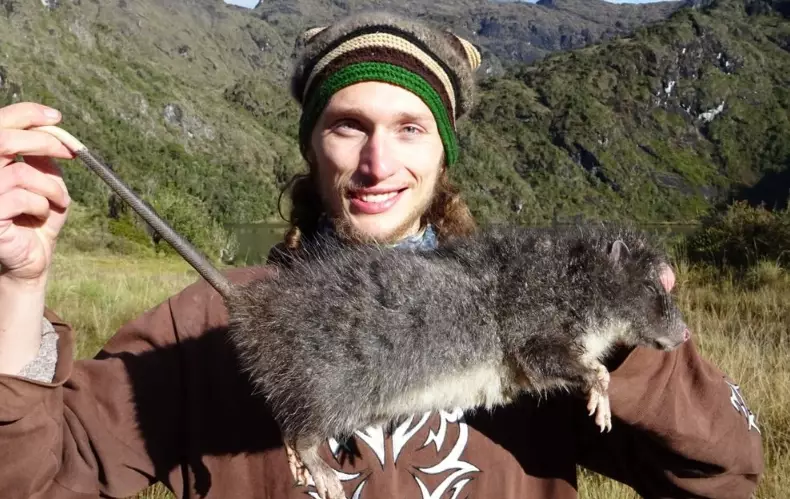
Then there's the habitat itself. The crater is a lush, montane forest with abundant food sources like fruits, roots, and plants. Competition seems low. This kind of ecological security reduces external pressures that shorten life. There's no need to gamble on early reproduction when your world is safe and food is plentiful. This points toward an evolutionary strategy that favors investing in a long life.
I remember reading the account of the scientists who first handled them. They noted the animals were remarkably placid, not skittish like most rodents. That behavior itself hints at a life free from constant threat, a life that can afford to be long.
Comparative Lifespan Analysis: What Other Giant Rodents Tell Us
Since we lack direct data, the next best tool is comparison. Let's look at the lifespans of other large rodent species, both in the wild and in captivity. This gives us a realistic bracket for the Bosavi woolly rat lifespan. I've put together a table that I find really helpful for visualizing this.
| Rodent Species | Average Size | Typical Wild Lifespan | Maximum Captive Lifespan | Relevance to Bosavi Rat |
|---|---|---|---|---|
| Capybara | ~55 kg (121 lbs) | 6-10 years | Up to 12 years | World's largest rodent; semi-aquatic, social. |
| North American Beaver | ~20 kg (44 lbs) | 10-15 years | Up to 20 years | Large, slow-growing, stable family units. |
| Porcupine (New World) | ~8 kg (18 lbs) | 5-7 years | Up to 15 years | Slow-moving, well-protected from predators. |
| Common/Brown Rat | ~0.3 kg (0.7 lbs) | ~1 year | ~3 years | Baseline for fast-lived, small rodents. |
| Gambian Pouched Rat | ~1.5 kg (3.3 lbs) | ~3 years (est.) | Up to 8 years | Similar size, but lives in higher-predation areas. |
| Bosavi Woolly Rat (Estimate) | ~1.5 kg (3.3 lbs) | 5 - 8+ years? | Unknown (Never kept) | Isolated, low predation, abundant food. |
Looking at this, a pattern emerges. The large, ecologically secure rodents (beavers, capybaras) easily hit a decade or more in the wild. The Bosavi woolly rat, while not as heavy as a capybara, shares that "secure" ecological niche. Its closest size match in the table, the Gambian pouched rat, likely has a shorter wild lifespan because it faces more predators and human threats in Africa.
Therefore, most mammalogists and ecologists who've commented on it suggest a Bosavi woolly rat lifespan in the wild likely falls in the 5 to 8 year range, possibly longer. Some have even speculated that in the perfect conditions of the crater, with no competition or introduced predators, they could approach beaver-like longevity of 10+ years. It's not a crazy thought. If a similarly sized, well-protected porcupine can manage 5-7 years in a tougher environment, why couldn't the Bosavi rat do better in its paradise?
Factors That Could Influence Their Longevity
Lifespan isn't just a random number. It's shaped by a cocktail of factors. For the Bosavi rat, we can identify the major players, even from a distance.
- Predation Pressure (Very Low): This is the big one. The crater historically had no large mammalian predators. The main threats were likely birds of prey (like the Papuan eagle) and possibly large pythons. This low threat level is a massive boost to potential lifespan.
- Food Security (High): The forest floor is reportedly rich with fallen fruits, fungi, and vegetation. A reliable food source means less energy spent on risky foraging and better overall health, supporting a longer life.
- Metabolic Rate (Likely Low): Large-bodied animals in cool climates tend to have slower metabolisms. A slower metabolism is often linked to slower aging and longer life. It's a fundamental biological principle.
- Disease and Parasites (Unknown): This is the wild card. Isolated ecosystems can have unique disease loads. Without studies, we don't know if parasites or pathogens are a significant limiting factor for their lifespan.
- Genetic Diversity (Potential Risk): Living in a small, isolated crater population could lead to inbreeding, which might reduce overall fitness and longevity. This is a concern for many confined populations.
Honestly, when you list it out like that, the first three factors are overwhelmingly positive. It paints a picture of an animal evolutionarily set up for a long, slow life. The disease and genetic factors are the main unknowns that could throw a wrench in that ideal scenario.
The Discovery and What It Means for Lifespan Research
To understand why we know so little, you have to appreciate the story of its discovery. It wasn't a planned zoological expedition. It was a BBC Natural History Unit team, led by Steve Greenwood, filming for the series "Lost Land of the Volcano" in 2009. They were the first people to enter the crater in a long, long time.
The discovery was, by all accounts, accidental and thrilling. They found the giant rat, along with other new species like a fanged frog and a camouflaged gecko. The scientific follow-up has been minimal due to the challenges of access and funding. The Smithsonian Institution's National Museum of Natural History has been involved in classifying and studying the specimens, but long-term field ecology? That's a monumental task.
This context is crucial. It means all lifespan estimates are extrapolations. A proper study of Bosavi woolly rat lifespan would require tagging individuals, monitoring them year after year, or establishing a captive breeding program. Neither has happened. The Smithsonian Institution and organizations like the International Union for Conservation of Nature (IUCN) are key players in this kind of foundational biodiversity science, but even for them, Bosavi remains a logistically daunting prospect.
Conservation Status and Future Threats to Lifespan
Here's a sobering thought. The very isolation that likely granted the Bosavi woolly rat its long lifespan is now its greatest vulnerability. The species is not yet formally assessed by the IUCN, but it would almost certainly be considered Vulnerable or Endangered due to its extremely limited range (just one crater).
The biggest emerging threat? Human activity. As mining, logging, and exploration increase in Papua New Guinea's highlands, the pristine nature of the crater is at risk. The introduction of non-native predators (like dogs or cats) or diseases could be catastrophic. A long lifespan depends on a stable environment. If that environment changes suddenly, the average Bosavi woolly rat lifespan could plummet before we even properly understand what it was.
My personal worry: We might be in a race against time. We're trying to estimate the natural lifespan of a species whose natural world is under increasing threat. The baseline we're trying to establish might be shifting even as we look at it.
Your Bosavi Woolly Rat Lifespan Questions Answered (FAQ)
What is the exact lifespan of a Bosavi woolly rat?
There is no exact number. Based on its size, ecology, and comparison to similar rodents, scientists estimate its lifespan in the wild is likely between 5 and 8 years, and potentially longer (up to 10+ years) in the ideal conditions of its isolated crater home.
Why is it so difficult to determine their lifespan?
Three main reasons: 1) Their habitat is incredibly remote and difficult for scientists to access for long-term study. 2) They have never been observed or kept in captivity, where age can be tracked precisely. 3) They are a very recently discovered species (2009), so there hasn't been time for extended research.
How does their lifespan compare to a normal rat?
It's dramatically longer. A common brown rat in the wild is lucky to live a year. The estimated Bosavi woolly rat lifespan is at least five times that, possibly ten times. This highlights how different their evolutionary pressures and life history are.
What is the biggest factor contributing to their potentially long life?
The near absence of natural predators in their Mount Bosavi crater home. This lack of external pressure allows for a "slow life history" strategy—slower growth, later reproduction, and investment in long-term survival, all of which support a longer lifespan.
Are they related to other giant rats?
Yes, they belong to the genus Mallomys, which includes other giant woolly rats in New Guinea. They are part of a unique evolutionary radiation of rodents on the island. Studying their relatives might provide more clues about their life history, but each species' lifespan can vary based on its specific environment.
Final Thoughts: The Living Mystery
Writing about the Bosavi woolly rat lifespan is an exercise in humility. It forces you to admit the limits of human knowledge. We've sent rovers to Mars, but we can't tell you for sure how many birthdays a giant rat in a Papua New Guinean crater celebrates.
And you know what? I kind of love that. In an age where information feels instantaneous, here's a creature that guards its secrets. Every estimate we've talked about—the 5-8 year range, the comparison to beavers and porcupines, the analysis of its safe habitat—is our best scientific guess. It's an inference built on solid ecological principles, but an inference nonetheless.
The real answer to the Bosavi woolly rat lifespan question is written in the dense forests of Mount Bosavi. It's in the life stories of individual rats we've never met. Until scientists can mount a sustained research presence there, the number will remain a fascinating mystery. Our job is to understand the logic behind the guess, appreciate the wonder of the animal itself, and hopefully, support efforts to ensure that its secluded world—and the long, slow life it enables—remains intact for future generations to finally solve the puzzle.
So, the next time someone asks you how long a Bosavi woolly rat lives, you can tell them: we don't know for sure, but all the clues point to a long and quiet life in a lost world. And sometimes, the mystery is more compelling than the fact.

Comments
Leave a Comment