Quick Navigation
- Not Just the Sphynx: A Look at Hairless Cat Breeds
- What's It Really Like? The Hairless Cat Personality
- The Care Routine: It's More Than Just No Brushing
- Health Considerations for a Hairless Cat
- The Big Question: Are Hairless Cats Hypoallergenic?
- Finding a Hairless Cat: Breeder vs. Rescue
- Your Hairless Cat FAQ (The Real Questions People Ask)
- Final Thoughts: Is a Hairless Cat Right for You?
So you're thinking about getting a hairless cat. Maybe you saw a picture online, all those wrinkles and big ears, and something just clicked. Or maybe you've heard they're hypoallergenic (more on that later, it's not that simple) and you're desperate for a feline friend without the sneezing. Whatever brought you here, you've got questions. A lot of them.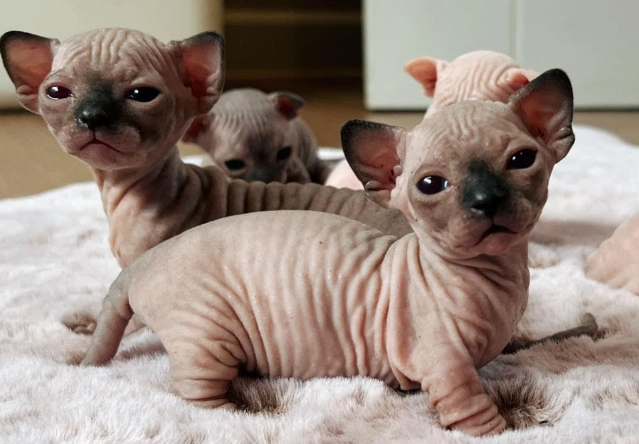
I remember the first time I met a Sphynx in person. It wasn't love at first sight, I'll be honest. I was at a friend's house, and this warm, velvety creature leaped onto my lap. It felt like a hot water bottle wearing a peach. It purred like a motorcycle and stared at me with these huge, lemon-shaped eyes. I was equal parts fascinated and slightly unnerved. That experience started a years-long journey of learning, and frankly, a bit of obsession, about these unique animals.
Owning a hairless cat isn't like owning a regular cat. It's a commitment to a specific, often high-maintenance, but incredibly rewarding lifestyle. This guide isn't going to sugarcoat it. We'll talk about the good, the bad, the oily, and the utterly charming. By the end, you'll know if a hairless feline is the right fit for your home.
Not Just the Sphynx: A Look at Hairless Cat Breeds
When people say "hairless cat," 99% of the time they're picturing the Sphynx. It's the poster child for the hairless phenomenon. But did you know there are other breeds out there? Some are recognized by major cat registries, others are newer or more regional. Knowing the differences matters, especially if you're looking at breeders.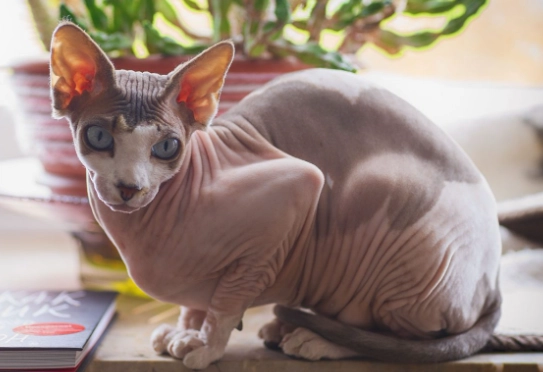
The Sphynx: The Classic Naked Cat
This is the one. Originating in Toronto, Canada in the 1960s from a natural genetic mutation, the Sphynx was developed through careful breeding. They're known for their wrinkled skin, large ears, and lean, muscular bodies that feel surprisingly heavy for their size. They have a prominent belly (often called a "pot belly") and a whip-like tail. Their personality is legendary: extroverted, clownish, dog-like in their devotion. They follow you from room to room, demand to be under the covers, and have zero concept of personal space. A Sphynx doesn't just live in your house; it becomes your shadow.
The Cat Fanciers' Association (CFA) and The International Cat Association (TICA) have strict breed standards for the Sphynx. If you're looking for a show-quality cat or want to understand the ideal type, checking their websites is a must. The CFA's Sphynx breed profile gives you the official lowdown on what breeders aim for.
Other Hairless and Nearly-Hairless Breeds
The Sphynx might be the star, but it's not the only player.
- Donskoy (Don Sphynx): Originating in Russia, the Donskoy's hairlessness is caused by a dominant gene, unlike the Sphynx's recessive gene. This means even with one hairless parent, some kittens can be born hairless. They often have more pronounced wrinkling and can be completely bald, with skin that feels like rubber.
- Peterbald: Also Russian, the Peterbald is a cross between a Donskoy and an Oriental Shorthair. They are elegant and slim with a wedge-shaped head. Their coat can range from completely bald ("ultra-bald") to a velour-like fuzz ("flock"), or even a short, straight coat ("brush").
- Bambino: A more recent and controversial cross between a Sphynx and a Munchkin (the short-legged cat). They are hairless and have short legs. It's crucial to note that creating dwarf cats is banned or heavily restricted in many countries due to potential health and mobility concerns. Do your research on the ethics before considering one.
- Elf Cat & Dwelf: Experimental breeds crossing Sphynx with American Curls (for the curled ears) and Munchkins. They are not recognized by major registries.
Here’s a quick comparison to keep them straight:
| Breed | Origin | Key Trait | Coat Type | Recognition (e.g., TICA) |
|---|---|---|---|---|
| Sphynx | Canada | Wrinkles, large ears, muscular | Bald to peach fuzz | Fully Recognized |
| Donskoy | Russia | Dominant hairless gene, very wrinkled | Often completely bald | Recognized in some registries |
| Peterbald | Russia | Svelte, Oriental-style body | Varies (bald, flock, brush) | Recognized in some registries |
| Bambino | USA | Hairless with short legs | Bald to peach fuzz | Experimental/Not Recognized |
My advice? Stick with the well-established, responsibly bred Sphynx or Peterbald if you want a predictable personality and better health guarantees.
What's It Really Like? The Hairless Cat Personality
Forget the aloof, independent cat stereotype. Throwing a hairless cat into that category is like calling a tornado "a bit of wind." The personality is the number one reason people fall for them, and also the number one reason some people get overwhelmed.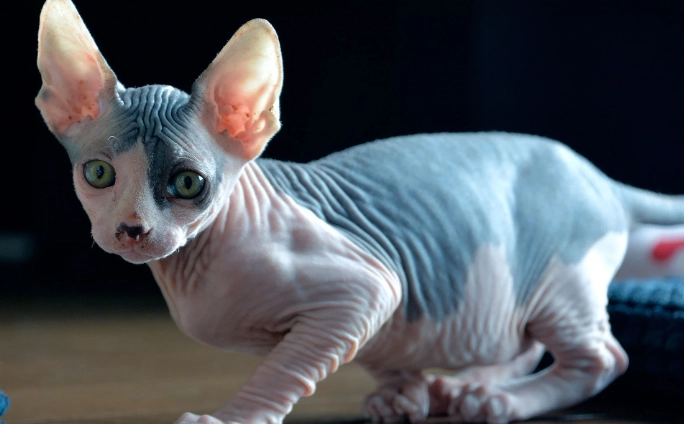
They are, in a word, needy. But in the best way. They crave constant warmth (because no fur) and constant interaction. You are their heater, their entertainer, their bed. A Sphynx left alone for long hours is often a miserable Sphynx. They are brilliant escape artists, not to run away, but to find you. I know an owner whose cat learned to open pocket doors to get into the bathroom with her.
- Energy Level: High. They have fast metabolisms to stay warm, which translates into zoomies, acrobatics, and a love for interactive toys.
- Intelligence: Very high. They learn tricks, open doors, and understand routines. Boredom is their enemy.
- Social Butterflies: They usually get along with other cats, dogs, and children. They see a guest as a new source of warmth and attention.
- Vocalization: They talk. Not always meows, but chirps, trills, and purrs you can hear from across the room.
If you want a pet that decorates your house and mostly ignores you, a hairless cat will be a profound disappointment. They are a participant, not a decoration.
The Care Routine: It's More Than Just No Brushing
This is the part that turns some people away. The care is intensive. No fur means their skin is directly exposed. They produce oils (sebum) that would normally be absorbed by fur. On a hairless cat, it builds up. Without a routine, you'll have a greasy, dirty cat that can develop skin problems and stain your furniture.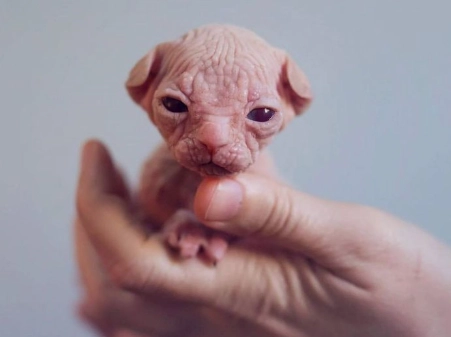
The Weekly (or Bi-Weekly) Bath
Yes, you have to bathe your cat. Most owners do it every 1-2 weeks. Use a gentle, hypoallergenic pet shampoo or one specifically for sensitive skin. Baby shampoo is often recommended, but some vets warn its pH isn't perfect for cats. I've had good luck with oatmeal-based shampoos. The key is to make it a calm, positive experience from kittenhood. Warm water, a non-slip mat, and lots of treats. They get cold fast, so have a warm towel ready to wrap them up in immediately.
Ears, Nails, and Eyes
Their large ears have no hair to protect them, so they produce a surprising amount of dark wax. Cleaning their ears with a vet-approved solution and a cotton ball is a weekly must. Their nails also need regular trimming, as the oil can build up under the nail sheaths. Some hairless cats have little to no eyelashes, making their eyes more prone to goopy discharge. A soft, damp cloth takes care of it.
The Clothing Debate
Sweaters. It's a whole thing. Some owners love dressing their cats up. The truth is, in a climate-controlled home, a healthy hairless cat doesn't need clothes to survive. However, they often seek out warm spots. A soft sweater in winter can make them more comfortable and save on your heating bill. If you do use clothes, they must be washed frequently as oils will soil them quickly.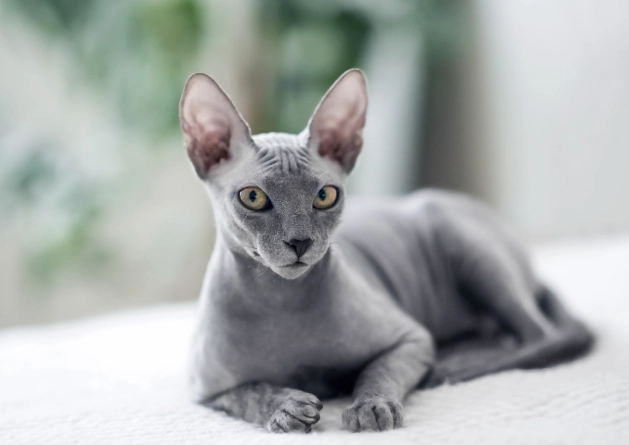
Health Considerations for a Hairless Cat
This is critical. The same gene that causes hairlessness can be linked to other health issues. Reputable breeders screen for these rigorously.
- Hypertrophic Cardiomyopathy (HCM): This is a serious heart condition prevalent in many cat breeds, including Sphynx. A responsible breeder will have echocardiograms performed on their breeding stock and provide you with proof. Never buy from a breeder who doesn't discuss HCM testing.
- Skin Conditions: They can be prone to yeast infections, sunburn, and acne (yes, cat acne on their chins). The regular bathing routine is your first defense.
- Higher Metabolism: They eat more than a furry cat of the same size to fuel their internal heating system. A high-quality, nutrient-dense diet is important. Some are prone to digestive sensitivities.
The best resource for understanding breed-specific health is often the breed club. The TICA Sphynx breed section and the Sphynx Breed Club can guide you to health information and ethical breeders.
Pet insurance. Get it. From day one.
The Big Question: Are Hairless Cats Hypoallergenic?
This is the million-dollar question, and the answer is frustrating: it depends.
Most cat allergies are not to cat hair, but to a protein called Fel d 1 found in cat saliva, skin, and sebaceous glands. When a cat grooms, the saliva (and the allergen) dries on the fur and becomes airborne. Since a hairless cat has little to no fur, there's less of a carrier for the allergen to stick to and shed around your house.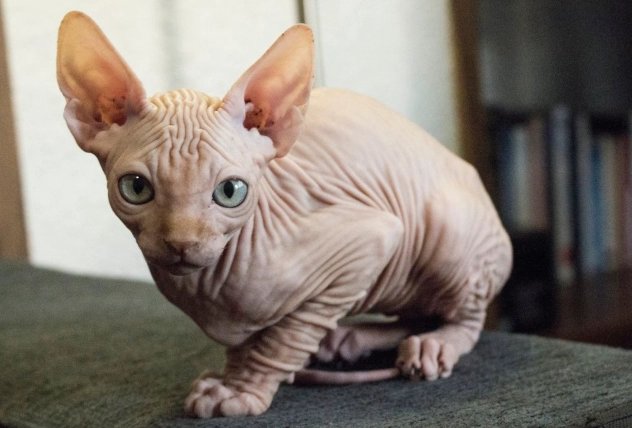
However, they still produce the allergen in their skin oils and saliva. In fact, because you have to handle them more (bathing, cuddling), you might be in more direct contact with the allergen. Some allergic people do great with a Sphynx. Others react just as badly.
There is no truly hypoallergenic cat. The only way to know is to spend several hours with one. Any breeder worth their salt will allow you to visit and see how you react before you commit.
Finding a Hairless Cat: Breeder vs. Rescue
This is where you need to be incredibly careful. The popularity of hairless cats has led to a surge in backyard breeders and scams.
Choosing a Reputable Breeder
A good breeder is your partner. They will:
- Ask you as many questions as you ask them.
- Welcome you to visit their home and meet the kittens and parents.
- Provide extensive health clearances for genetic conditions like HCM.
- Have a contract that includes a health guarantee and requires you to return the cat to them if you can't keep it.
- Keep kittens until they are at least 12-16 weeks old, fully weaned, vaccinated, and socialized.
- Be a member of a recognized cat registry like CFA or TICA.
The Canadian Cat Association (CCA), for example, has breeder directories and breed standards that can be a useful reference point, even internationally.
Considering Rescue
Yes, hairless cats end up in rescue. It happens more than you think. People get them for the look without understanding the care, or life circumstances change. Breed-specific rescues exist, and organizations like Petfinder sometimes list them. Adopting an adult cat has huge benefits: you know their exact personality and health history. It can be a wonderful, rewarding path.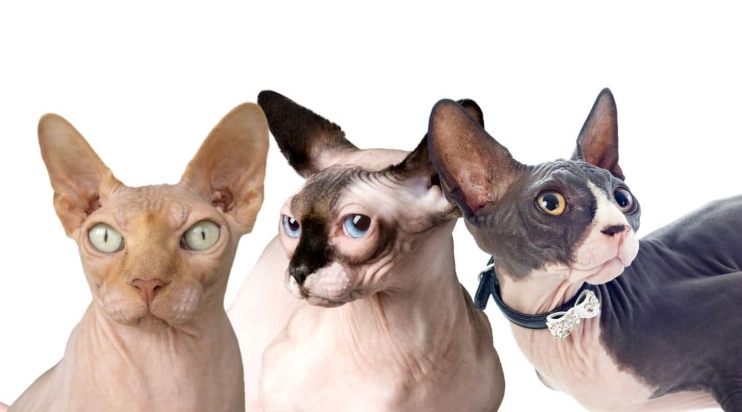
Your Hairless Cat FAQ (The Real Questions People Ask)
Let's tackle some of the stuff you're probably Googling at 2 AM.
Final Thoughts: Is a Hairless Cat Right for You?
Look, I love these weird, wonderful creatures. But I wouldn't recommend one to everyone. They are a lifestyle.
You should get a hairless cat if: you want a deeply interactive, affectionate, and entertaining companion; you are home a lot or have other pets for company; you are committed to a regular grooming routine; you have the financial means for potential higher vet costs; and you've done the homework on health.
You should reconsider if: you are rarely home; you want a low-maintenance pet; you are on a tight budget; you are squeamish about ear cleaning or skin oils; or you are getting one purely for the "cool factor" without understanding the work involved.
Living with a hairless cat is messy, sometimes expensive, and always an adventure. But for the right person, the trade-off is a bond that's hard to describe. It's a warm, purring, naked little soul that thinks you're the center of the universe. And honestly, that's a pretty good deal.
Do your research. Meet some in person. Talk to owners and breeders. The decision to bring any pet home is big, but with a hairless cat, it's especially important to go in with your eyes wide open. Good luck!




Comments
Leave a Comment