Inside This Story
- Meet the Snail That's Part Ironclad, Part Alien
- Why Is the Scaly-Foot Snail So Ridiculously Rare?
- Quantifying the Rarity: Numbers, Status, and Comparisons
- The Looming Storm: Why "How Rare" Is Turning into "How Long Left"
- Is There Hope? Conservation Status and What's Being Done
- Your Questions, Answered (The Scaly-Foot Snail FAQ)
You know, I was scrolling through some weird animal facts the other day (a favorite pastime of mine) and stumbled across a picture of this thing. It looked like a tiny, armored knight from a fantasy novel, not a snail. The scaly-foot snail, or Chrysomallon squamiferum if you want to get fancy. The caption just said "one of the rarest creatures on Earth." That got me thinking. We hear that phrase a lot, don't we? "Rare." For the panda, it means a few thousand. For some birds, it might mean a few hundred. But for a creature living two miles underwater, what does "rare" even mean? How rare is the scaly-foot snail, really? I decided to dive in—figuratively, of course—and what I found is a story that's way more fascinating, and concerning, than I expected.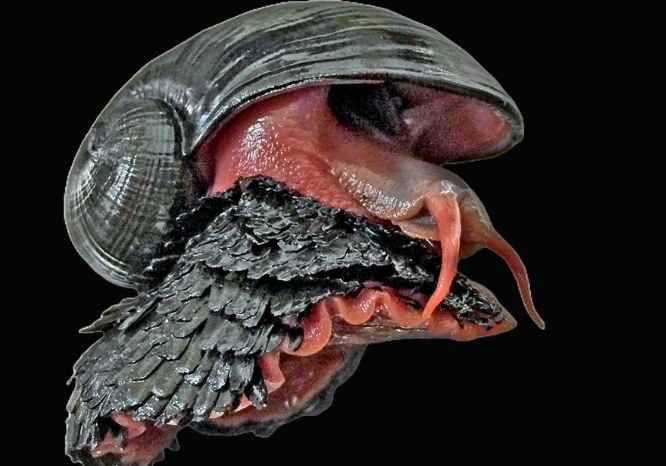
It's not just about counting individuals. Asking "how rare is the scaly-foot snail?" opens a door to a world of extreme biology, geopolitical mining interests, and the fundamental challenge of protecting something we can barely even visit. Let's get into it.
Meet the Snail That's Part Ironclad, Part Alien
Before we can talk about rarity, you have to understand what this thing is. Calling it a snail feels almost insulting. Discovered in 2001 near hydrothermal vents in the Indian Ocean, it's a complete oddball. Its most famous feature? Its foot—the squishy part most snails glide on—is covered in hard, mineralized scales made of iron sulfides. That's right. It literally incorporates iron from its environment into its body armor. Scientists call this biomineralization, and in this case, it's like the snail is forging its own suit of plate mail. No other animal on Earth is known to do this with iron sulfides.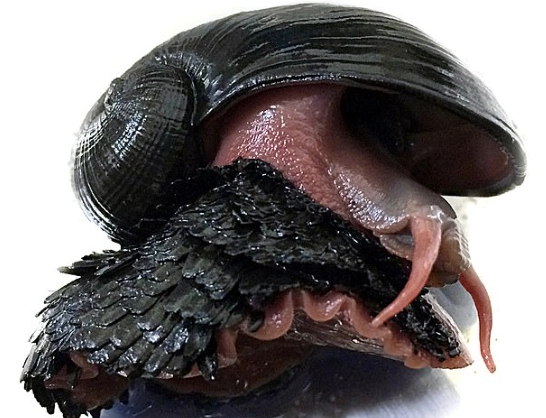
Its shell is also a three-layer composite, with an iron sulfide outer layer, a shock-absorbing organic middle, and a calcified inner layer. It's a masterpiece of natural engineering, built to withstand the predators and pressures of the deep.
And what a deep it is. It lives exclusively around hydrothermal vents—those cracks in the seafloor where superheated, mineral-rich water spews out, creating oasis-like ecosystems in the perpetual darkness. The water pressure is crushing, temperatures can swing from near freezing to over 300°C (572°F) in just inches, and the water is toxic with hydrogen sulfide and heavy metals. For most life, it's hell. For the scaly-foot snail, it's home. This extreme specialization is the first big clue to its rarity.
Fun (and telling) fact: The snail doesn't have a functioning digestive system in the traditional sense. It hosts symbiotic bacteria in a special gland. These bacteria chemosynthesize energy from the vent fluids, essentially farming food for the snail from toxic chemicals. The snail is utterly, completely dependent on the vents. No vents, no snail.
Why Is the Scaly-Foot Snail So Ridiculously Rare?
So, back to our core question: how rare is the scaly-foot snail? The answer lies in a perfect storm of limiting factors. It's not just one thing; it's a cascade of them that makes this creature exceptionally vulnerable.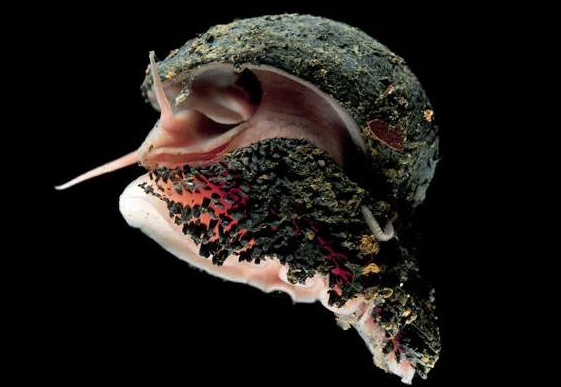
1. The Real Estate Problem: Hyper-Specific Habitat
Think of hydrothermal vents as islands. Not tropical, sandy islands, but dark, smoky, deep-sea islands. They are scattered, isolated, and transient. A vent field might be active for a few decades before it shuts off, dooming the entire local ecosystem. The scaly-foot snail is only known from three vent fields in the entire world: the Kairei and Longqi fields in the Indian Ocean's Central Ridge, and the Solitaire field. That's it. Three spots.
I tried to find a good analogy. It's like if the entire global population of a bird species lived in three specific, small parks in different continents, and those parks could suddenly vanish. The snail's entire existence is tied to these fragile, ephemeral hotspots. This is the single biggest reason for its scarcity.
2. A Body Built for One Job (and One Job Only)
All that amazing adaptation—the iron scales, the specialized shell, the bacterial symbionts—comes at a cost. It's a masterpiece of evolution, but it's not a flexible design. This snail is a hyper-specialist. It can't just pick up and move to a new neighborhood if things get tough. It can't survive in cooler, less toxic waters. Its larvae, which drift in the currents, must somehow find another active, suitable vent to settle on. In the vast, open ocean, that's like winning the lottery with worse odds.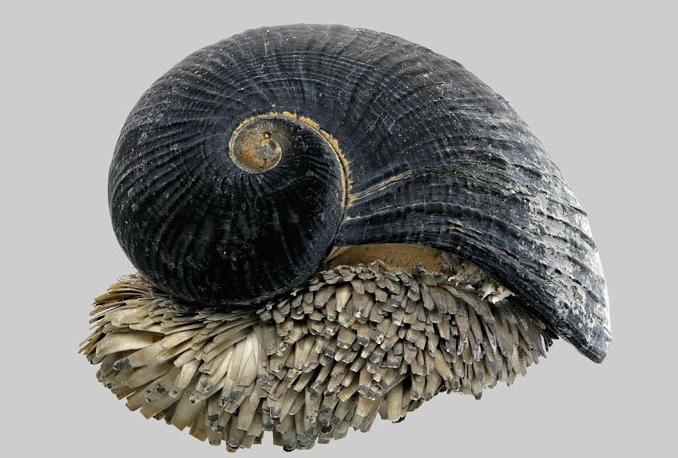
Some researchers think its populations are naturally small and isolated, even when a vent is healthy. They aren't packed in like sardines. Finding a mate in the dark, under immense pressure, can't be easy. Their reproduction rate isn't fully understood, but it's likely not high. When you combine low population density with catastrophic habitat risk, you get a textbook definition of rarity.
3. The "We Just Don't Know" Factor
Here's the frustrating part for scientists and conservationists. We have a brutally hard time getting down there. Submersibles and ROVs (Remotely Operated Vehicles) are incredibly expensive to run. Missions are rare. So, our population data is based on a handful of visits, photos, and samples. We can make estimates, but a precise census? Forget it.
We don't know exactly how long they live. We have limited data on their full life cycle. We're making educated guesses about their connectivity between vent fields. This knowledge gap itself is a component of their rarity—they are rare in our understanding, which makes protecting them even trickier.
So, how rare is the scaly-foot snail? It's rare by habitat, rare by design, and rare by our own ignorance.
Quantifying the Rarity: Numbers, Status, and Comparisons
Alright, let's try to put some numbers to this feeling of extreme scarcity. While we lack a precise headcount, the scientific and conservation community has made strong assessments.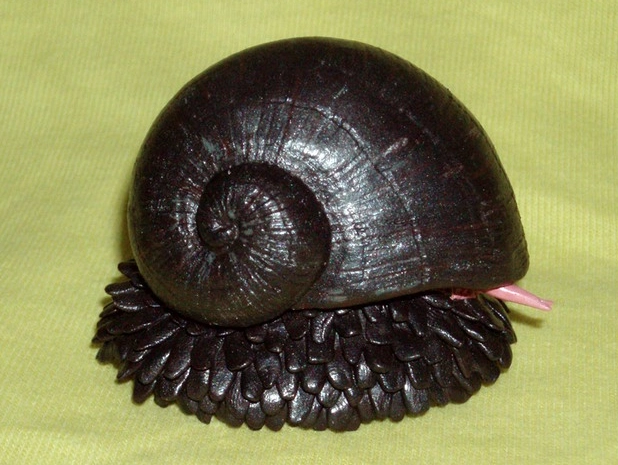
The International Union for Conservation of Nature (IUCN), the global authority on species conservation status, has listed the scaly-foot snail as Endangered. Their assessment is a must-read for anyone serious about this topic. You can find the official IUCN Red List entry for Chrysomallon squamiferum here. They cite its extremely restricted range (less than 0.02 km² across the three known sites), the threat of deep-sea mining, and the inherent vulnerability of vent ecosystems as the key reasons.
The Population Estimate: While not a firm number, experts working from submersible survey data suggest the total global population likely numbers in the low thousands, possibly even the high hundreds of mature individuals. When you consider those individuals are split across three isolated sites, each sub-population is terrifyingly small. A single event could wipe out one of them entirely.
To give you a sense of scale, let's compare it to other famously rare animals. This isn't to make a competition, but to frame the snail's situation.
| Animal | Estimated Mature Population | Primary Threat | IUCN Status |
|---|---|---|---|
| Scaly-foot Snail | Likely 1,000 - 5,000* | Deep-sea mining, habitat fragility | Endangered |
| Javan Rhino | ~76 | Poaching, habitat loss | Critically Endangered |
| Vaquita (Porpoise) | ~10 | Bycatch in illegal gillnets | Critically Endangered |
| Sumatran Orangutan | ~14,000 | Deforestation | Critically Endangered |
| Giant Panda | ~1,800 | Historical habitat loss | Vulnerable |
*Expert estimate based on available survey data. The key difference? We can see, track, and theoretically protect a Javan Rhino on land. The snail's entire world is invisible to us and under imminent threat from an industry we're just starting to regulate.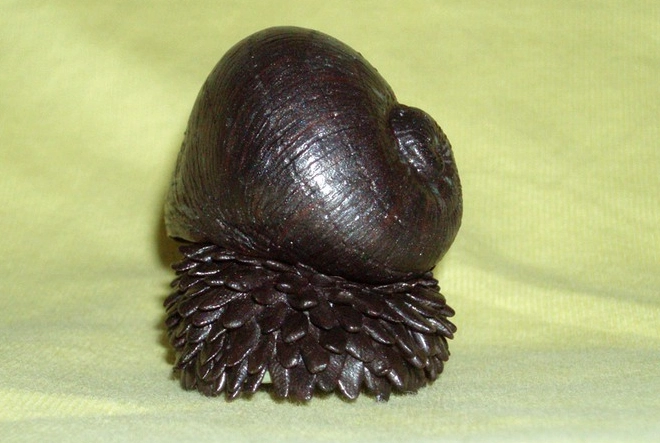
The Woods Hole Oceanographic Institution, a leader in ocean science, has fantastic resources on hydrothermal vent ecosystems. Their work helps us understand the context of the snail's home. You can explore their public research on the WHOI website to learn more about the challenges of deep-sea exploration.
The Looming Storm: Why "How Rare" Is Turning into "How Long Left"
If the snail's natural situation is precarious, the human-made threats are like a tsunami heading for its already tiny islands. This is where the conversation gets urgent.
The single greatest threat to the scaly-foot snail is deep-sea mining. The very vents it calls home are rich in polymetallic sulfides—deposits containing copper, zinc, gold, and silver. For mining companies, these are untapped resources. For the snail, they are its living room, kitchen, and nursery.
Mining a hydrothermal vent would be an act of complete destruction. Imagine a giant machine grinding the entire vent structure to dust, sucking up the material, and pumping sediment-laden water back into the area. It would:
- Instantly annihilate the entire local population of scaly-foot snails and every other vent-endemic species.
- Smother nearby areas in sediment, likely killing anything that survived the initial destruction.
- Alter the chemical composition of the water, making it impossible for new vent communities to establish, even if the vent remained geologically active.
And here's the kicker: one of the three known habitats for the snail, the Longqi vent field (also known as Dragon's Breath), is already under exploration license for potential mining. It's not a future "maybe." It's a present-day reality. The International Seabed Authority (ISA) is the body that regulates this, and the debates are fierce. You can follow the official proceedings and regulations on the ISA's official website.
Other threats are almost secondary but still matter:
- Scientific Collection: Ironically, the very act of studying it requires taking specimens. The scientific community is now hyper-aware of this and practices extreme caution, taking the absolute minimum needed. But early on, more were collected than might be ideal.
- Climate Change: This might alter deep ocean currents and chemistry in ways we don't yet understand, potentially affecting the delicate vent ecosystems from afar.
Is There Hope? Conservation Status and What's Being Done
So, is it all doom and gloom? Not entirely. The snail's incredible story and stark vulnerability have made it a poster child for deep-sea conservation. It's forcing conversations we desperately need to have.
Its "Endangered" listing on the IUCN Red List is a huge deal. It was the first species whose assessment was based entirely on the threat of deep-sea mining, setting a precedent. This status gives conservationists a powerful tool in legal and policy arguments.
Some scientists and NGOs are pushing for the vent fields it inhabits to be designated as "Areas of Particular Environmental Interest" (APEIs) or full marine protected areas, which would place them off-limits to mining. Progress is slow, bogged down in international law and economic interests, but the pressure is building.
There's also a fascinating proposal: could we "farm" or cultivate these snails in controlled laboratory settings? The challenges are monumental—recreating the extreme pressure, chemistry, and temperature of a hydrothermal vent on land. But as a last-ditch conservation effort, it's being discussed. It's a Hail Mary pass, but when you're talking about a species this unique, you consider all options.
Public awareness is key. The more people ask "how rare is the scaly-foot snail?" and learn about its plight, the harder it becomes for decisions to be made in the dark. Organizations like the NOAA Office of Ocean Exploration and Research are crucial in this public education mission. Their footage and findings help bring the deep sea to life. Check out their incredible image and video galleries to see deep-sea vents for yourself on the NOAA Ocean Exploration site.
Your Questions, Answered (The Scaly-Foot Snail FAQ)
I've been reading forums and questions people have. Here are some of the most common ones that pop up alongside "how rare is the scaly-foot snail?"
- Stay informed and share. Talk about it. Share articles (like this one!). The more people know this strange, iron-clad snail exists and is in trouble, the better.
- Support reputable marine conservation organizations that are involved in deep-sea policy and research.
- Be a conscious consumer. The metals targeted by deep-sea mining (copper, cobalt for batteries) are in high demand. Supporting recycling, a circular economy, and companies committed to responsible sourcing reduces the pressure to mine the deep sea.
In the end, the scaly-foot snail is more than just a rare animal. It's a test case.
It forces us to ask: What value do we place on life that offers us no direct, obvious benefit? How do we manage the global commons of the deep ocean? Is short-term resource extraction worth the permanent loss of biological wonders we are only beginning to comprehend?
When you ask "how rare is the scaly-foot snail?" you're not just asking for a number. You're asking about our relationship with the last true wilderness on our planet. Its rarity is a warning, and its incredible biology is a reminder of what we stand to lose in the dark, silent depths.
I, for one, hope we listen.

Comments
Leave a Comment