Quick Guide to This Deep Dive
- The Straight Facts: Shell Size and Body Dimensions
- Why Are They This Size? It's All About the Vent Life
- From Baby to Adult: How They Grow (It's Not Fast)
- Putting Them on the Scale: Size Comparison with Other Snails
- Your Questions Answered: Scaly-Foot Gastropod Size FAQ
- Why Getting the Size Right Matters: Conservation and Understanding
- A Quick Recap: The Size of Scaly Footed Gastropods in a Nutshell
You know, when I first saw a picture of the scaly-footed gastropod, my brain just sort of short-circuited. It looked like something a fantasy artist would dream up for a video game boss, not a real creature living in our oceans. The name alone is a mouthful – Chrysomallon squamiferum – but most folks just call it the scaly-foot snail or the iron-plated snail. And the first question that popped into my head, and probably yours too, was a simple one: just how big is this thing?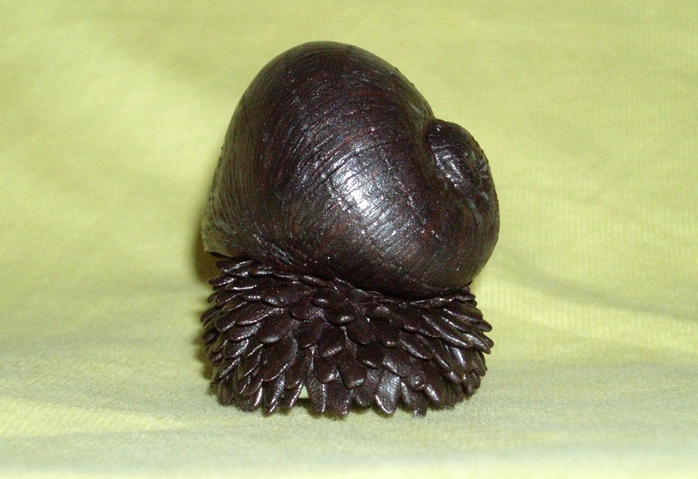
It's funny, because when you hear about a snail with a foot covered in iron sulfide scales, you might imagine some monstrous, tank-sized beast lumbering across the seafloor. The reality, as it often is in nature, is a lot more nuanced and, in my opinion, way more fascinating. The size of scaly footed gastropods isn't just a random number; it's a story written by the extreme pressures, temperatures, and chemical weirdness of their deep-sea home.
But that number alone doesn't tell you much, does it? It's like saying a car is 5 meters long without mentioning if it's a smart car or a limousine. To really understand how big scaly footed gastropods are, we need to put them in context, see what factors make them that size, and maybe bust a few myths along the way. I've spent a good chunk of time sifting through research papers and expedition reports (some of them are pretty dry reading, I won't lie) to piece this together for you.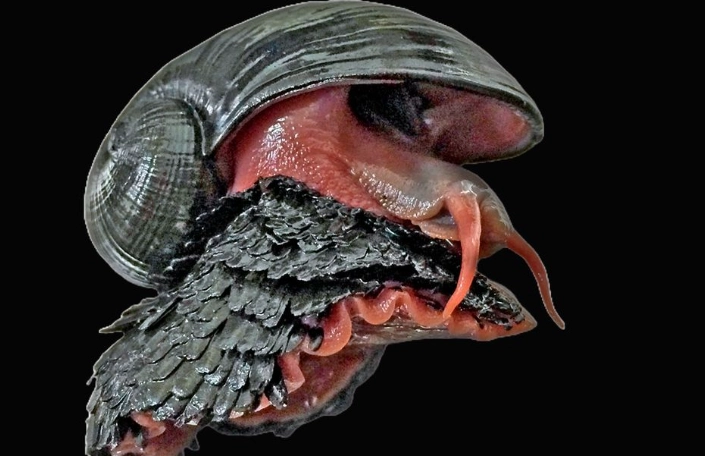
The Straight Facts: Shell Size and Body Dimensions
Alright, let's get specific. When scientists talk about snail size, they usually measure the shell. For Chrysomallon squamiferum, the shell is globose – meaning round and ball-like – and pretty thick. It's their primary house and first line of defense.
Average Size Range:
- Shell Width (Diameter): The most common measurement you'll find. It ranges from about 30 mm to 45 mm (1.2 to 1.8 inches) for a fully mature adult. The largest reliably measured specimens hover around that 45mm mark.
- Shell Height/Length: Slightly less than the width, usually between 25 mm and 40 mm.
- Foot & Scale Coverage: The fleshy foot, which is where those famous iron-sulfide (greigite) scales are embedded, can extend beyond the shell when the snail is moving. The scale-covered area itself might be around 20-30 mm across. The scales themselves are tiny, often less than a millimeter in size, but there are hundreds of them forming that legendary armor.
I remember reading one paper that described finding populations with slightly different average sizes at different hydrothermal vent fields. It wasn't a huge difference, but it suggests their environment plays a direct role. The snails at the Kairei vent field in the Indian Ocean might have a slightly different growth pattern than those at the Longqi field. It's details like this that make marine biology so cool.
So, how big are scaly footed gastropods compared to things you know? Think about a standard ping-pong ball (40mm). An average scaly-foot is in that ballpark. It's smaller than a tennis ball, but definitely larger than a marble. This is a useful mental image because it immediately corrects the assumption that such an extraordinary animal must be physically huge.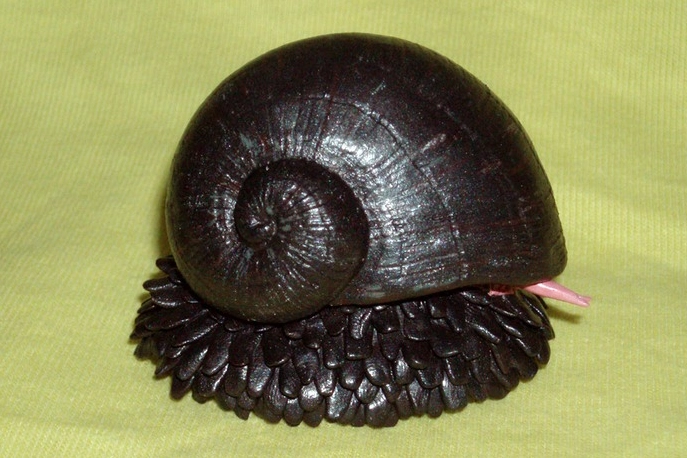
Why Are They This Size? It's All About the Vent Life
This is where it gets interesting. The size of scaly footed gastropods isn't an accident. It's a perfect adaptation to one of the most hostile environments on Earth. Living around deep-sea hydrothermal vents, at depths of over 2,400 meters (that's about 1.5 miles down!), comes with a unique set of rules.
Energy is the big dictator. These snails don't eat food in the traditional sense. They have a symbiotic relationship with bacteria living in a special organ in their body. These bacteria chemosynthesize energy from the hydrogen sulfide spewing out of the vents. It's a brilliant but highly specialized and localized food source. There's only so much energy to go around in these vent plumes. Growing to a massive size would require more energy than this system can reliably provide. A golf-ball-sized body is likely the sweet spot – large enough to host the necessary symbiotic bacteria and develop strong defenses, but not so large that it becomes energetically unsustainable.
Pressure and Buoyancy play a subtle role too. At those depths, the pressure is crushing. Having a robust, moderately-sized, globose shell is a great shape to resist that pressure. A larger, more elaborate shell might be a structural liability.
Competition and Predation are different down there. The ecosystem is sparse but intense. Their main predators are probably other vent-endemic species like crabs and other snails. Their size, combined with that iron-armored foot and a door on their shell (the operculum), creates a formidable defensive package. Being bigger might not offer a significant survival advantage against the specific threats they face. In fact, being more compact might make it easier to hunker down and seal themselves in completely.
Honestly, when you think about it, their size is a masterpiece of evolutionary efficiency. Every millimeter seems optimized for the vent lifestyle.
From Baby to Adult: How They Grow (It's Not Fast)
Nobody has raised one of these from birth in a lab (the conditions are nearly impossible to replicate), so our understanding of their growth comes from comparing individuals of different sizes collected from the wild. It paints a picture of a slow-growing animal.
Juvenile scaly-footed gastropods start incredibly small, likely just a millimeter or two when they settle onto the vent rock after their larval stage. Their growth is tied directly to the success of their symbiotic bacteria. They probably spend years, possibly even decades, slowly accumulating layers to their shell and developing their scale armor to reach that final golf-ball dimension.
Here’s a rough breakdown of what we think the growth stages look like, based on size classifications from research:
| Life Stage | Approximate Shell Width | Key Features & Notes |
|---|---|---|
| Larva (Pelagic) | Microscopic | Free-swimming, dispersing to find new vents. No shell or scales yet. |
| Newly Settled Juvenile | 1 - 5 mm | Tiny, thin shell. Beginning to establish symbiosis with bacteria. Scales barely forming. |
| Developing Juvenile | 5 - 20 mm | Shell thickening. Scale coverage on the foot becomes visible and more organized. |
| Sub-Adult | 20 - 30 mm | Approaching adult form. Shell is robust, scale armor is well-developed but the snail may not be fully mature/reproductive. |
| Mature Adult | 30 - 45 mm | Full size. Thick, globose shell. Dense iron sulfide scale armor on the foot. Actively reproducing. |
The takeaway? Reaching the full size of a scaly footed gastropod is a long, slow journey in the deep.
Putting Them on the Scale: Size Comparison with Other Snails
To truly grasp how big scaly footed gastropods are, let's line them up against some other well-known gastropods. This is where a simple measurement becomes a story.
- Vs. Your Common Garden Snail: A large garden snail (Helix aspersa) might have a shell 25-40 mm wide. Surprise! They're actually quite comparable in shell size. The scaly-foot isn't bigger; it's just built differently – way thicker and heavier, with that insane biological armor.
- Vs. The Giant African Land Snail: Now here's a giant. Lissachatina fulica can have a shell over 180 mm long. Compared to that, our deep-sea iron snail is a dwarf. This highlights how evolution in resource-rich, stable land environments can favor gigantism, while the extreme, energy-limited vent environment favors robust, medium-sized specialists.
- Vs. Other Deep-Sea Vent Snails: Even within its own weird neighborhood, the scaly-foot holds its own. The "white scaly-foot" (Chrysomallon squamiferum has a black shell morph; there's a white-shelled relative) is similar in size. Other vent snails, like some species of Alviniconcha or Ifremeria, can be larger, sometimes exceeding 50-60 mm. So, while the scaly-foot is notable, it's not the absolute largest snail on the block down there. Its claim to fame is its material science, not its dimensions.
Your Questions Answered: Scaly-Foot Gastropod Size FAQ
I've been reading forums and questions people post online about these creatures. Here are some of the most common ones related to their size, with my best shot at clear answers.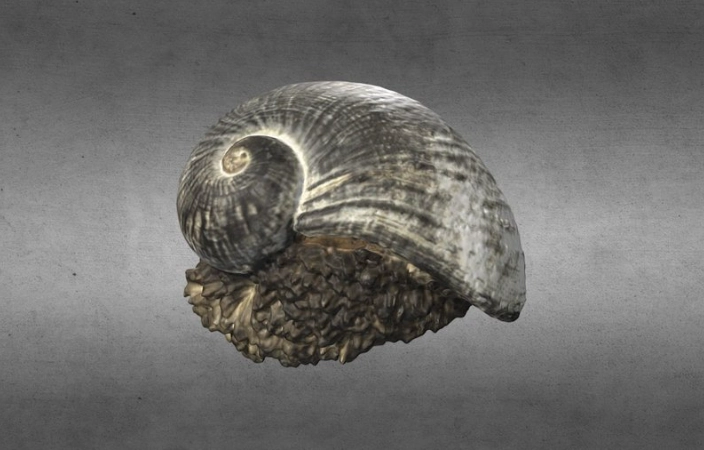
Can scaly footed gastropods get bigger than a golf ball?
The largest confirmed specimens are right around 45 mm in shell width. While there might be rare outliers, the biological and environmental constraints of their hydrothermal vent habitat make it extremely unlikely for them to grow significantly larger. The energy just isn't there to support it. So, no, you won't find a softball-sized one.
Are they the biggest deep-sea snail?
Nope, they're not. While certainly one of the most famous, other gastropods from chemosynthetic environments (like cold seeps and other vent systems) can grow larger. The scaly-foot's size is impressive for its specific niche, but it doesn't hold the deep-sea size record.
How does their size help them survive?
Their medium, compact size is a survival toolkit. It's large enough to: 1) host a substantial population of life-giving symbiotic bacteria, 2) support the development and maintenance of their heavy mineral armor, and 3) be difficult for small predators to handle. Yet, it's small enough to: 1) be energetically feasible in a food-limited environment, 2) allow them to retreat fully into their strong shell and seal the opening, and 3) be stable in the turbulent flows near vent chimneys.
Why don't they grow bigger if they have such strong armor?
Armor is expensive to make! Those iron sulfide scales aren't free. They require sulfur and iron, which the snail has to process and secrete. Growing a larger body would require exponentially more resources for both the armor and the basic tissue. In the precarious balance of vent life, the cost would likely outweigh the benefit. Evolution has settled on the most efficient size.
Why Getting the Size Right Matters: Conservation and Understanding
This might seem like a nerdy detail, but accurately knowing how big scaly footed gastropods are is crucial for scientists. When you're assessing a population from submersible video or collected samples, size distribution data tells a story. A population with lots of small, young snails might be newly established or recovering. A population with only large adults might be old and not reproducing well.
Given that hydrothermal vent ecosystems are threatened by potential deep-sea mining, understanding the basic biology – including growth rates and maximum size – is essential for conservation. The International Union for Conservation of Nature (IUCN) has listed Chrysomallon squamiferum as Endangered on its Red List. You can read their detailed assessment, which includes notes on its biology, on the IUCN Red List website. Knowing that they are slow-growing, medium-sized animals makes their vulnerability even clearer. They can't quickly repopulate an area if it's damaged.
Furthermore, their unique size and structure are a goldmine for biomimetic research. Engineers studying their iron-coated scales for new types of armor or their shell structure for lightweight, pressure-resistant materials need precise physical measurements. A vague idea of size isn't good enough. You can explore some of the fascinating research into their iron sulfides through resources like the Smithsonian Ocean Portal, which often features articles on deep-sea discoveries.
A Quick Recap: The Size of Scaly Footed Gastropods in a Nutshell
Let's wrap this up with a simple list of the key takeaways about the size of these incredible animals:
- Typical Adult Size: Shell width of 30-45 mm (golf ball range). Shell length of 25-40 mm.
- Not a Giant: They are medium-sized. Their fame comes from their unique iron-sulfide armor, not from being enormous.
- Growth is Slow: They likely take many years to reach full size in the harsh, energy-limited deep-sea vent environment.
- Size is an Adaptation: Their specific dimensions are a perfect balance between defense, energy needs, and the physical demands of high-pressure, hydrothermal vent life.
- Comparative Size: They are similar in shell size to a large garden snail, but much smaller than giant land snails. Other deep-sea snails can be larger.
So, the next time someone asks you, "Hey, how big are those scaly footed gastropods anyway?" you can tell them. They're about the size of a golf ball, but pound for pound, they're one of the toughest, most extraordinary animals in any ocean. Their size is a perfect lesson in how evolution crafts life to fit a specific, extreme niche – not through sheer scale, but through brilliant, efficient design.
If you're hungry for more technical details, the original species description and many follow-up studies are published in scientific journals. Repositories like the PubMed Central (PMC) database often have open-access papers. Also, the National Oceanic and Atmospheric Administration (NOAA) frequently shares findings from deep-sea exploration missions that shed light on vent creatures like this one.
Hope this deep dive helped satisfy your curiosity. The deep sea is full of wonders that constantly reset what we think is possible in nature, and the scaly-foot gastropod is a shining, iron-clad example.



Comments
Leave a Comment