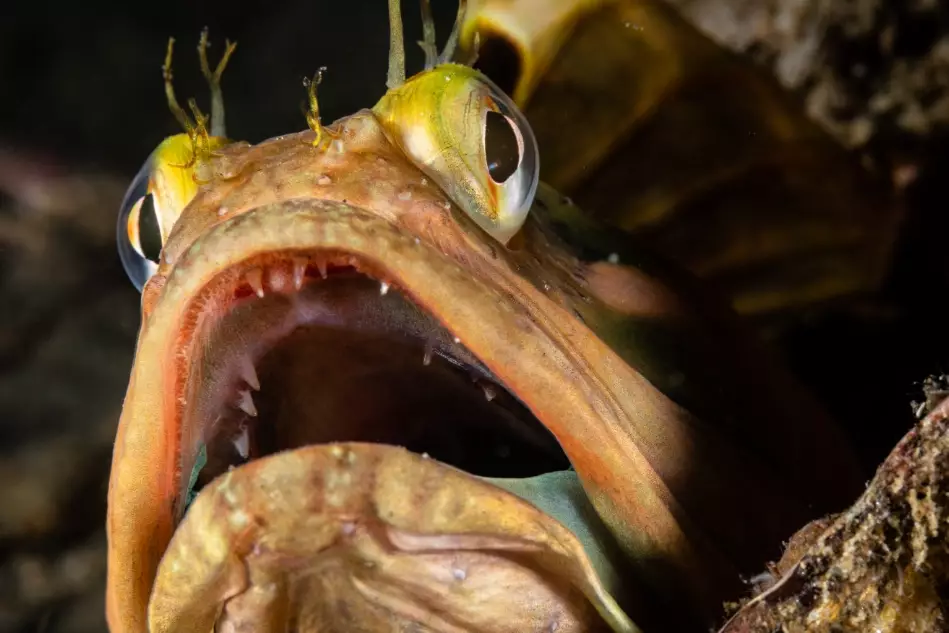
Let's cut straight to the point. The sarcastic fringehead (*Neoclinus blanchardi*) is a small, bizarre-looking fish that's famous for its massive, extendable mouth and aggressive territorial displays. But behind all that theatrical bravado lies a simple, fundamental need: to eat. So, what's on the menu for this pugnacious little creature of the Pacific? It's not just about listing prey items. To truly understand what a sarcastic fringehead eats, you need to step into its world—a dark, cramped home on the seafloor where every meal is an ambush waiting to happen.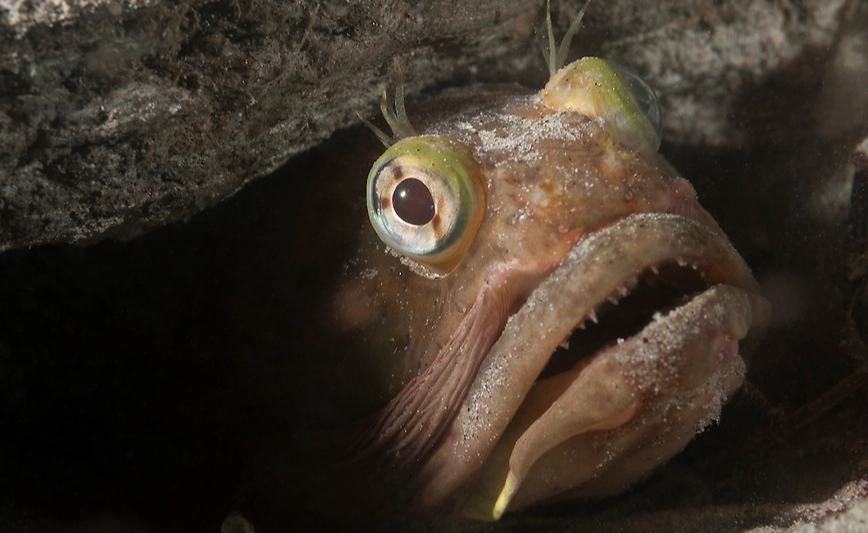
Quick Navigation
Where Do Sarcastic Fringeheads Live and Hunt?
You can't talk about diet without talking about address. The sarcastic fringehead is a benthic dweller, meaning it lives on the ocean floor. Its range stretches from San Francisco, California, down to central Baja California in Mexico. They favor sandy or muddy bottoms, but here's the critical detail—they are almost never found roaming freely.
These fish are obligate cavity dwellers. They spend their entire adult lives inside a protective shelter, with only their heads poking out. That shelter is their entire universe: their home, their fortress, and their hunting blind.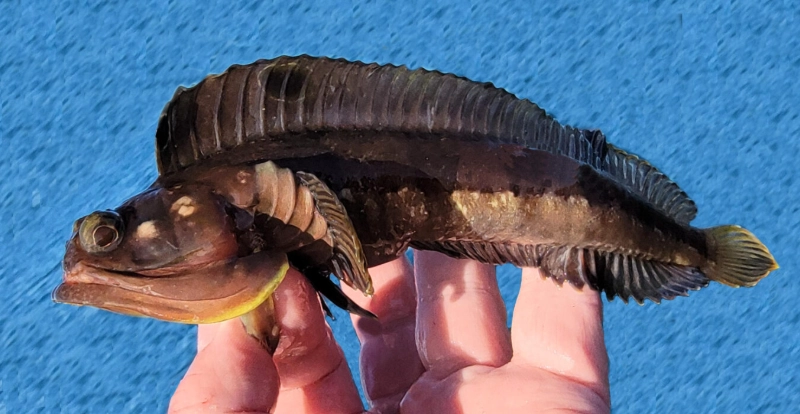
- Abandoned Shells: Empty giant barnacle shells or snail shells are prime real estate.
- Rock Crevices: Natural fissures in rocky outcrops or reefs.
- Human Debris: Bottles, cans, or any other junk that creates a hollow space on the seabed. They're not picky landlords.
- Burrows: Sometimes they'll take over burrows made by other creatures, like worms or clams.
This sedentary lifestyle dictates everything about their feeding strategy. They aren't built for pursuit. They're built for the quick-draw ambush. Think of them not as roaming wolves, but as trapdoor spiders of the sea. Their world is about a square foot in front of their face. What swims, crawls, or stumbles into that zone is potential dinner.
The Ambush Master: How Do They Catch Their Food?
Their famous mouth isn't just for show in territorial fights. It's their primary fishing net and weapon. The mechanics are brutally efficient.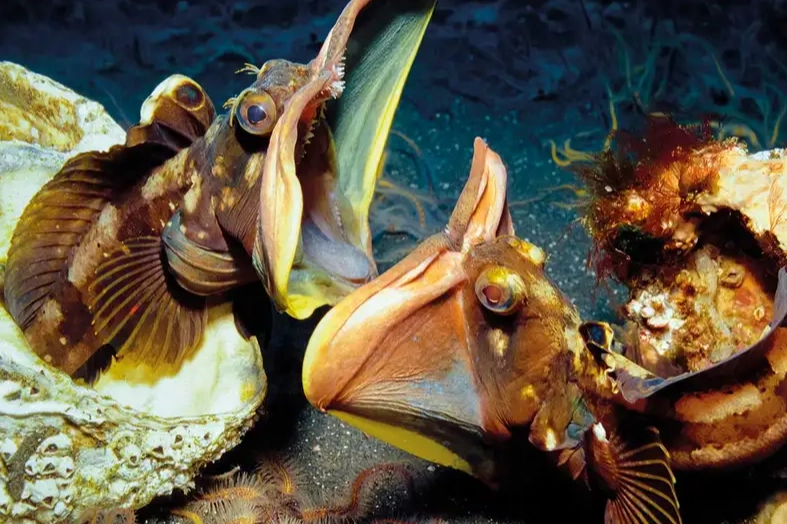
The fringehead lies in wait, perfectly camouflaged against the opening of its lair. Its body is mottled brown and olive, blending with the surrounding sediment and shell. It remains motionless, conserving energy. When an unsuspecting animal—a small crab, a shrimp, a worm—ventures too close, the strike is instantaneous.
The Lightning Strike
The jaw mechanism is a marvel of biomechanics. Muscles snap the jaws open to an incredible width, often wider than the fish's own body. This creates a sudden vacuum, sucking water and the prey item directly into the mouth. The entire action takes milliseconds. There's no chase, no struggle. One moment the prey is going about its business, the next it's gone.
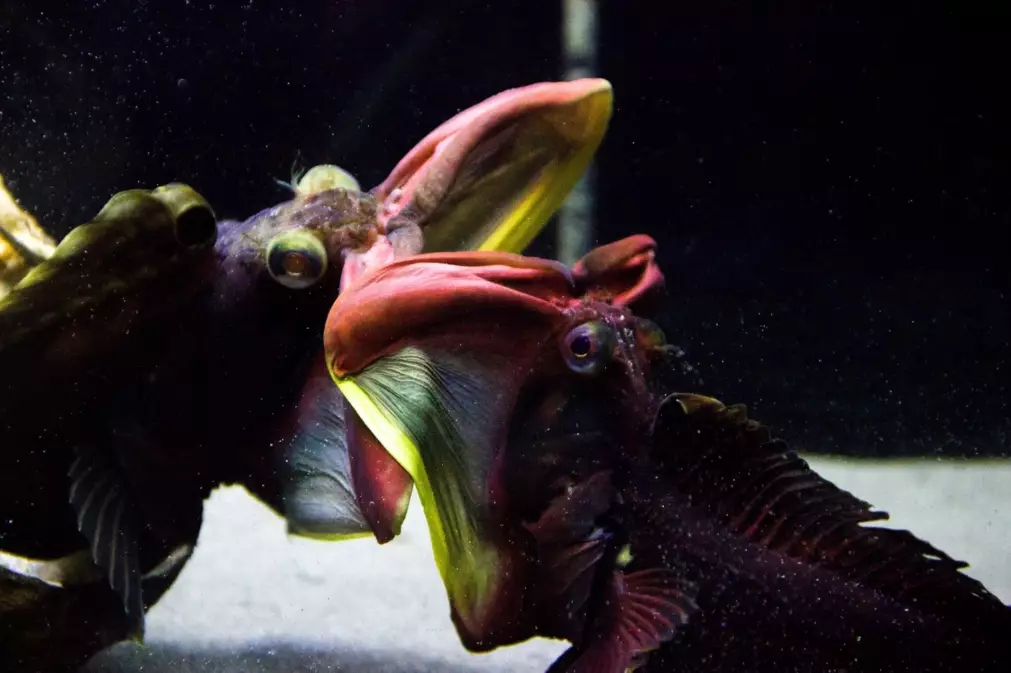
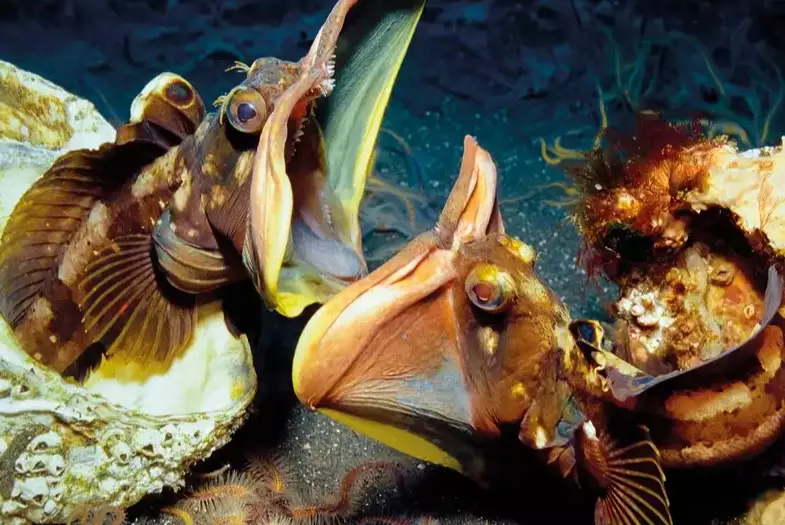
This is where a common misconception pops up. People see videos of two fringeheads in a gaping display battle and assume they eat other fish of similar size. That's almost never the case in the wild. Those displays are about intimidation and territory defense, not feeding. Their actual prey is much smaller relative to their mouth size.
Patience Over Power
A fringehead's success hinges on patience. They can go days without a successful strike. Their metabolism is relatively low, an adaptation to this feast-or-famine, wait-and-snap lifestyle. I've spent hours watching them on dives off the coast of Southern California, and the sheer boredom of their existence, punctuated by split-second violence, is fascinating. They don't "hunt" in the active sense; they are the trap.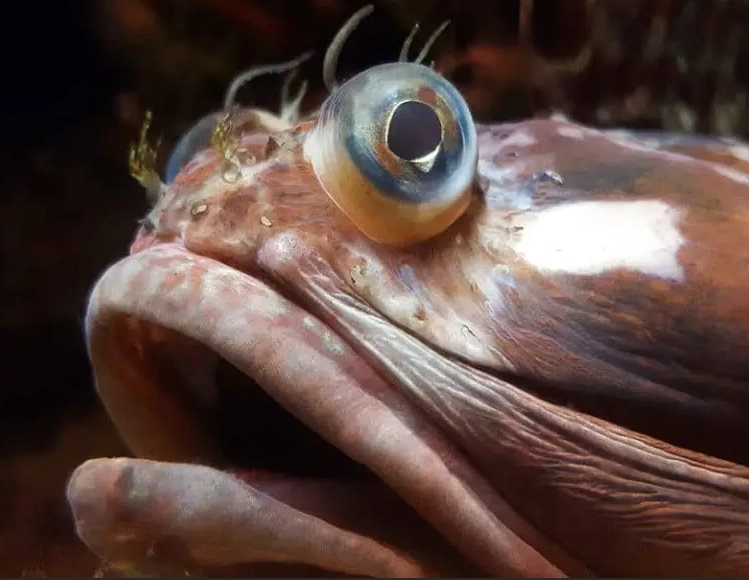
Primary Prey: What's Actually on the Fringehead's Plate?
Now, to the specific menu. Stomach content studies and direct observations (like those documented by researchers at the Monterey Bay Aquarium and in scientific papers from Scripps Institution of Oceanography) paint a clear picture. The sarcastic fringehead is an opportunistic carnivore with a strong preference for benthic invertebrates—creatures that live on or in the seafloor.
Their diet is less about species and more about size and availability. Anything small enough to fit into that cavernous mouth and unlucky enough to wander by is fair game.
Top Tier Staples:
- Small Crabs: These are probably the favorite. Juvenile crabs of various species, often no bigger than a fingernail, are perfect targets. They're slow-moving near a burrow and packed with nutrition.
- Shrimp and Amphipods: These "sea fleas" and other tiny crustaceans are abundant in their environment. A quick snap and a crunchy meal.
- Polychaete Worms: Segmented worms that burrow in the sediment or crawl along the bottom. A wriggly, protein-rich snack.
- Mysids and Other Small Crustaceans: The zooplankton of the benthic world.
Occasional Additions:
- Very Small Fish: This is rarer than most think. If a tiny goby or blenny fry settles right in front of the burrow, it might get sucked in. But fringeheads aren't adept at catching fast, agile fish. It's more of a right-place-right-time luck than a targeted strategy.
- Mollusk Larvae or Tiny Clams: Anything small and edible.
Here's a specific observation from a dive log I kept years ago near Catalina Island: a fringehead in an old beer bottle snapped at a small hermit crab investigating the bottle's rim. Missed. Ten minutes later, a tiny shrimp drifted by, and gulp, lunch was served. It's a stark lesson in their opportunistic nature.
Beyond the Bite: Their Role as Both Predator and Prey
The food web doesn't stop with them eating. Sarcastic fringeheads are a mid-level link in the coastal chain. While they're fearsome predators to a crab, they are themselves a tasty meal for larger animals.
What Eats Sarcastic Fringeheads? Larger fish like kelp bass, rockfish, and cabezon are known predators. The fringehead's main defense is to retreat deep into its burrow, but if caught out in the open (during a rare relocation or if its shelter is destroyed), it's highly vulnerable. Their dramatic mouth displays might scare off a similarly-sized competitor, but they're useless against a hungry bass ten times their size.
This dual role is crucial. By preying on small crustaceans and worms, they help control those populations. And by being prey themselves, they transfer energy up the food chain to larger, economically important fish species. They're a small but integral piece of the muddy bottom ecosystem.
Fringeheads and Humans: Aquariums and Misconceptions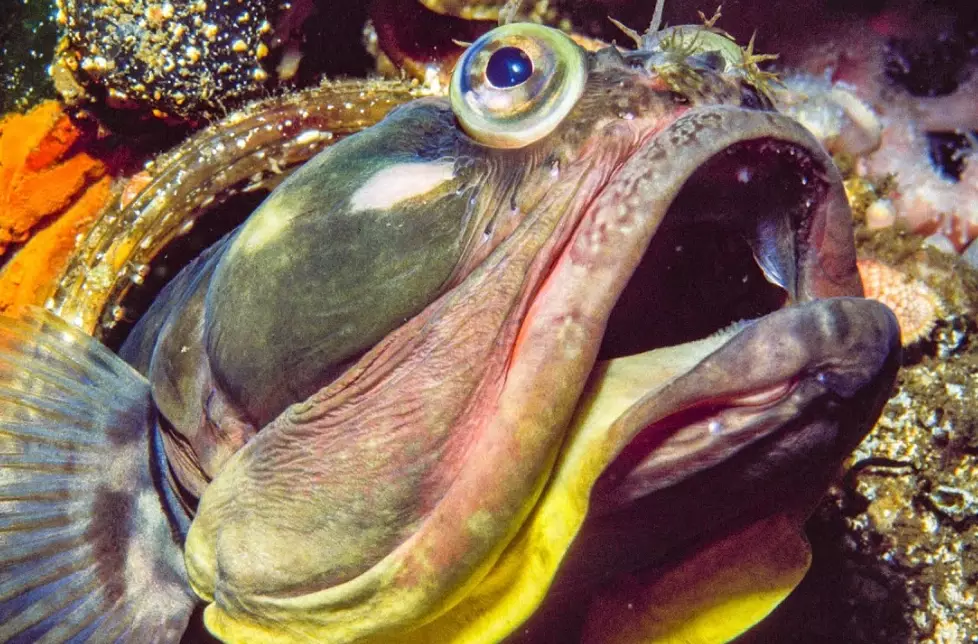
This is where many well-intentioned hobbyists get it wrong. The fringehead's unique appearance makes it desirable for advanced marine aquariums. But its diet in captivity is a major challenge and often a point of failure.
Feeding a captive fringehead is not as simple as dropping in some flake food. They are live-food specialists, attuned to the movement and specific prey types of their natural environment. They often ignore dead, frozen, or non-moving food. A successful keeper needs to provide a steady supply of live brine shrimp, mysis shrimp, or small ghost shrimp. Even then, getting them to transition can be stressful for the fish.
Furthermore, their territorial and sedentary nature means they provide little "activity" in a tank. They'll claim a PVC pipe or a shell and you might only see a head. For most aquarists, the novelty wears off quickly against the practical feeding difficulties. It's a classic case of a wild animal whose specialized ecology doesn't translate well to a domestic setting.
Your Fringehead Diet Questions Answered
 How often does a wild sarcastic fringehead need to eat?
 So, what does a sarcastic fringehead eat? It eats whatever it can suck into its mouth from the doorstep of its dark, cramped home. Its diet is a direct reflection of its identity: a patient, sedentary, and highly specialized ambush predator of the murky bottom. It's not a glamorous menu, but it's a perfectly adapted one, turning the simple act of waiting into a successful survival strategy for one of the ocean's most characterful little fish.



Comments
Leave a Comment