You type "how big are sarcastic fringehead fish?" into Google, probably after seeing a wild photo of a fish with a head that looks like it's been run over, its mouth gaping wide enough to swallow a softball. The short, direct answer is they're not giants of the sea. Most sarcastic fringeheads max out at about 6 to 10 inches (15 to 25 cm) in total length. But if you stop there, you miss the entire story. Their size is almost irrelevant compared to the sheer scale of their aggression and the biomechanical wonder of their enormous mouth. I've spent years diving the kelp forests of California, and I can tell you, the numbers don't capture the experience of startling one of these reclusive, bad-tempered fish. This article will break down not just their dimensions, but why their size is perfectly adapted for a life of ambush and intimidation in the murky depths.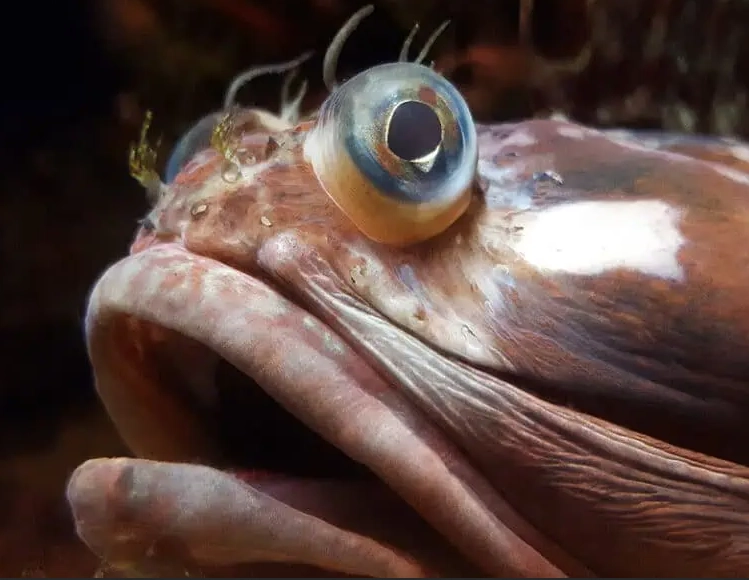
What's Inside: Your Quick Guide to the Fringehead
What is the Actual Size of a Sarcastic Fringehead?
Let's get the tape measure out. The average adult sarcastic fringehead (Neoclinus blanchardi) you're likely to encounter is about 7 to 9 inches long (18-23 cm). The official maximum recorded length, according to resources like the Monterey Bay Aquarium and fishbase, is roughly 12 inches (30 cm), but that's a real veteran. Juveniles start tiny, just an inch or two.
Here’s the twist most articles don't emphasize: their body is incredibly slender and eel-like. So, a 9-inch fringehead has the girth of a fat marker pen. This isn't a bulky grouper. Their weight is negligible, maybe a few ounces. The size that truly matters is the oral disc—the inside of their mouth. When flared, it can be as wide as their body is long. Imagine a tube sock that can suddenly turn its toe into a dinner plate.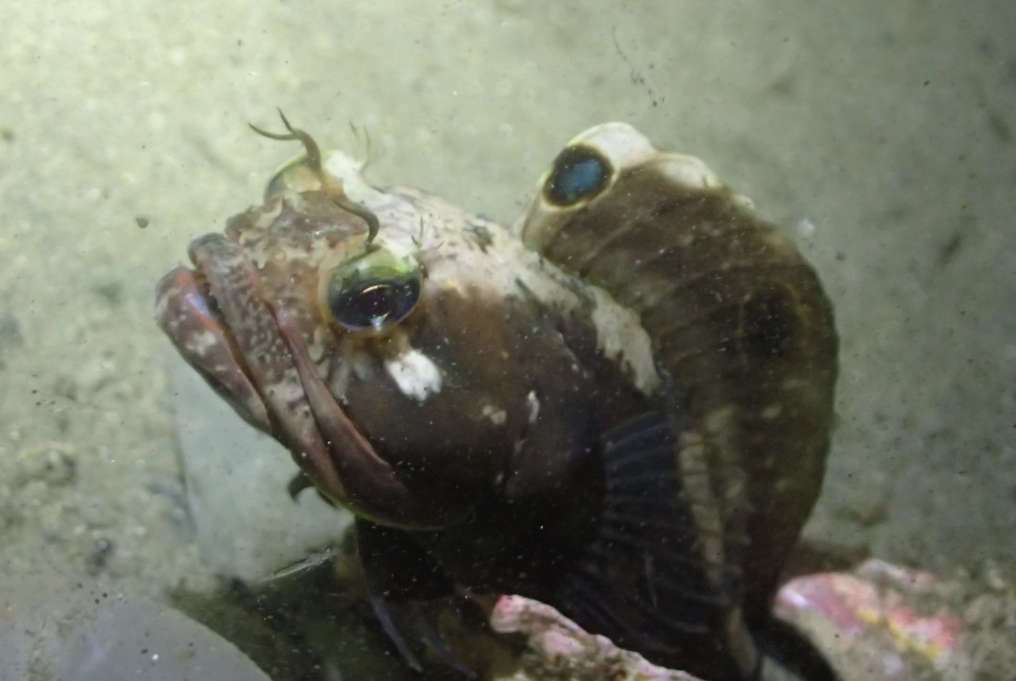
| Life Stage | Typical Length | Notable Feature |
|---|---|---|
| Juvenile | 1-3 inches (2.5-7.5 cm) | Fully formed but miniature; seeks small shelters. |
| Adult (Common) | 6-9 inches (15-23 cm) | Prime aggressive display size; mouth can flare to match body length. |
| Maximum Recorded | ~12 inches (30 cm) | Rare; likely very old individuals in ideal habitats. |
Why Are They Called 'Sarcastic'? It's Not What You Think
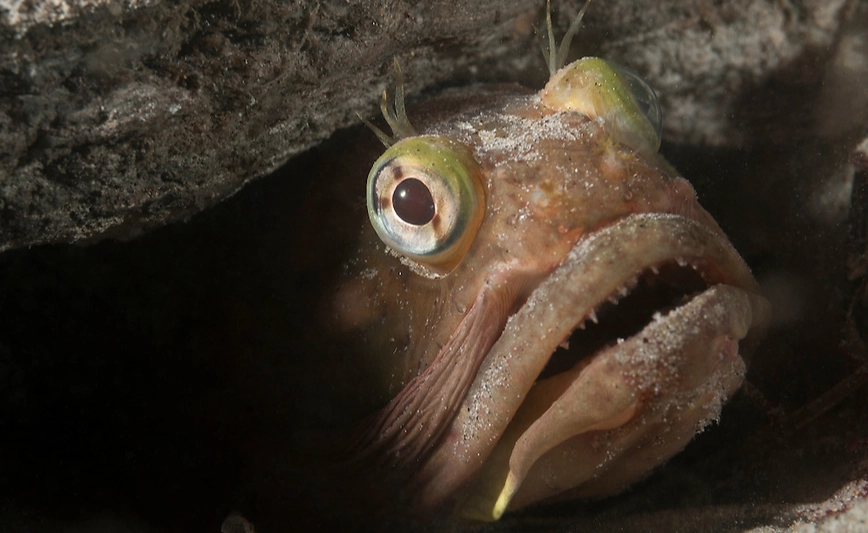
This name trips everyone up. You might think it's because of their "smirk" or attitude. Not quite. The "sarcastic" part is believed to come from an old, somewhat obscure use of the word meaning "flesh-tearing" or "flesh-ripping," which refers to their sharp teeth and aggressive nature. The "fringehead" is clearer: it describes the floppy, fleshy appendages (called cirri) that grow above their eyes and along their dorsal fin. These fringes might help with camouflage or sensory perception in their dark homes.
I find the common name misleading. It makes them sound whimsical. There's nothing whimsical about a fish that will latch onto a perceived threat and refuse to let go, even if that threat is a diver's glove ten times its size. A more accurate name, in my opinion, would be the "ambush jawfish" or "cavern brawler."
The Mouth is the Main Event: How They Fight and Feed
Asking "how big are they?" is really asking about their mouth. This is their entire survival strategy.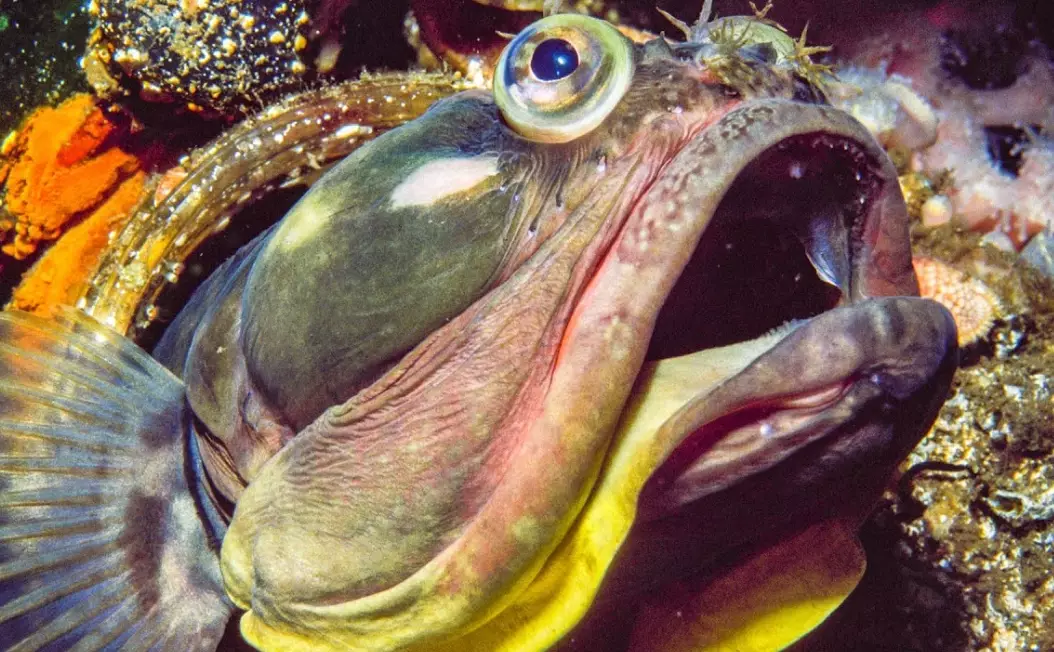
The Mechanics of the Gape
The upper jaw (premaxilla) is not fused to the skull. When the fish opens its mouth, this jaw rotates forward and upward, creating a massive, vertical opening. The skin around the mouth is highly elastic. Inside, the lining is often brightly colored—yellows, oranges, blues—to maximize the shock value. It's a pure intimidation play. They're not trying to eat the intruder; they're trying to look like they could.
Territory is Everything
Sarcastic fringeheads are sedentary. They find a burrow—an abandoned worm tube, a clam shell, a bottle, a crevice—and that's home for life. Their size is perfectly adapted to this. They don't need a big body for swimming long distances. They need a big mouth to guard their front door. Most of their diet (small crustaceans, worms) probably wanders right past their lair.
The famous "mouth wrestling" videos you see online are almost always male-male competition. Two males find their territories adjacent. They emerge, press their gigantic open mouths together like two trash can lids clanging, and push. It's a test of strength. The bigger mouth often wins, convincing the smaller one to find a new home. It's a brutal, efficient real estate market on the seafloor.
Where to Find Them: Habitat and Range
You won't stumble upon one by accident on a sandy beach. Their size and lifestyle dictate a very specific habitat.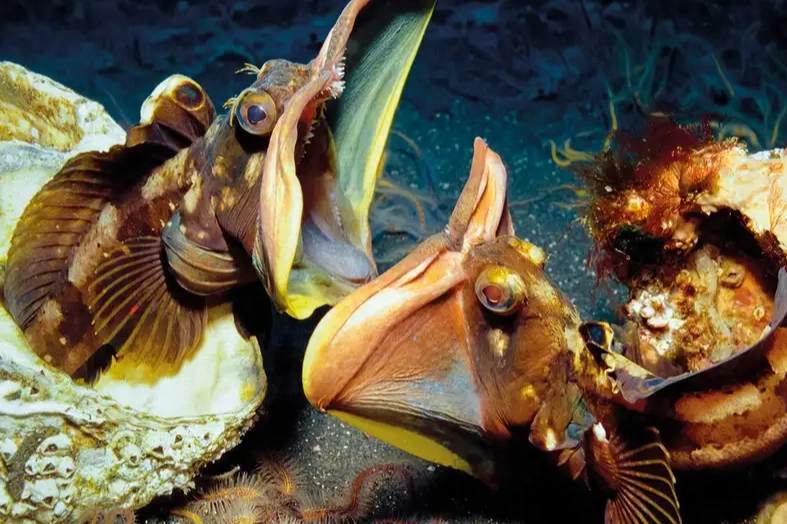
Geographic Range: They are endemic to the northeast Pacific Ocean. Their range stretches from San Francisco Bay, California, down to central Baja California, Mexico. The waters around Southern California's Channel Islands are a particular hotspot.
Depth & Environment: They live on the continental shelf, typically at depths between 10 and 240 feet (3-73 meters). They favor muddy or sandy bottoms where their preferred hideouts—burrows and debris—are found. They are masters of using human trash as homes. I've seen them in beer bottles, PVC pipes, and even an old boot.
If you're a diver hoping to see one, your best bet is a slow, careful dive on a mucky bottom. Look for any small hole or tube. Shine a light gently near the entrance. If you're lucky, you might see a pair of eyes, then the sudden, breathtaking unfurling of that mouth. Don't poke it. Just watch.
Can You Keep a Sarcastic Fringehead as a Pet?
This is a common thought after seeing their wild appearance. The short, expert answer is: you shouldn't, and here's why.
First, they are not commonly available in the aquarium trade. They'd need to be collected via diving, which is stressful for the fish and impacts wild populations. Second, and more importantly, they make terrible display pets. Their entire behavior is based on hiding and being defensive. In a tank, you'd have a fish that stays hidden in its chosen PVC pipe 99% of the time. The one time you see it is during maintenance, when it might dart out to bite your tweezers.
Their diet in captivity would be challenging (live foods like small shrimp), and they are highly territorial, making tank mates nearly impossible unless the tank is enormous with carefully separated territories. For the average aquarist, it's a recipe for a boring and potentially problematic pet. There are far more engaging and suitable fish that exhibit interesting behavior in a home aquarium.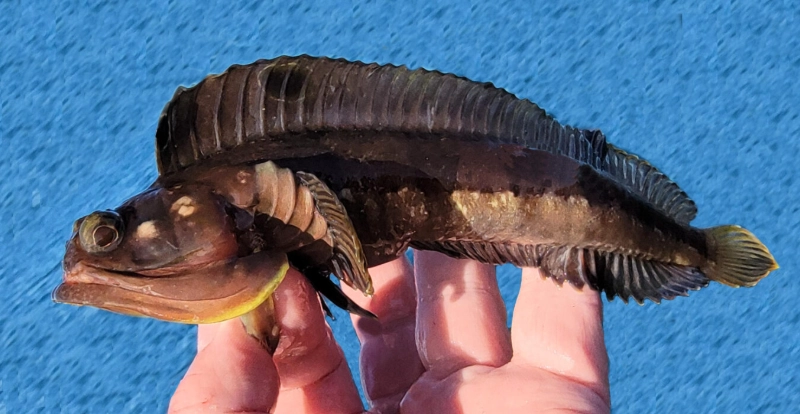
Your Fringehead Questions Answered
 How can I tell a sarcastic fringehead apart from other similar fish, like the spotted fringehead?




Comments
Leave a Comment