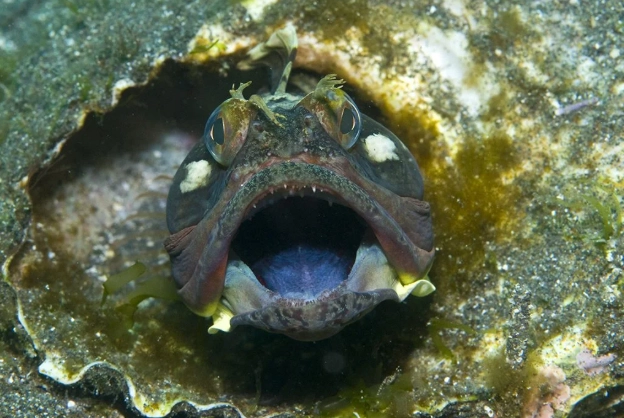
You've probably seen the viral video. A small, nondescript fish, maybe six inches long, pokes its head out of a burrow. Another fish approaches. In a flash, the first one erupts, revealing a cavernous, rainbow-colored mouth that seems to swallow its own head. That's the Sarcastic fringehead (Neoclinus blanchardi), and its bite is one of the most spectacular, misunderstood displays in the ocean. Most articles just call it "aggressive" and move on. But after years of diving the Pacific kelp forests and talking to marine biologists, I've learned the real story is about real estate, physics, and a survival strategy so extreme it borders on absurd. This isn't just about a fish with a big mouth; it's about understanding a creature that has turned intimidation into a high-stakes art form.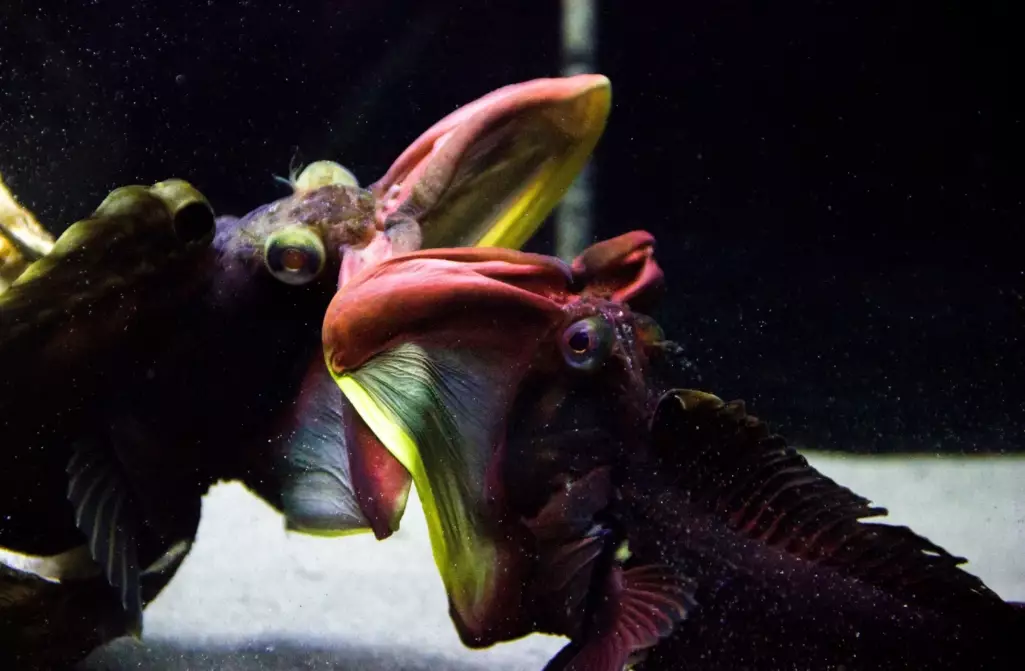
What You'll Discover in This Deep Dive
- Where to Find This Feisty Fish (It's Not Where You Think)
- The Anatomy of a Fringehead Bite: A Step-by-Step Breakdown
- Why Do They Fight? The Real Reason Isn't Hunger
- Bite Force Myth vs. Reality: The Physics of a Paper Tiger
- What Happens If You Meet One? A Diver's Practical Guide
- Your Fringehead Questions, Answered by Experience
Where to Find This Feisty Fish (It's Not Where You Think)
Forget open water. The Sarcastic fringehead is a homebody of the most obsessive kind. You won't find it cruising for food. You'll find it inside something. Its entire world is a hole.
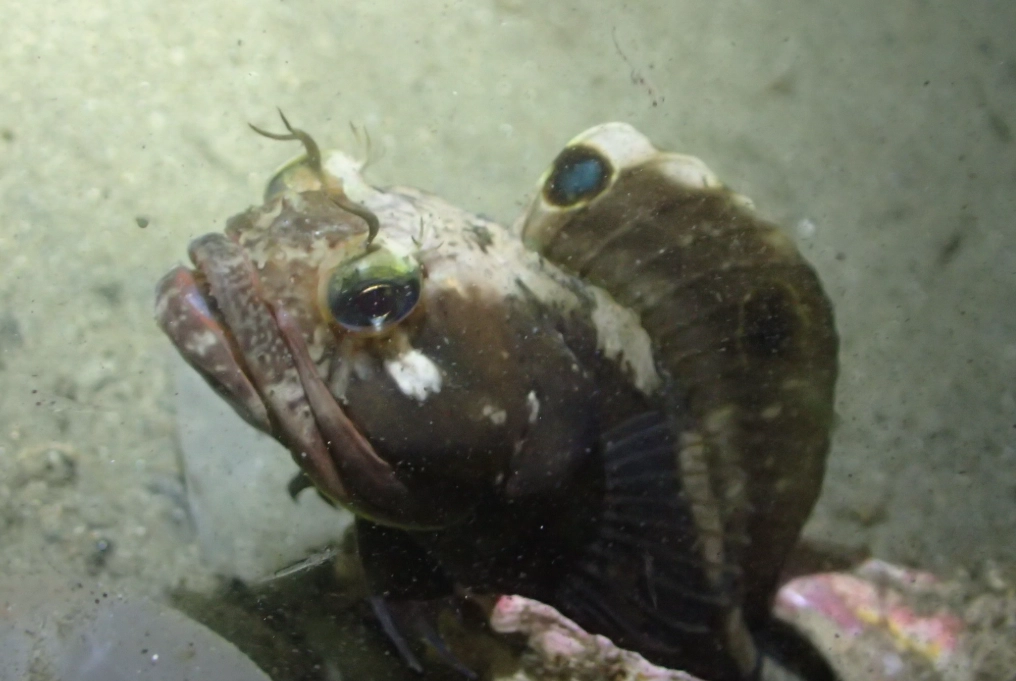
Their preferred real estate includes empty clam or snail shells, crevices in rocky reefs, and, famously, human-made debris like bottles and cans on the seafloor off the coast of California and Baja California. I once spent a frustrating 45 minutes on a dive near Monterey trying to photograph one that had claimed a Heineken bottle. The green glass was a perfect fit. He'd peek out, flare, and duck back in. It was a comical yet perfect example of their adaptability.
This habitat choice is the first key to understanding the bite. The fringehead is a sit-and-wait ambush predator. It doesn't chase. It guards. Its territory, often just a few cubic inches, is its lifeline for safety, breeding, and ambushing small crustaceans that wander by. The infamous bite is almost never a feeding strike. It's a territorial eviction notice.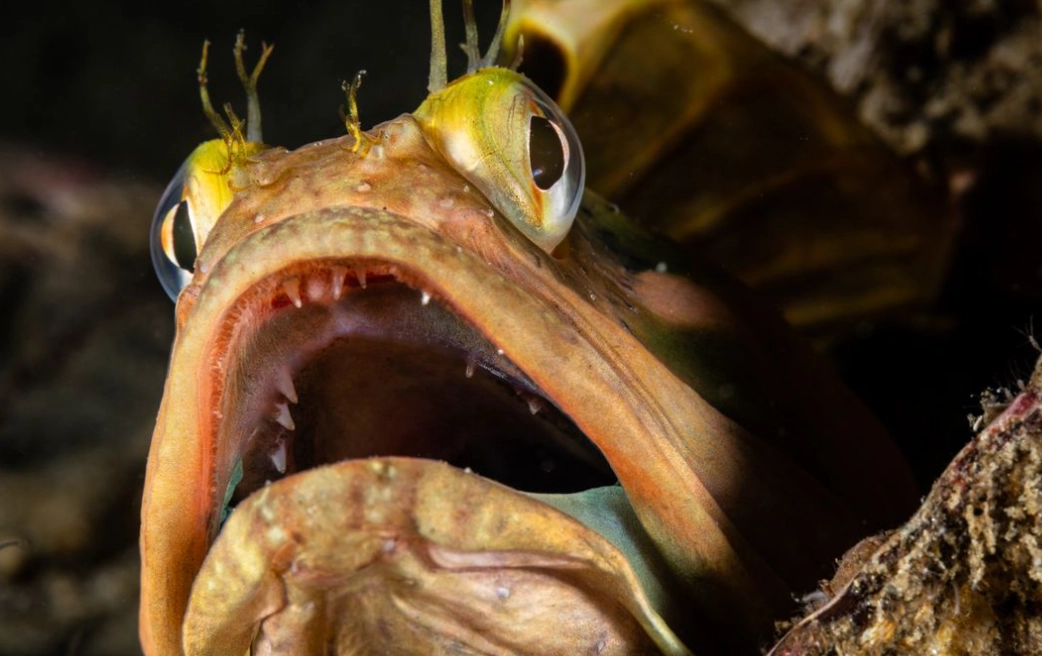
My Experience: The best places to reliably observe them are not the pristine, remote reefs, but often areas with a mix of natural rock and scattered debris at depths of 10-100 feet. It's a humbling reminder that "nature" often adapts to our leftovers.
The Anatomy of a Fringehead Bite: A Step-by-Step Breakdown
Calling it a "bite" is a bit misleading. It's more of a mouth press. Here’s what actually happens during that viral moment, broken down into phases most online sources gloss over.
Phase 1: The Warning Flare
Before the full eruption, the fringehead will often perform a smaller gape. It opens its jaws partially, showing off the brightly colored lining (often blue, yellow, or red). This is the "get lost" warning. Most intruders, like small blennies or gobies, heed it. If they don't, phase two begins.
Phase 2: The Hyperextension
This is the money shot. The fish contracts powerful muscles at the back of its skull, which forces the entire jaw apparatus to swing forward and upward like a pair of giant, hinged gates. The technical term is maxillary and premaxillary protrusion, but all you see is a head that seems to turn inside out into a vast, membranous cavern. The mouth can become over four times wider than the fish's head. It's a visual illusion of immense size.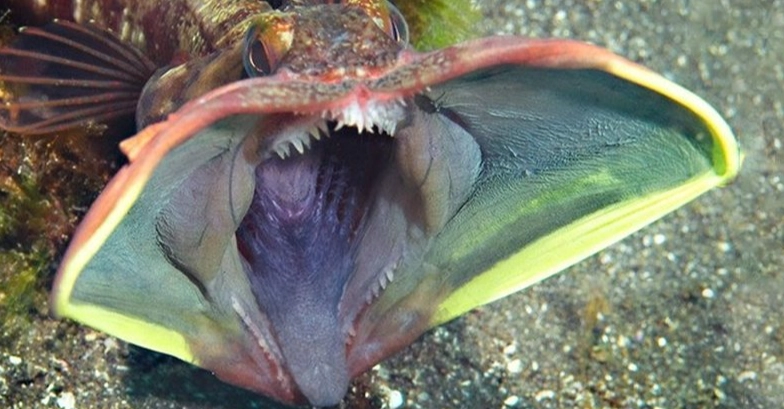
Phase 3: The Press (Not The Bite)
This is the critical nuance everyone misses. The fringehead doesn't snap its jaws shut on the intruder with crushing force. It presses its wide-open mouth against the other fish. The goal is to smother, shove, and intimidate. The inside of its mouth is thin and flexible. It's like being attacked by a living, wet plastic bag. The action is more akin to a sumo wrestler using his body to push an opponent out of the ring than a shark taking a chunk of flesh.
Why Do They Fight? The Real Reason Isn't Hunger
You might assume all that aggression is about food. It's not. Stomach content studies, like those referenced in research from the Scripps Institution of Oceanography, show they eat small crustaceans. A rival fish is too big to eat.
The driving force is pure, unadulterated real estate. A good burrow is scarce. It provides shelter from larger predators like kelp bass and cabezon. It's a perfect launchpad for ambushing meals. And crucially, it's where males attract females to lay eggs, which they then ferociously guard until hatching. Losing your hole means almost certain death. This table breaks down the high stakes:
| What's at Stake | Consequence of Losing |
|---|---|
| Immediate Shelter | Exposure to predators; no safe resting place. |
| Feeding Ground | Must expend energy to hunt in open water, increasing risk. |
| Reproductive Success | No place to attract a mate or guard eggs; genetic dead end. |
So the bite is a calculated display. It's a way to say, "My mouth is bigger than your future here," without the risks of a damaging brawl. It's all about efficient intimidation.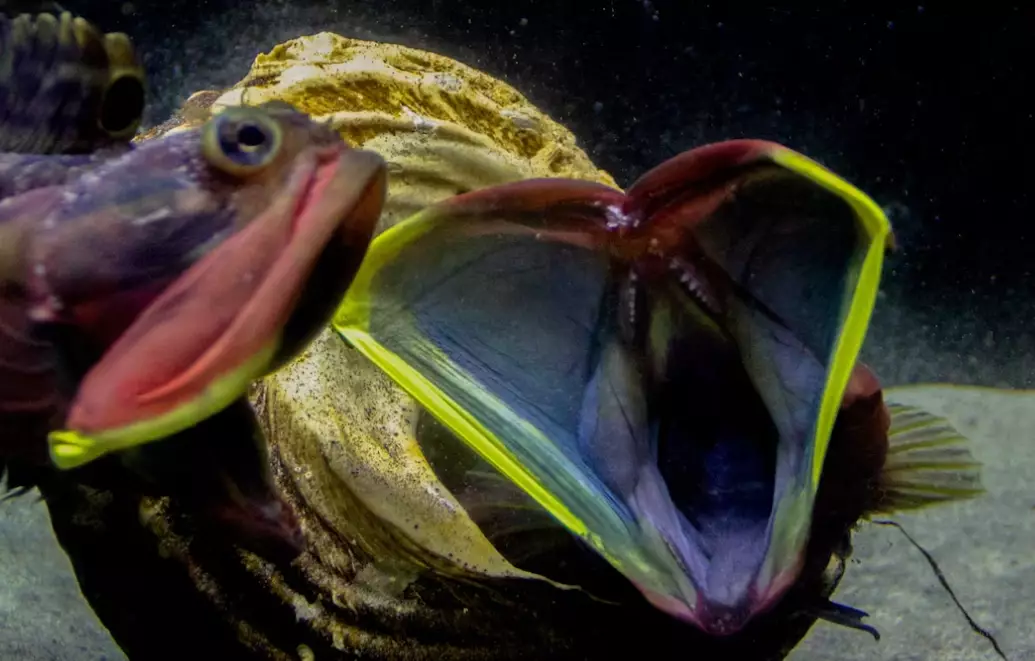
Bite Force Myth vs. Reality: The Physics of a Paper Tiger
This is where I see the most misinformation. Headlines scream about its "terrifying bite force." Let's be clear: the Sarcastic fringehead has a pitifully weak bite for its size.
The biomechanics don't lie. To achieve that incredible gape, the jaw muscles are positioned for speed and range of motion, not power. The muscle leverage is all wrong for crushing. Compare it to a moray eel, which has a second set of jaws in its throat and muscles designed for generating force, and the fringehead is a lightweight.
Its "force" comes from hydrodynamic pressure, not muscular strength. By rapidly opening its mouth against another object, it can create a suction effect and a physical shove. The power is in the sudden expansion and surface area, not the closing action. Calling it a "paper tiger" is accurate—it's terrifying to look at, but the structural integrity is focused on the display, not the damage.
What Happens If You Meet One? A Diver's Practical Guide
You're diving in Southern California. You see a likely hole or bottle. How do you interact responsibly?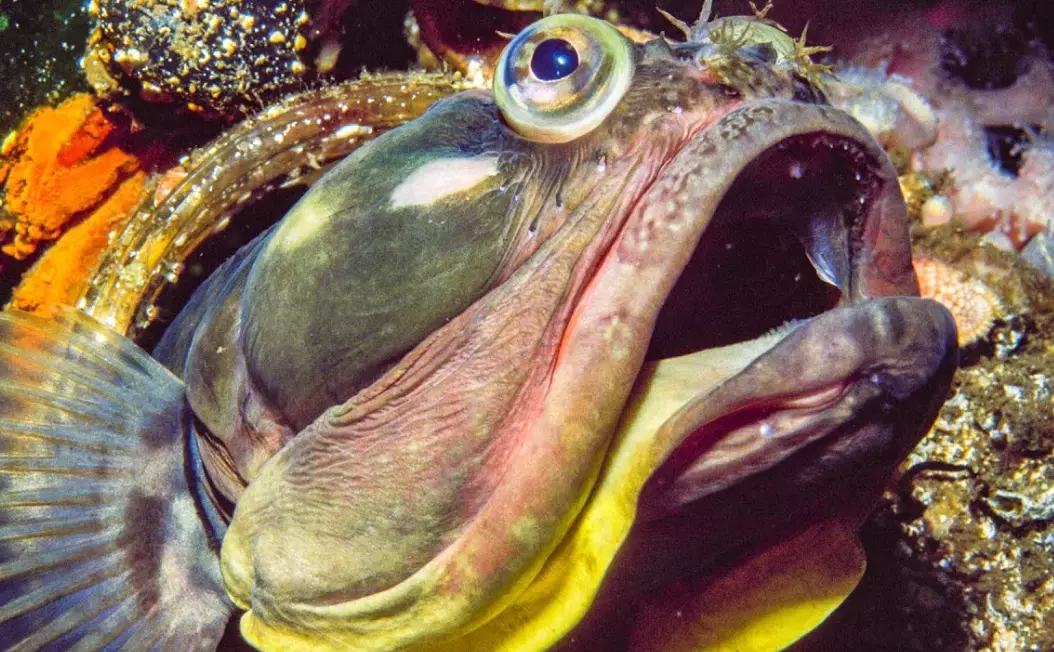
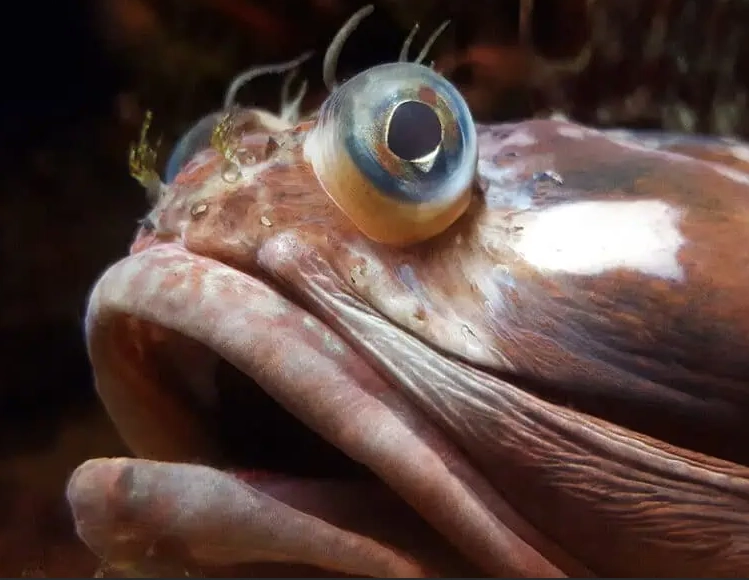
First, look for signs. You might see a pair of beady eyes and frilly "fringe" tentacles (the "cirri" above its eyes) peeking out. Do not poke the hole. Gently wave your hand or a dive light a few inches away. If it's home, you'll likely get the warning flare.
Respect the display. Observe, take a photo if you can do so without crowding it, and then move on. Your presence is a major stressor. The fish thinks you're a colossal rival trying to steal its home. Lingering forces it to stay in a high-alert, energy-burning state.
Will it bite you? Almost impossible. Your finger is vastly larger than anything it's evolved to confront. The worst that could happen is it might press its mouth against your glove—a sensation divers describe as a weak, wet tap. The real danger is you damaging its fragile home or stressing it to exhaustion.
Your Fringehead Questions, Answered by Experience
 Are they related to the similar-looking fish called the "blenny"?
 Understanding the Sarcastic fringehead bite pulls back the curtain on one of the ocean's great performances. It's not a mindless act of aggression. It's a precise, evolved solution to the fundamental problems of shelter and survival. It's a bluff, a measuring contest, and a declaration of ownership, all wrapped up in one of the most bizarre anatomical feats in the fish world. The next time you see that viral video, you'll see more than just a big mouth—you'll see a tiny homeowner defending its castle with the only spectacular tool it has.


Comments
Leave a Comment