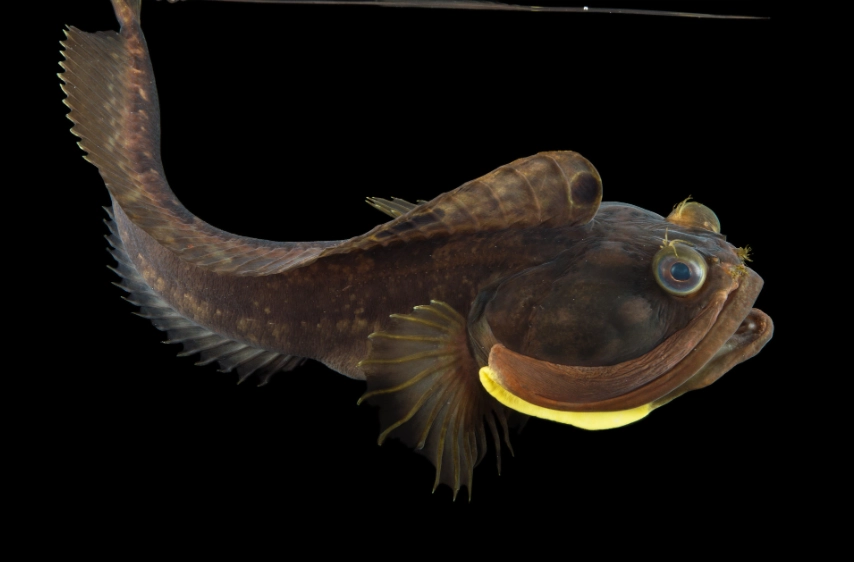
Let's cut to the chase. You've probably seen the viral video—a bizarre fish with a head-splitting, enormous mouth lunging from a burrow. Your first thought was likely, "How big is that thing?" The answer is trickier than you might think. The sarcastic fringehead (Neoclinus blanchardi) is a master of optical illusion. Its body is modest, but its weaponized mouth creates a terrifying, and massively overestimated, sense of scale. Most sources lazily repeat a single number without context. After years observing marine life and talking to researchers from Monterey Bay Aquarium, I've found the real story about sarcastic fringehead size is more fascinating than the meme.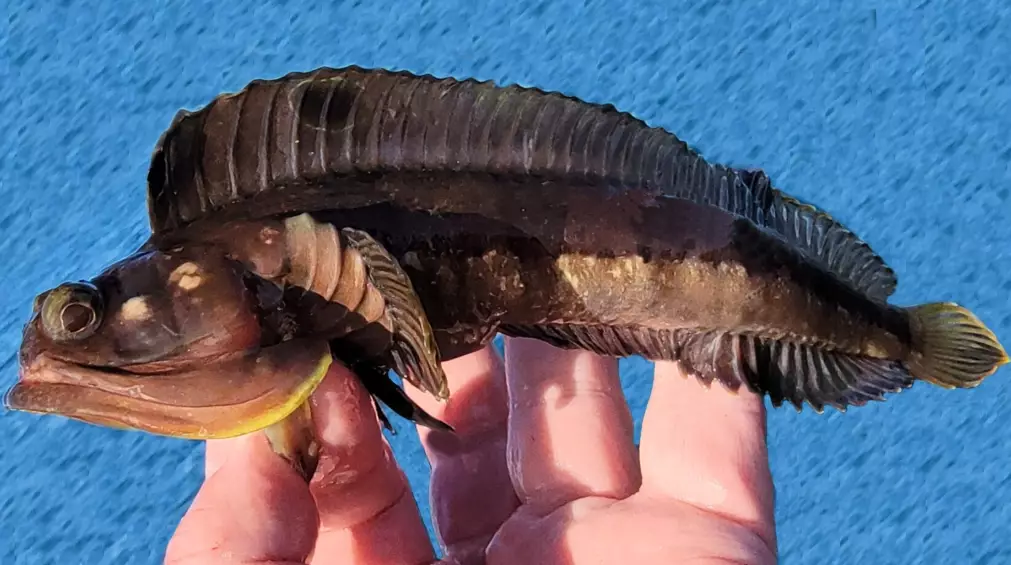
Dive Right In: Your Quick Guide
How Big Do Sarcastic Fringeheads Get?
The standard textbook answer is "up to 30 centimeters (about 12 inches)." Stop right there. That figure is the absolute maximum, the Olympic champion of fringeheads. It's like saying humans are "up to 7 feet tall"—technically true, but wildly misleading for the average person. The typical adult you'll encounter, or that dominates most underwater footage, is much smaller.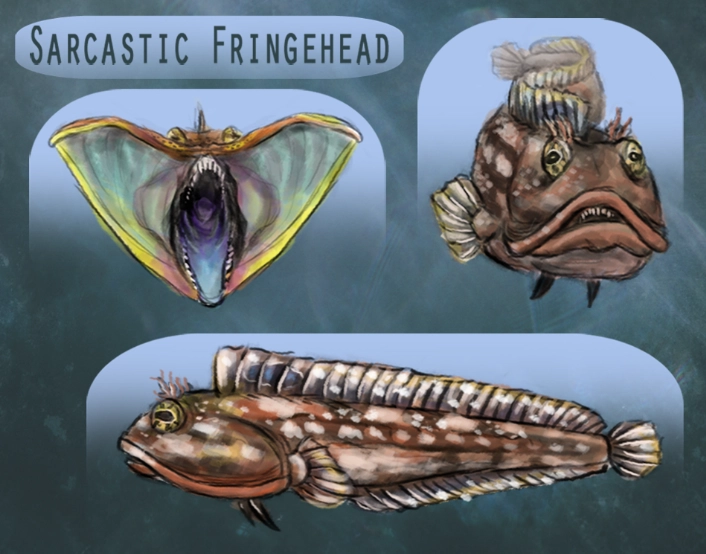
Here’s the breakdown based on data from the FishBase global database and my own notes from Pacific Coast surveys:
| Life Stage / Common Context | Typical Total Length | What This Looks Like |
|---|---|---|
| Juvenile (first year) | 5 - 8 cm (2 - 3 inches) | Smaller than your smartphone, often hiding in tiny shells. |
| Average Adult (most encounters) | 15 - 20 cm (6 - 8 inches) | Roughly the length of a standard sub sandwich. This is the "normal" size. |
| Large Adult (less common) | 20 - 25 cm (8 - 10 inches) | A hefty specimen, about the size of a footlong ruler. |
| Record / Maximum Size | 30 cm (12 inches) | The rare giant. Equivalent to a large burrito. |
The key takeaway? When you picture a sarcastic fringehead, think 6 to 8 inches, not a foot. That 12-inch figure sets unrealistic expectations. I've seen seasoned divers come up disappointed, thinking they missed the "big ones," when in fact they saw perfectly mature, impressive adults.
Why the confusion? The mouth. When fully extended in a threat display, the jaw and fleshy folds can make the head appear triple its resting width. This dramatic transformation, not the body length, is what sears into your memory. The fish is performing the ultimate bluff.
How to Measure a Sarcastic Fringehead (It's Not Simple)
You can't just lay a tape measure next to this fish. Their aggressive, territorial nature and hidden lifestyle make it a challenge. Scientific surveys, like those conducted by the National Oceanic and Atmospheric Administration (NOAA), often use remotely operated vehicles (ROVs) or careful diver observations with laser scale pointers.
Here’s how an expert would approach it, and where amateurs go wrong:
- Measure Total Length (TL), not Standard Length (SL). This includes the tail fin. SL (body without tail) is used for some species but omits a significant part of the fringehead.
- Wait for a neutral posture. Measuring during a gape display is useless. You need the fish relaxed, with its mouth closed, to get the true body length.
- Estimate from burrow size. They rarely leave their homes. The diameter of their chosen burrow (old clam shells, bottles, crevices) is a good proxy. A fringehead won't live in a hole it can't turn around in.
The most common mistake? Judging size by the mouth alone. A 7-inch fish can present a mouth that looks 4 inches wide—a terrifying proportion that tricks your brain into thinking the whole animal is much larger.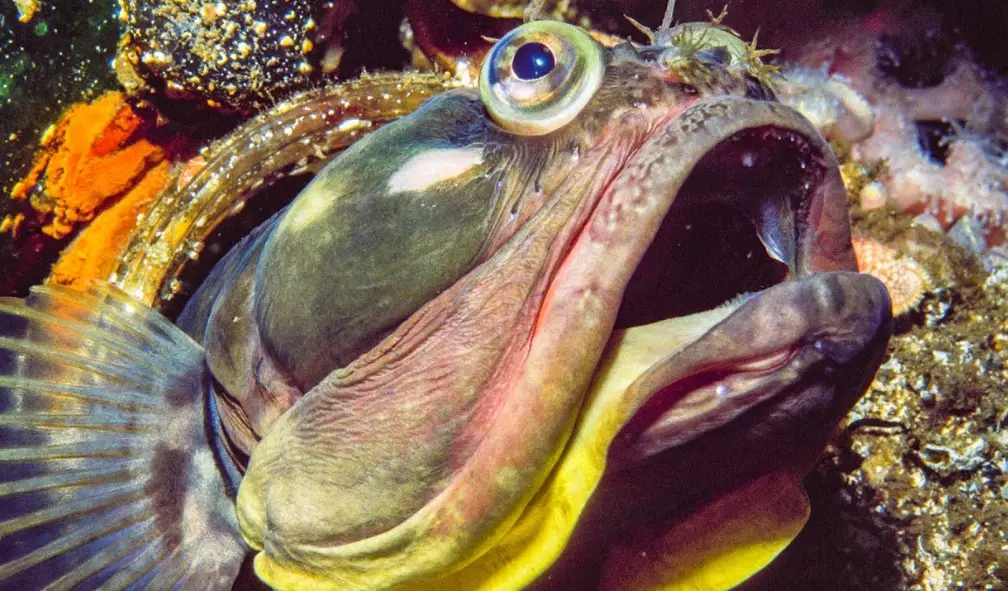
Where They Live and Why Size Matters
Sarcastic fringeheads are found along the Pacific coast of North America, from San Francisco, California, down to central Baja California in Mexico. They prefer specific, often murky, environments:
- Depth Range: 3 to 73 meters (10 to 240 feet), but most common between 10-30 meters.
- Seafloor Type: Muddy or sandy bottoms littered with debris. They are not reef fish. They need empty shells, cans, or rocky crevices to claim as territory.
- Water Temperature: Cool, temperate waters. Their distribution is limited by this.
Size is their currency. In the dark, silty world they inhabit, visual cues are everything. A larger body and a bigger mouth directly translate to dominance.
Myth vs. Reality: The Territorial Display
This is where the "sarcastic" name comes from—their seemingly mocking, wide-gaped challenge. When two rival males meet at a territory boundary, they engage in a "gaping contest." They press their giant, colorful mouths together and push, like a bizarre kiss of war. The larger mouth usually wins, convincing the smaller rival to back down without actual combat, which is risky for both.
So, a fringehead's perceived size (that mouth) is more important in daily life than its actual body length. Evolution has selected for the most intimidating bluff, not necessarily the longest body. This subtle point is often missed in basic descriptions.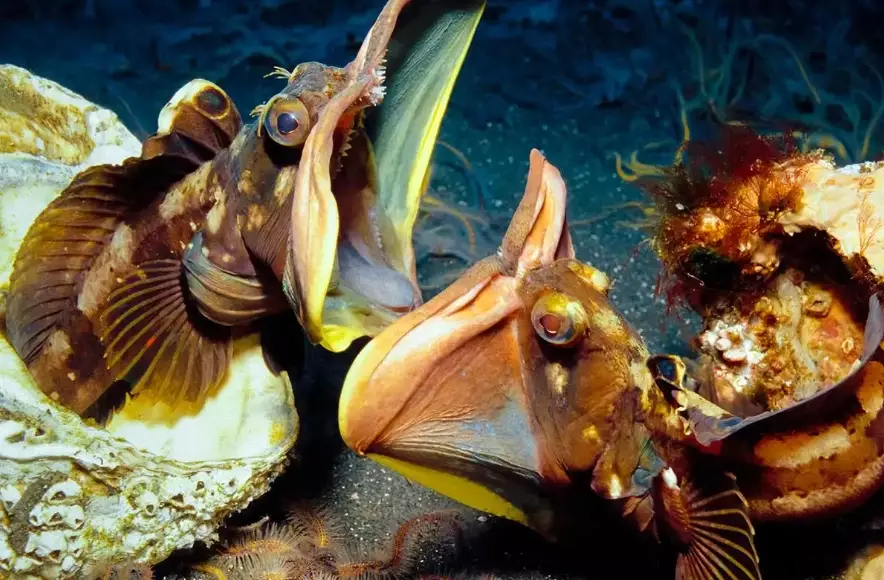
How to See a Sarcastic Fringehead for Yourself
You're not likely to find one on a casual beach walk. Here’s your actionable plan.
For Non-Divers:
Your best bet is a major public aquarium with a dedicated California coast or kelp forest exhibit. The Monterey Bay Aquarium is world-class and often has fringeheads on display. Look for them in darker, sandy-bottomed tank areas near burrows. Call ahead or check their website's animal guide; not all specimens are on display year-round. Other good options include the Aquarium of the Pacific in Long Beach or the Birch Aquarium in San Diego.
For Divers:
If you're SCUBA certified, you can seek them in the wild. Popular dive sites off Southern California, like the Channel Islands or areas near La Jolla, are known habitats. Hire a local dive guide. Tell them you want to see fringeheads. A good guide will know specific debris fields or wrecks where they are known to nest.
Pro Tip from a Dive Guide: "Move slowly along the sandy bottom. Look for any small hole or object. Pause and watch for several minutes. You might just see a pair of lips peeking out. Gently tap the sand nearby with a pointer stick—sometimes the curiosity or aggression gets the better of them, and they'll pop out to see who's invading."
Remember, never try to poke or provoke one out. You risk injuring the fish and, frankly, they're faster than you think.
Your Burning Questions Answered
 I found a small, aggressive fish in a shell. Is it a baby fringehead?
The sarcastic fringehead's size is a lesson in perception versus reality. Their evolutionary genius isn't in being the biggest fish on the block, but in perfectly impersonating one. Knowing that the average adult is about the length of your hand-span makes their ferocious display even more impressive. It's a small animal with the courage and apparatus to pretend it's a monster. Next time you see that viral video, you'll know the truth—and that truth is stranger, and cooler, than the fiction.



Comments
Leave a Comment