You're walking along a beach after a storm, the air still crisp with salt. Among the tangled kelp and shells, you see them—hundreds of small, brilliant blue, almost plastic-looking discs, each with a tiny, rigid sail. They look like forgotten toys from a miniature regatta. This is your first encounter with Velella velella, the By-the-Wind Sailor. It's a moment that sparks immediate curiosity. What is this beautiful, stranded creature? Is it a jellyfish? Can it sting? The most interesting fact, the one that hooks you, isn't just one thing. It's the entire, bizarre life strategy of an animal that has perfected the art of going with the flow, literally. Let's unravel the mystery.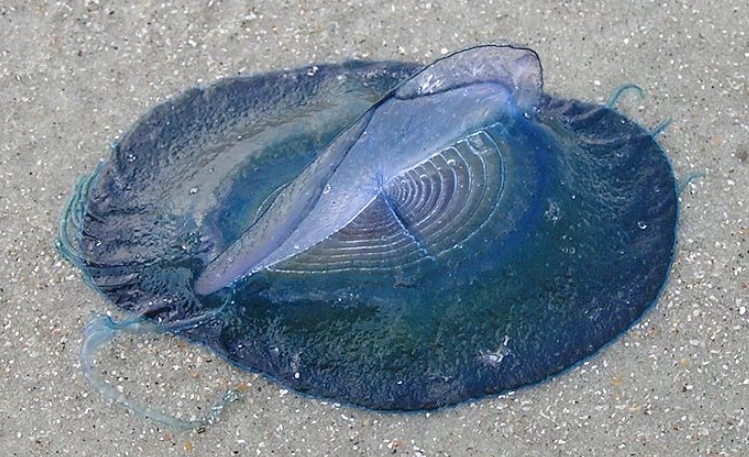
What You'll Discover in This Guide
What Exactly is a By-the-Wind Sailor? (It's Not What You Think)
First, let's clear up the biggest misconception. The By-the-Wind Sailor is not a single animal. It's not even a true jellyfish, though it's a close cousin. That little blue raft is a colony. Think of it as a tiny, floating city where every resident has a specialized job and they all share one body.
The scientific name is Velella velella. It belongs to a group called hydrozoans, which are related to jellyfish, corals, and sea anemones. The blue, chitinous float you see is essentially the apartment building. Living on and within it are different types of polyps—individual, genetically identical units that make up the colony.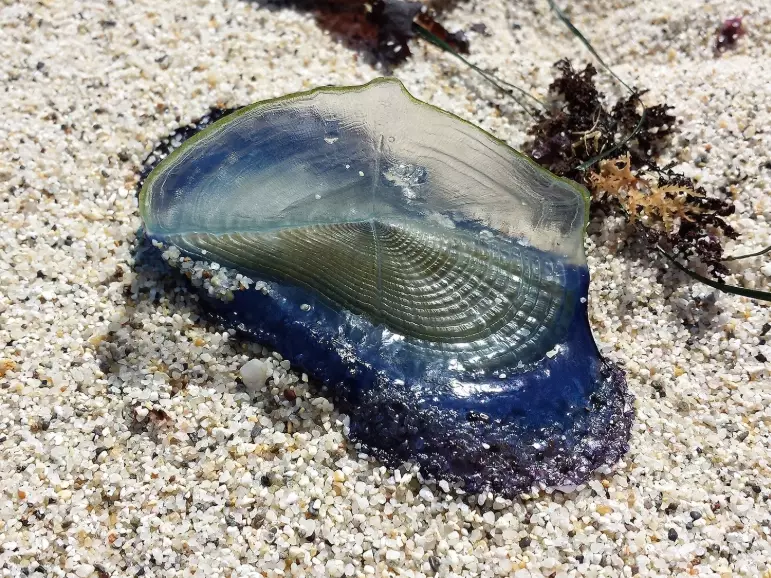
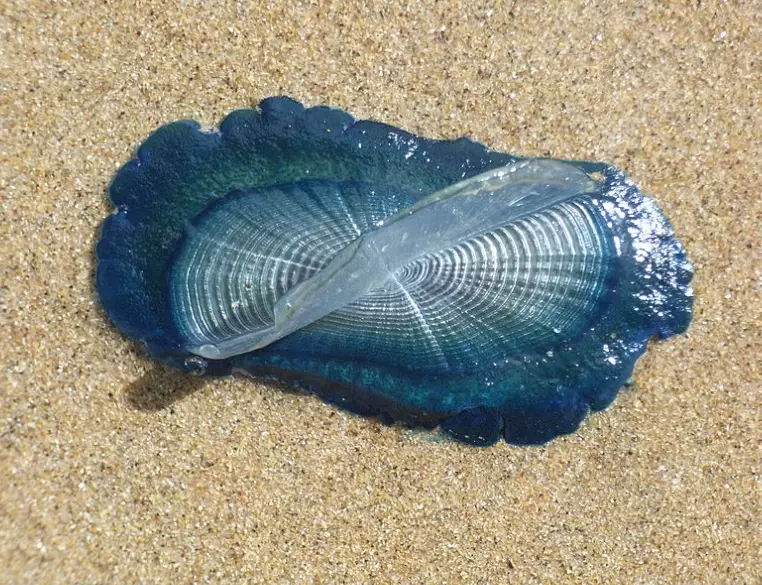
Its other common name, "blue sea raft," is perfectly descriptive. The vivid blue color isn't just for show. It's believed to provide some protection from the sun's UV rays at the ocean's surface. The shape is a marvel of natural engineering—an oval disc that sits perfectly at the air-water interface.
The Sail That Determines Its Fate
The most obvious feature is that diagonal, translucent sail. It's made of the same stiff material as the float. This isn't a sail for speed; it's a sail for direction. And its orientation is a genetic lottery with huge consequences.
Individual Velella colonies are born with their sail set in a clockwise or counter-clockwise spiral relative to their body axis. This might seem like a minor detail, but in the vast, wind-driven systems of the open ocean, it's everything. It determines which way the wind will push them.
How Does the By-the-Wind Sailor Actually 'Sail'?
They have no brain, no eyes, and no way to actively steer. Their locomotion is entirely passive, a perfect example of life at the mercy of the elements. The sail catches the wind like the sail on a tiny boat. But without a keel or rudder, they don't sail into the wind; they sail downwind.
This is where the sail's spiral direction comes into play. In the North Pacific Ocean, the majority of Velella have sails oriented to the right. When the prevailing northwesterly winds blow, these right-sailed colonies are pushed offshore, away from land, keeping them in their preferred open-ocean habitat. It's a survival adaptation.
But what about the left-sailed minority? They get pushed in the opposite direction. During strong and persistent onshore winds—often from storms or seasonal shifts—entire armadas of Velella, disproportionately those with the "wrong" sail orientation, can be blown onto beaches. This is the phenomenon you witness during a mass stranding.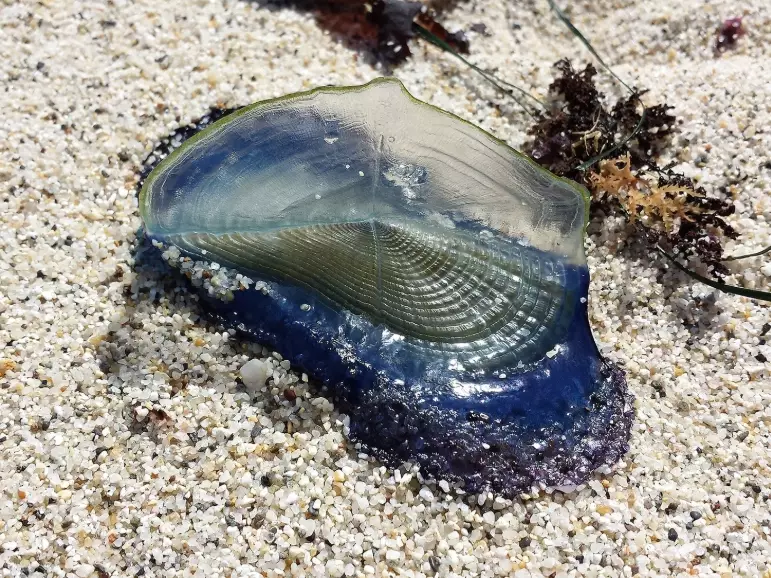
| Feature | Description | Purpose / Consequence |
|---|---|---|
| Float (Pneumatophore) | Oval, chitinous, bright blue disc, 3-8 cm across. | Buoyancy; keeps colony at surface; may offer UV protection. |
| Sail | Diagonal, stiff, chitinous membrane. | Passive locomotion; orientation determines drift direction. |
| Feeding Polyps | Dangling from the underside, with stinging cells (nematocysts). | Capture plankton (tiny crustaceans, fish larvae). |
| Reproductive Polyps | Also on the underside. | Release tiny medusae (the next life stage). |
| Dominant Sail Orientation (N. Pacific) | Clockwise / Right-handed | Pushed offshore by prevailing winds, favoring survival. |
I remember a massive stranding on the Oregon coast a few years back. The wrack line was a continuous strip of electric blue for miles. It was stunning, but also a bit sad. It represented a massive ecological dead-end for those colonies. Their perfect adaptation works most of the time, until the weather patterns change.
Is the By-the-Wind Sailor Dangerous to Humans?
This is a top concern for anyone finding them, especially with kids or dogs. The short, practical answer is: mostly harmless, but be smart.
Yes, they have stinging cells (nematocysts) in their feeding tentacles to paralyze tiny plankton. No, these stings are not designed for, and are largely ineffective against, human skin. For most people, handling a Velella will feel like nothing at all.
However—and this is the expert nuance—some individuals with very sensitive skin or specific allergies might experience a mild, temporary irritation, like a slight itch or redness. It's nowhere near the potency of a true jellyfish like a lion's mane or a box jellyfish. The real risk is secondary. If you handle one and then rub your eyes or a sensitive mucous membrane, you could transfer irritants.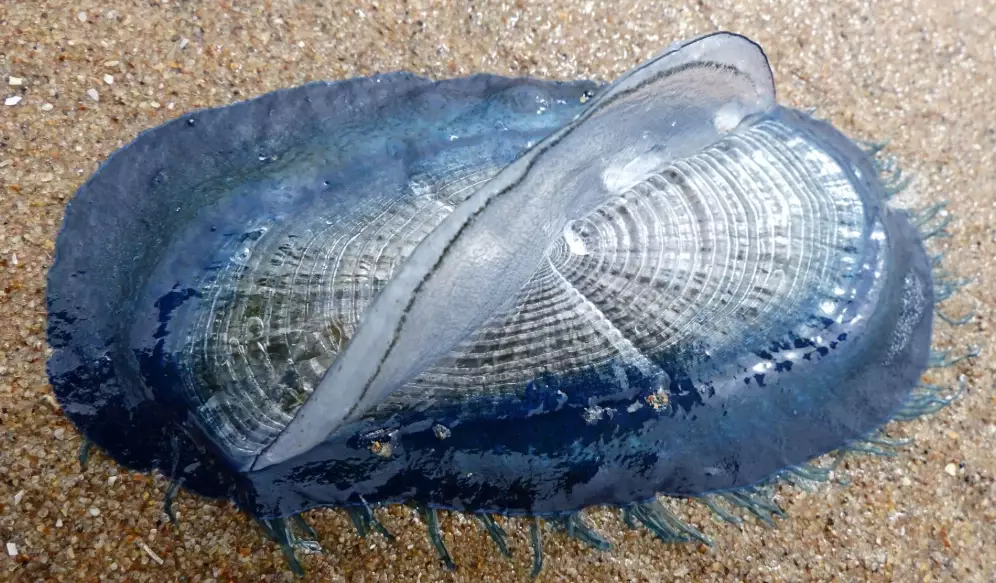
As for dogs, the same logic applies. A curious sniff is unlikely to cause harm, but a dog trying to eat a stranded colony might get a mildly upset stomach or mouth irritation. It's good practice to keep pets from mouthing them.
Where & When Can You See Them? Your Observation Guide
You won't find Velella velella on just any beach at any time. Their appearance is an event, tied to specific oceanographic and weather conditions. They are creatures of the open ocean, so your best chances are on west-facing beaches that are exposed to the deep sea.
Prime Locations:
The entire US West Coast is a hotspot, from Washington down through Oregon and California. Beaches like Cannon Beach (OR), Monterey Bay shores (CA), and the Olympic Peninsula (WA) regularly see strandings. They're also common in the UK and Ireland, on beaches facing the Atlantic. I've had the best luck on the wild coasts of Cornwall and Scotland.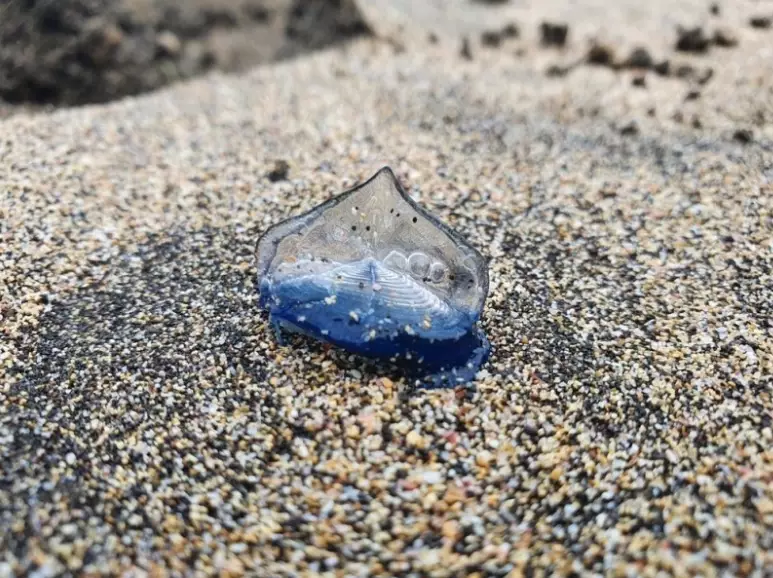
Timing is Everything:
Spring is the classic season. As winter storms subside and prevailing wind patterns shift, the winds can push vast fleets ashore. April through June is peak time in the Northern Hemisphere. However, a strong autumn storm can also cause a significant stranding event. The key trigger is a period of sustained onshore winds (easterly or southerly on the US West Coast) following a time when the Velella were blooming offshore.
Check local marine biology groups or beach reporting forums after a bout of windy weather. The strandings are often reported in local news.
Why By-the-Wind Sailors Are Important Ocean Indicators
Beyond their beauty, Velella serve as critical floating ecosystems and biological indicators. They are a key part of the neuston—the community of organisms that live at the ocean's surface. For young fish, sea turtles, and even birds like the charismatic albatross, a patch of Velella is a floating oasis of food and shelter in the vast, featureless blue desert.
More importantly for us, their arrival on shore is a message. A mass stranding event is a visible sign of oceanographic conditions: water temperature, currents, and wind patterns. Scientists are increasingly looking at the frequency and scale of these events as potential indicators of climate change effects, such as shifting wind regimes or ocean current alterations.
There's also a poignant, modern connection. Lying dead on the sand, their delicate blue bodies can be tragically confused with plastic fragments. They highlight the problem of ocean plastic pollution in a visceral way. A beach covered in Velella looks, from a distance, like a beach covered in plastic waste. This visual similarity is a powerful, if unintended, reminder of the fragility of surface-dwelling life.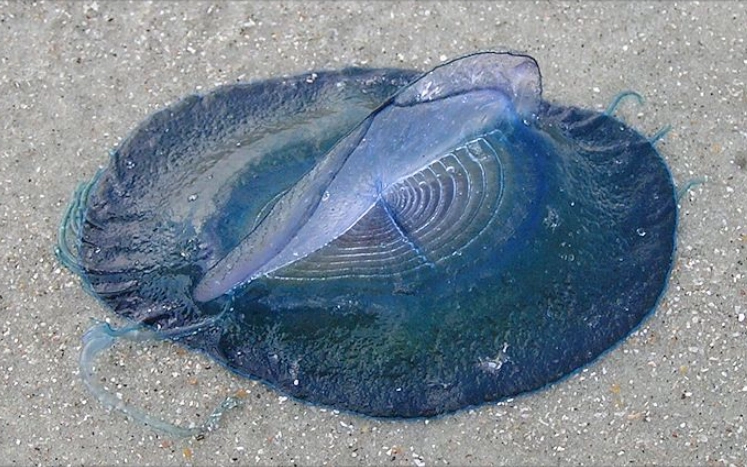
 How long do they live?

Comments
Leave a Comment