Walking along a West Coast beach in spring, you might stumble upon a surreal sight: thousands of small, brilliant blue, oval creatures with a clear, stiff sail, carpeting the sand. They look like miniature plastic toys, but they're very much alive. This is a mass stranding of Velella velella, commonly known as the By-the-wind sailor. It’s a spectacle that puzzles beachgoers and delights marine biologists in equal measure. I remember my first encounter on a Oregon beach—the sheer scale was breathtaking, and the faint, iodine-like smell was unmistakable. But what are these strange beings? Are they jellyfish? Why do they wash ashore in such numbers? Let's dive into the fascinating world of this open-ocean drifter.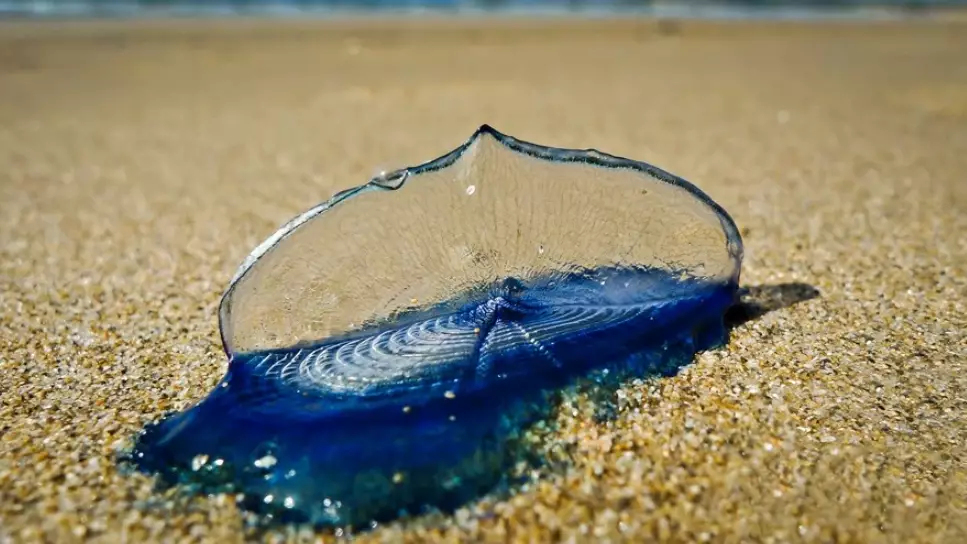
What’s in This Guide?
What Exactly is a By-the-Wind Sailor?
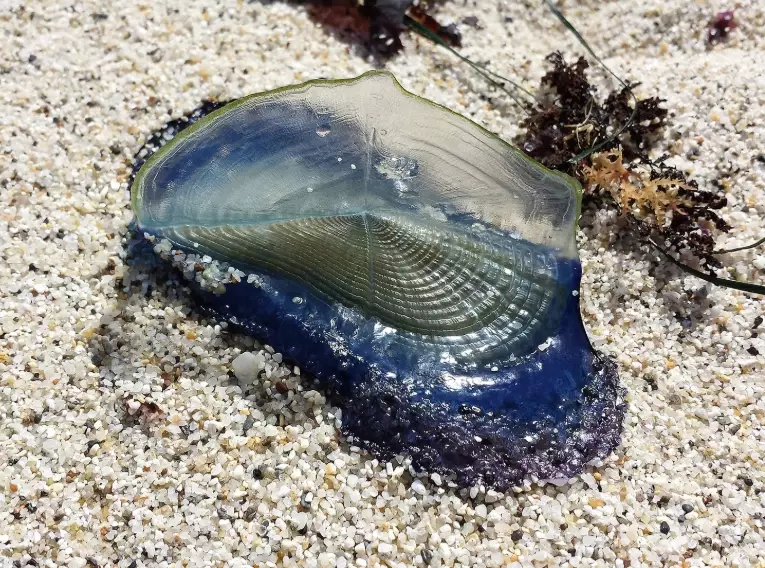
First, let's clear up the biggest misconception: the By-the-wind sailor is not a true jellyfish. True jellyfish, like moon jellies, are single animals. Velella velella is something more complex—a colonial hydrozoan. Think of it as a floating city. The blue, oval float you see is a colony made up of hundreds of individual, genetically identical polyps working together. Some polyps form the float and sail, some specialize in catching food (with stinging tentacles), and others handle reproduction. This colonial nature puts it in the same broader family as the Portuguese man o' war, though Velella is far less dangerous.
Key Takeaway: Not a Jellyfish
Calling it a jellyfish is like calling a dolphin a fish. It's a common shorthand, but biologically inaccurate. This distinction matters because it explains their structure, life cycle, and why they behave differently from the jellies you see pulsing in the water.
Their entire existence is adapted to life at the ocean's surface. They are pleuston—organisms that live at the air-water interface. The float traps a bubble of gas, keeping them buoyant. They don't swim. They sail.
The Sail: Nature's Ingenious (and Flawed) Design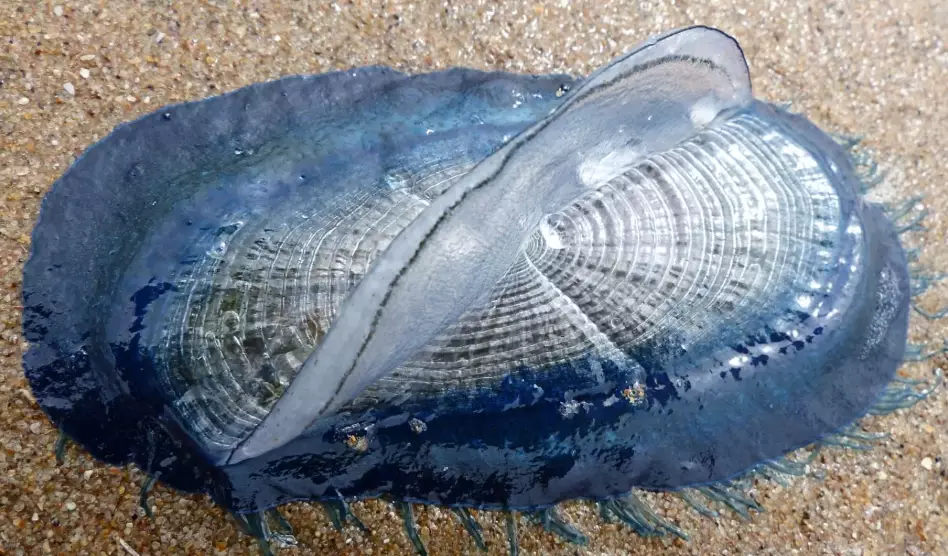
That transparent, chitinous sail is their defining feature and their fate. It's set diagonally across the float, catching the wind like the sail of a tiny boat. This is passive travel at its finest—an efficient way to disperse across vast ocean distances without expending energy.
Here’s a twist most articles don't mention: the sail's orientation isn't random. Populations in different ocean basins have evolved sails that are predominantly clockwise or counterclockwise. In the North Pacific, most Velella have sails oriented to the left (if you're looking from the float up the sail). This orientation, in theory, should catch prevailing winds and keep them offshore. But weather is messy. Strong, persistent onshore winds from storms or unusual weather patterns override this clever adaptation, blowing entire armadas onto the beach. It’s a brilliant survival strategy that fails spectacularly under specific conditions.
How to Identify Velella Velella on the Beach
When you find them, they’re often in various states. Freshly stranded ones are vivid; older ones fade to a pale, crumpled cellophane. Here’s what to look for:
The Float (Pneumatophore): This is the main body, about 3-7 cm long. It's a deep, cobalt blue or purple-blue color, oval-shaped with a concentric, chambered structure you can sometimes see inside. It feels firm but flexible, like stiff plastic.
The Sail: A clear, rigid, upright membrane running diagonally across the top. It might be intact or broken.
Underside: If you carefully flip a fresh specimen (use a stick if you're hesitant), you'll see a central mouth surrounded by reproductive polyps, and a fringe of short, blue tentacles. These tentacles bear stinging cells for capturing plankton, but they are harmless to human skin.
| Feature | By-the-Wind Sailor (Velella velella) | Portuguese Man o' War (Physalia physalia) | True Jellyfish (e.g., Moon Jelly) |
|---|---|---|---|
| Type | Colonial Hydrozoan | Colonial Hydrozoan | Single Animal (Scyphozoan) |
| Float Size & Color | Small (3-7 cm), oval, solid blue | Large (up to 30 cm), bladder-like, blue/pink/purple | No float; bell-shaped body |
| Sail/Rigging | Flat, diagonal, clear chitinous sail | Crested, S-shaped sail | None |
| Sting to Humans | Negligible, cannot penetrate skin | Extremely painful, medically significant | Varies; moon jelly mild, others severe |
| Stranding Behavior | Mass strandings, often by the million | Individual or small groups | Less common in such dense masses |
The Secret Life and Ecology of the Blue Sailor
Dangling their tentacles in the water, Velella are passive predators of zooplankton—tiny copepods, fish larvae, and other microscopic sea creatures. They are a crucial part of the open ocean food web, a link between the tiny and the larger.
Their life cycle is a two-part marvel. The floating colony we see is the asexual phase. It buds off tiny, specialized medusae (the sexual, jellyfish-like stage) that detach and swim freely in the deep water. These medusae produce eggs and sperm, leading to larvae that eventually develop into new floating colonies. You'll almost never see the medusa stage unless you're hauling plankton nets in the open ocean.
They are also a moving ecosystem. Their blue color likely protects them and their symbiotic algae from UV radiation. You'll often find other creatures associated with them, like the Velella sea slug (Glaucus atlanticus) which feeds on them and stores their stinging cells for its own defense, or the Velella fly which lays eggs on stranded colonies.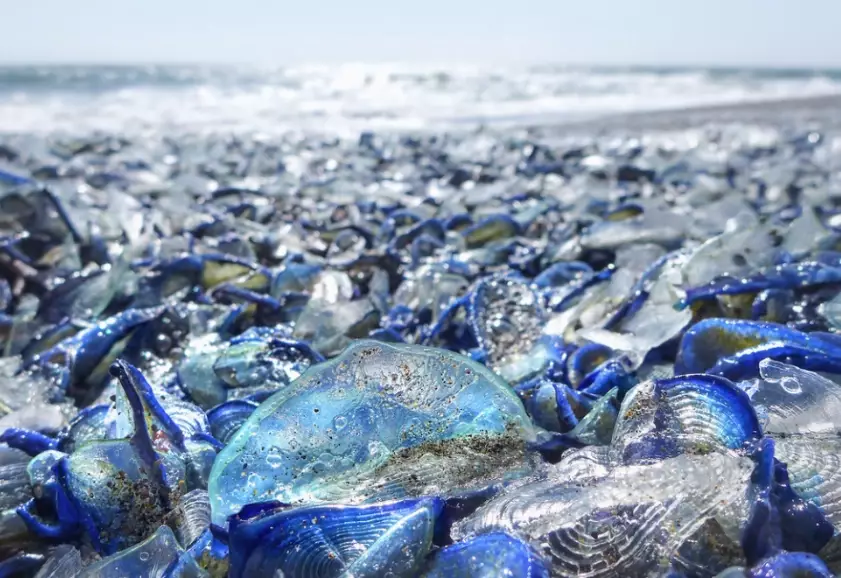
Understanding Mass Stranding Events
These events are not random tragedies; they are a predictable ecological phenomenon tied to wind and current. They most commonly occur on west-facing beaches in the North Pacific (California, Oregon, Washington, British Columbia) and similarly exposed coasts worldwide during spring and early summer.
The mechanism is straightforward: a period of strong, steady onshore winds pushes surface waters—and everything riding them—toward the coast. Velella, utterly at the mercy of the wind, have no escape. A single event can deposit millions of individuals along miles of coastline. Within days, they decompose, creating that distinctive smell and providing a sudden, massive nutrient pulse to the intertidal zone and scavengers like birds and crabs.
Research from institutions like the Monterey Bay Aquarium Research Institute (MBARI) uses oceanographic models to track and sometimes predict these events. While not harmful, a major stranding can be a nuisance for beach towns, requiring cleanup. From an ecological standpoint, it’s a natural redistribution of ocean biomass.
A Beach Observer's Guide: What to Do and Not Do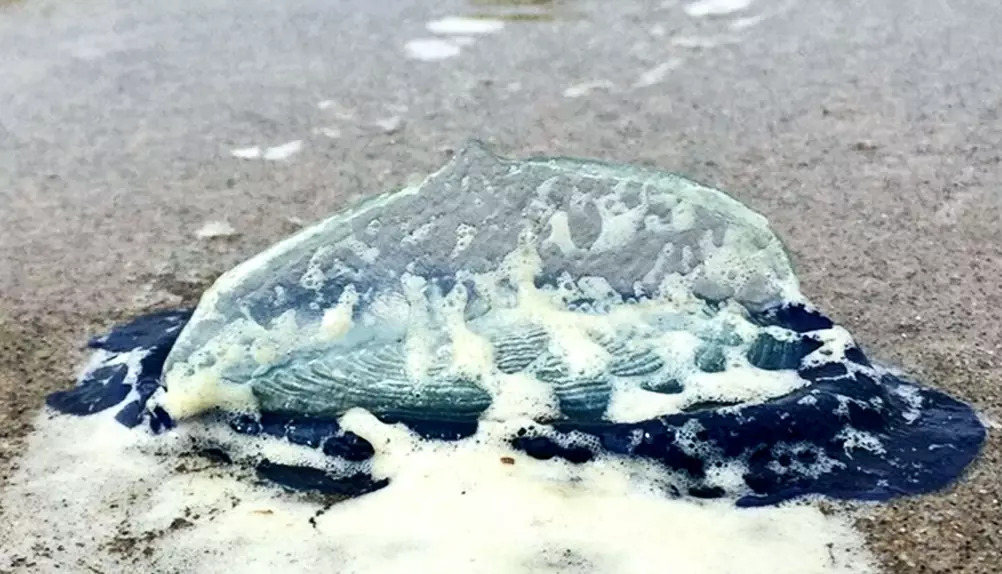
So you’ve found a stranding. Here’s a practical, step-by-step approach.
Observe and Photograph: Get down low. Capture the scale of the event with a wide shot, then focus on individual specimens. The blue against the sand makes for stunning macro photography.
Touch Gently (It’s Safe): You can carefully pick one up. The sting is designed for microscopic prey and won’t affect you. Feel the texture of the float—it’s surprisingly tough. The sail is crisp, like a piece of plastic wrap. Return it to the water if it still looks lively, though be aware it will likely wash back up.
Don’t Collect Buckets of Them: They decompose rapidly and will create a foul mess. Taking one or two for a short-term educational display is fine, but they are not souvenirs. Their beauty is fleeting.
Report Your Sighting: Contribute to community science. Apps like iNaturalist are fantastic for logging strandings. Your data point helps scientists track the frequency and extent of these events. Note the date, location, and approximate density (e.g., "scattered every few feet" or "thick carpet").
For Beach Cleanup Crews: If a stranding is particularly dense in a high-traffic area, raking them into piles above the tide line for natural decomposition is the most ecologically sound approach. Avoid burying them in large quantities directly on the beach, as this can temporarily alter sand chemistry.
Your Questions Answered (Beyond the Basics)
 Do mass strandings of Velella indicate a problem with ocean health or climate change?
Finding a blanket of blue sailors on the beach is a temporary gift from the open ocean. It’s a chance to witness a unique life form and a dramatic ecological event right at the water's edge. They remind us of the interconnectedness of ocean currents, wind, and life, and of the stunning beauty hidden in the details of the natural world. So next time you see that blue line on the sand, take a closer look—you’re seeing one of the ocean’s most elegant and doomed voyagers.


Comments
Leave a Comment