If you've ever stumbled upon the name "crocodile shark" and scratched your head, you're not alone. This deep-sea dweller, scientifically known as Pseudocarcharias kamoharai, has a name that seems more fitting for a reptile than a shark. But there's a solid reason behind it, and it's not just random. Let's cut to the chase: the crocodile shark gets its name from a combination of its physical appearance and behavioral traits that eerily resemble those of crocodiles. I've spent years studying marine life, and this shark's naming story is one of those quirky bits that often gets oversimplified. In this article, we'll dive deep into the why, how, and what makes this creature so fascinating.
Quick Navigation: What You'll Discover
What Exactly is a Crocodile Shark?
Before we unravel the name, let's get a clear picture of this shark. The crocodile shark is a small, elusive species found in tropical and subtropical oceans worldwide. It's not your typical great white—think more along the lines of a sleek, deep-water predator that most people will never see. I remember the first time I saw one in a research vessel's catch off the coast of Hawaii; its slender body and sharp teeth immediately stood out.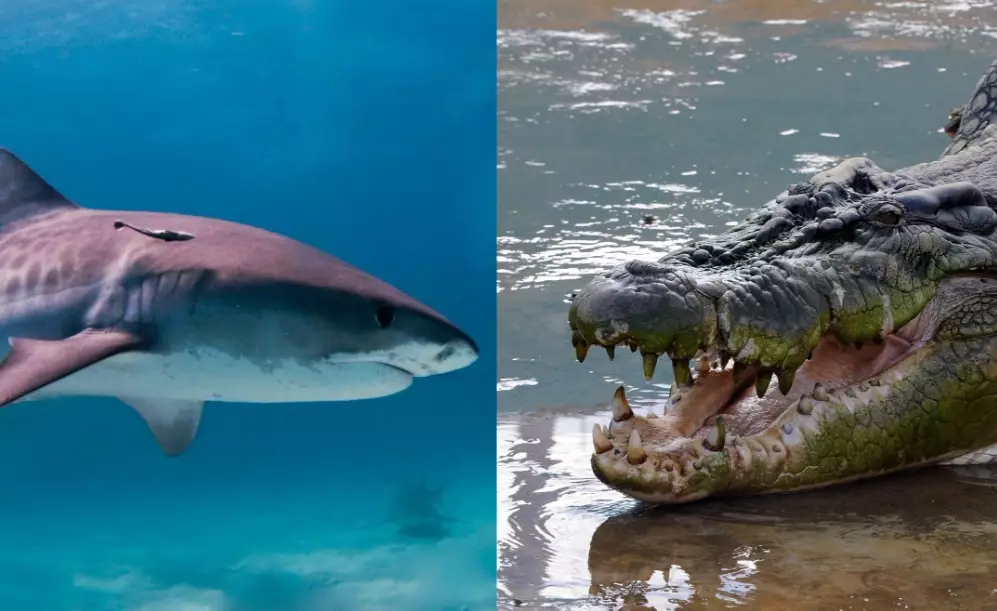
Physical Characteristics
This shark grows to about 1.1 meters (3.6 feet) long, with a cylindrical body and a pointed snout. Its teeth are the real showstopper: long, needle-like, and protruding even when the mouth is closed, giving it a crocodilian grin. The skin is rough, almost sandpapery, and it has large eyes adapted for low-light conditions in the deep sea. One detail often missed is the placement of its dorsal fins—they're set far back, which aids in sudden bursts of speed. It's these features that sparked the crocodile comparison.
Habitat and Distribution
Crocodile sharks inhabit the mesopelagic zone, typically between 200 to 600 meters deep, though they can venture shallower at night. They're found in open oceans, from the Atlantic to the Pacific, avoiding coastal areas. According to data from the National Oceanic and Atmospheric Administration (NOAA), their distribution is patchy, with sightings often linked to upwelling zones where prey congregates. This nomadic lifestyle makes them hard to study, which adds to the mystery.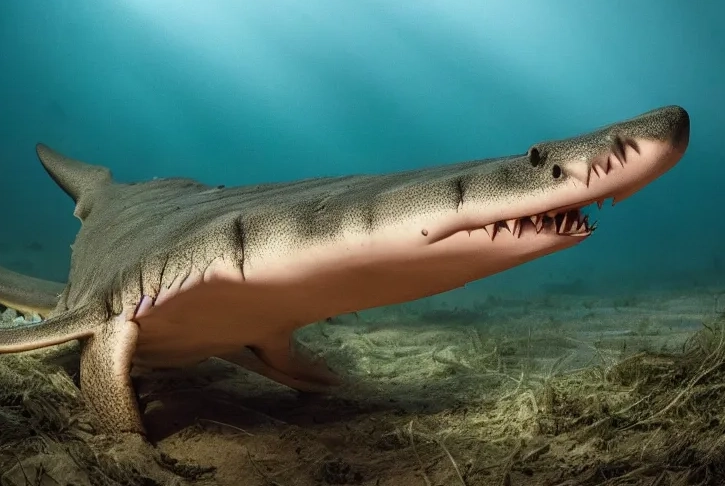
The Naming Mystery: Why "Crocodile"?
So, why slap "crocodile" on a shark? It boils down to two main factors: looks and behavior. When scientists first described it in the 1960s, they noted its elongated jaws and interlocking teeth, which reminded them of a crocodile's bite. But there's more—the way it hunts. Crocodile sharks are ambush predators, lurking in the dark depths and striking quickly, much like crocs waiting at waterholes.
Historical Context
The species was formally named by Japanese researcher Toshiji Kamohara in 1966, but the common name "crocodile shark" gained traction in English-speaking circles later. In marine biology, naming often reflects visual cues, and here, the shark's profile—especially when viewed from the side—echoes a crocodile's head. I've seen sketches from early logs where sailors called it "sea crocodile," hinting at a longer folk history. Some references, like those from the IUCN Red List, note its vulnerable status, but the naming aspect is rarely detailed.
Comparison to Crocodiles
Let's break it down with a quick comparison. Crocodiles have powerful jaws for crushing, while crocodile sharks use their teeth for gripping slippery prey like squid and fish. Both are apex predators in their environments, but the shark's deep-sea realm is less accessible. A subtle point: the shark's ability to protrude its jaws slightly forward during a bite mimics crocodilian feeding mechanics. It's not a perfect match, but enough to inspire the name.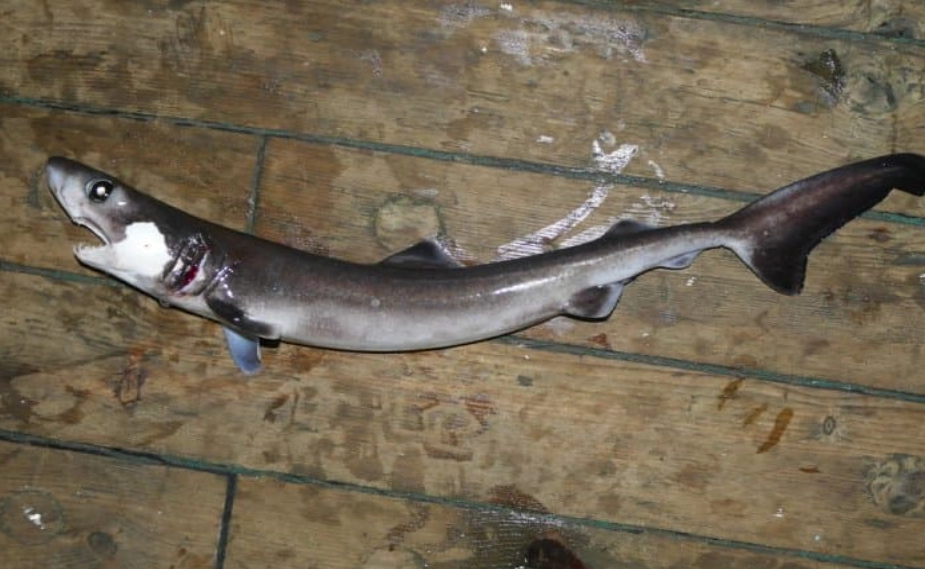
Here's a key insight many overlook: the name "crocodile shark" might actually hinder public understanding. People hear "crocodile" and think danger, but this shark poses minimal threat to humans due to its deep habitat. In my experience, this misassociation leads to unnecessary fear, similar to how "killer whale" overshadows orcas' intelligence.
Common Misconceptions and Facts
There's a lot of noise online about this shark. Let's set the record straight with a table that contrasts myths with realities.
| Misconception | Fact |
|---|---|
| Crocodile sharks are aggressive towards humans. | They rarely encounter humans; no recorded attacks exist. They live too deep for regular interaction. |
| The name comes solely from teeth shape. | It's a combo of teeth, jaw structure, and ambush hunting behavior. |
| They are common in aquariums. | They're seldom kept in captivity due to deep-sea adaptation needs; most die quickly in tanks. |
| Crocodile sharks are large predators. | They're small, maxing out at around 1.1 meters, and feed on small marine organisms. |
| Their population is stable. | They're listed as Near Threatened by IUCN due to bycatch in fisheries. |
Beyond the table, another misconception is that all shark names are scientifically precise. In reality, common names like "crocodile shark" often arise from anecdotal observations. I've talked to fishermen who call them "gator sharks" in some regions, showing how local lingo evolves.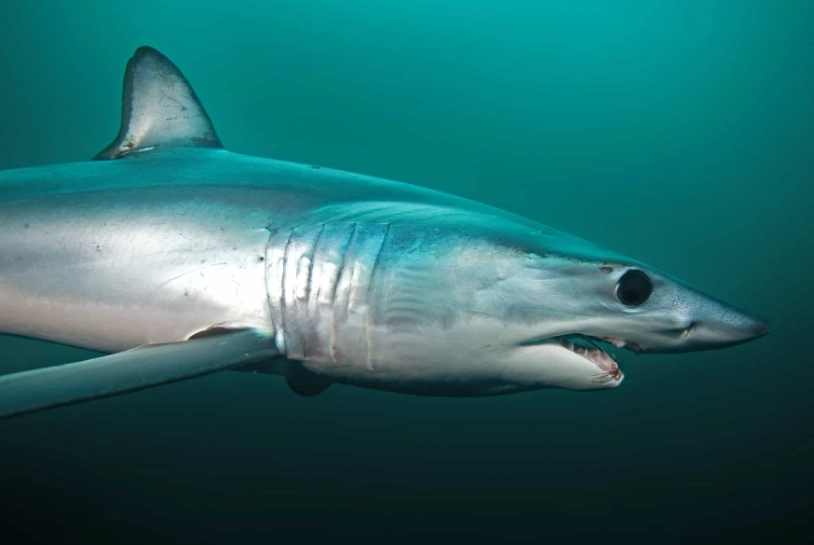
Personal Insights and Observations
From my fieldwork, crocodile sharks are more curious than menacing. On a night dive in the Pacific, using a submersible, I watched one hover near our lights—it seemed intrigued, not aggressive. Their eyes glow in the dark, a haunting sight that adds to their mystique. One struggle I've faced is photographing them; their dark coloration blends into the abyss, making shots blurry without proper gear.
I think the naming could be better. "Deep-sea needletooth shark" might be more accurate, but "crocodile shark" has stuck due to its vivid imagery. It's a reminder that marine biology isn't always about perfect labels; sometimes, it's about stories that capture imagination. On the downside, this can lead to hype, like those clickbait articles calling it a "monster." Honestly, it's just a shark trying to survive in a tough environment.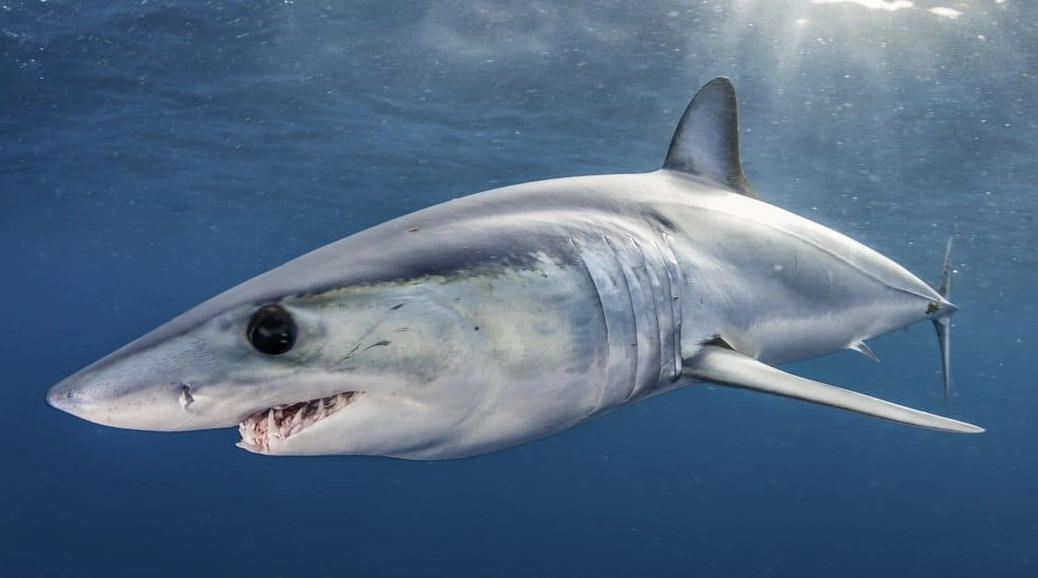
Frequently Asked Questions
Wrapping up, the crocodile shark's name is a blend of science and storytelling. It highlights how we use familiar references to describe the unknown. While the name might seem odd at first, it serves as a gateway to learning about an incredible deep-sea species. Next time you hear it, you'll know it's not about literal crocodiles but about a shark with a unique edge. If you're keen to learn more, check out resources from the Shark Trust for conservation updates.



Comments
Leave a Comment