You're weeding your garden, and your finger brushes against something cold, soft, and shockingly clear on a leaf. For a second, you think it's a dropped piece of gelatin. Then it moves. You've just met what many call a jelly caterpillar – a larval insect so transparent its internal workings are on full display. This isn't a single species, but a captivating phenomenon found across several moth and butterfly families where the larvae have translucent, gelatinous-looking skin. It's one of nature's most underrated wonders, sitting right under our noses. This guide cuts through the generic info and gives you the nitty-gritty on where to look, how to tell them apart, and why they're more than just a cool photo op.
What's Inside This Guide
What Exactly is a Jelly Caterpillar?
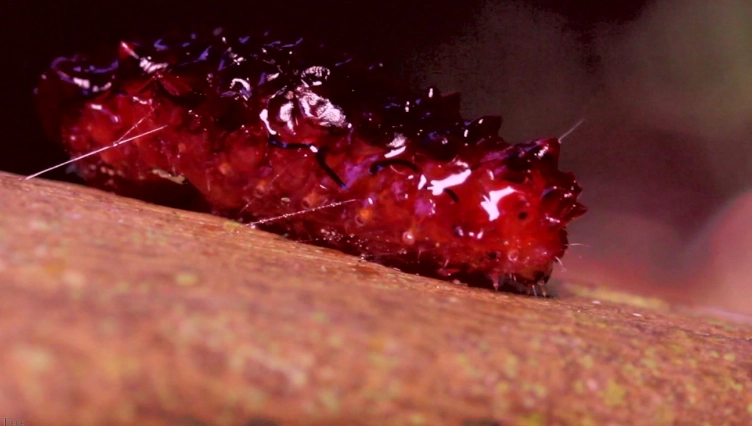
Let's clear this up first. "Jelly caterpillar" is a common name, not a scientific one. It refers to the larval stage of certain insects, primarily in the Limacodidae (slug moth) and Zygaenidae (burnet moth) families, whose bodies lack the dense hair or opaque coloration of most caterpillars. Instead, their integument (skin) is semi-translucent. You can often see the green hue of digested leaves in their gut, the dark outline of their tracheal tubes, and sometimes even the faint pulse of their dorsal vessel (a simple heart).
This transparency isn't for our amusement. It's a form of camouflage. Against a sun-dappled leaf, a transparent caterpillar becomes incredibly hard for birds and wasps to spot. The light passes through them, breaking up their outline. I once watched a chickadee land inches from a large, jelly-like larvae on an oak leaf and fly off completely oblivious. The bird looked right through it.
Where and How to Find Jelly Caterpillars
Forget random searching. To find these jelly like insect larvae, you need a strategy. They're not rare, but they're masters of hide-and-seek.
Prime Locations:
- The Underside of Leaves: This is non-negotiable. 90% of your finds will be here, especially on oak, cherry, willow, and rose bushes. They stick to the leaf's underside like a soft, clear slug.
- Dawn or Dusk Patrol: They are often more active and visible during cooler, more humid parts of the day. After a light rain is golden hour for jelly caterpillar hunters.
- Native Plant Gardens & Unsprayed Hedgerows: Pesticides are a death sentence. Your best bet is a neglected corner of a garden, a public park that avoids chemicals, or a wild hedgerow. Check plants like dogwood, hackberry, and various fruit trees.
I've had the most consistent success on the lower branches of young oak trees in semi-shaded areas. Walk slowly, gently lift leaves, and look for a slight, glossy sheen or an unusual, lumpy texture.
A Closer Look: Anatomy and Behavior of Transparent Larvae
What are you actually seeing inside that transparent caterpillar body?
The most prominent feature is the gut, running like a central, greenish tube. Its color directly reflects their last meal. You might see dark, pellet-like frass (waste) moving through it. Along the sides, look for thin, silvery-white lines – those are the tracheal tubes, part of their breathing system. In some species, you can spot small, dark osmeteria (scent glands) behind the head, which they evert to deter predators with a foul smell.
Their movement is distinct. Many lack the standard prolegs of other caterpillars and move more like a slug, using a muscular "foot" and waves of contraction. It's a slow, gliding motion. If you disturb one, it might contract into a gelatinous blob or simply freeze, relying on its invisibility cloak.
How to Identify Different Types of Jelly Caterpillars
Here's where most online guides fall short. They'll say "look for a clear caterpillar," but that's like saying "look for a red bird." You need specifics. Below is a breakdown of common jelly like insect larvae you're likely to encounter, based on host plant and key features.
Common Jelly-Like Caterpillars You Might Encounter
| Common Name / Group | Key Identifying Features | Typical Host Plants | Geographic Range (Primary) |
|---|---|---|---|
| Spiny Oak Slug Moth Larvae (Euclea delphinii) | Translucent green body with a pattern of dark, branched spines. Body margin has a faint white line. Looks like a tiny, see-through stegosaurus. | Oak, cherry, willow, basswood | Eastern North America |
| Saddleback Caterpillar (early instars) (Acharia stimulea) | Young larvae are surprisingly translucent before developing the famous "saddle." Look for a green, jelly-like blob with irritating hairs just starting to emerge. | Wide range: ornamentals, trees, garden plants | Eastern North America |
| Yellow-Collared Slug Moth Larvae (Apoda y-inversum) | Pale, almost glassy body with a distinctive yellow or orange "collar" mark just behind the head. Spines are short and often clear. | Beech, oak, maple | Eastern North America |
| Green-Banded Glass Moth Larvae (Various Zygaena species) | More common in Europe. Slender, with very clear segmentation. Often have a row of dark, shiny spots along the back and distinct black bands between segments. | Bird's-foot trefoil, clover, other legumes | Europe, parts of Asia |
A huge mistake beginners make is trying to identify them by color alone. The internal gut color changes with diet. Focus on the spine arrangement, head capsule color, and any distinct markings like collars or bands. When in doubt, note the exact plant you found it on. This is the single most useful clue for a proper caterpillar identification guide like those from the US Forest Service or university entomology departments.
The Lifecycle: From Translucent Larva to Winged Adult
That little blob of jelly has a destiny. After feeding and growing through several molts (instars), the transparent caterpillar will eventually seek a sheltered spot to pupate. The transparency often fades in the final instar as the body prepares for metamorphosis.
They often spin a flimsy, silken cocoon incorporating debris, or for some slug moths, a hardened, oval capsule.
Inside, the magic happens. The adult that emerges is often a stunning, brightly colored moth – frequently a deep metallic blue, green, or crimson. The contrast is mind-blowing. The unassuming, see-through leaf-grazer transforms into a jewel of the night (or day, for some Zygaenids). It's a powerful reminder that protecting these larvae means protecting future pollinators and aerial beauties.
Are Jelly Caterpillars Dangerous or Beneficial?
This is a major user concern. Let's be direct.
Most are NOT dangerous to touch gently, but there's a critical caveat. Many in the slug moth family (Limacodidae) possess urticating hairs or spines that can deliver a painful sting, similar to nettles. The infamous Saddleback Caterpillar is a prime example. The sting isn't from venom injected by a bite, but from hollow spines that break off and release an irritant.
Are they beneficial? Absolutely. They are native insects playing a specific role in the food web. They feed on leaves, yes, but rarely in numbers that harm healthy plants. In turn, they are a vital food source for birds, parasitic wasps, and other predators. Reaching for pesticide because you see a few is like using a flamethrower to kill a spider. You'll wipe out the good guys too. According to the IUCN Red List, insect declines are a global crisis, and every native caterpillar counts.
How to Safely Observe and Photograph Jelly Caterpillars
You've found one. Now what?
- Do Not Remove the Leaf: This stresses them and disrupts their feeding. Observe in situ.
- Use a Hand Lens: A 10x loupe will open up their incredible internal world. You'll see details you never imagined.
- For Photography: Use your smartphone's macro mode or a dedicated macro lens. The trick is indirect, diffused light. Direct flash will create a blinding white hotspot on their glossy skin. Hold a piece of white paper to reflect window light, or shoot on a cloudy day. Get on their level – shoot from the side to highlight transparency.
- Document & Release: Take notes: date, plant species, location. Then walk away and let it be.
I ruined a dozen shots of a perfect specimen before I learned the diffused light trick. The photos looked like a glowing blob. Patience and soft light are everything.
Your Jelly Caterpillar Questions Answered

Comments
Leave a Comment