Let's be honest, the first time you see one, your brain might short-circuit. Is that a miniature dragon? A pinecone that sprouted legs and a bad attitude? Nope. It's the caterpillar of the royal walnut moth (Citheronia regalis), better known by its street name: the hickory horned devil. It's the largest caterpillar in North America, looks like it crawled out of a fantasy novel, and triggers a primal "run away" response in most people. Here's the twist—it's completely harmless. This guide is for anyone who's found one, photographed one from a safe distance, or just wants to know what on earth this creature is.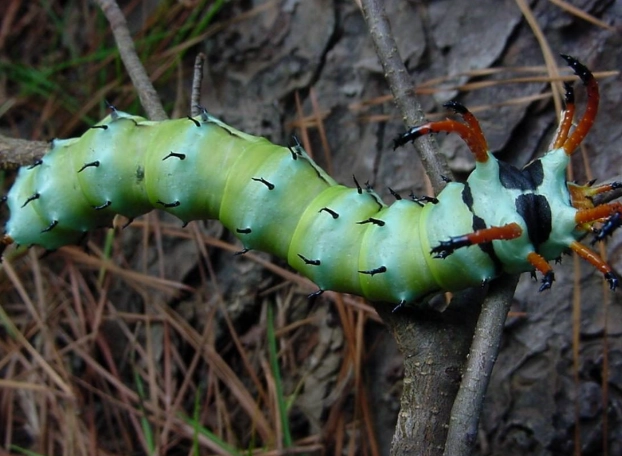
What's Inside This Guide?
- Meet the Hickory Horned Devil: Beyond the Fearsome Name
- The Lifecycle of a Regal Giant: From Egg to Moth
- Where and How to Find Royal Walnut Moth Caterpillars
- Are Hickory Horned Devils Dangerous or Poisonous?
- What to Do If You Find One: A Step-by-Step Guide
- Beyond the Caterpillar: The Stunning Royal Walnut Moth
- Common Myths and Misconceptions Debunked
Meet the Hickory Horned Devil: Beyond the Fearsome Name
The name fits. A full-grown hickory horned devil can reach the size of a hot dog, around 5.5 inches long. Its body is a vibrant, almost electric green, like a Granny Smith apple. The head is a rusty orange or maroon color, and it's crowned with four long, black-tipped "horns" that look capable of doing serious damage (they can't). Along its back are rows of smaller, black-tipped spikes. It's an outfit designed for one thing: intimidation.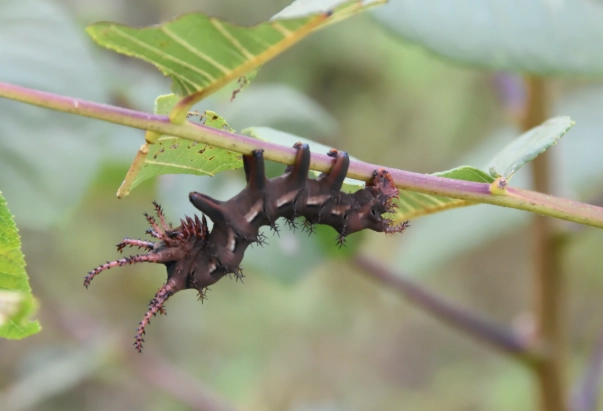
I found my first one fifteen years ago on a hiking trail in southern Ohio. It was lumbering across the path, moving with a slow, deliberate confidence. My hiking buddy jumped back. I got closer, my heart pounding not from fear, but from sheer excitement. Up close, you realize it's not aggressive. It's just... big. And weirdly beautiful. The colors are so crisp, the patterns so precise. It's a living sculpture.
That's the first thing most experts in the field will tell you: don't let the look scare you off. This is a gentle giant of the insect world. Its entire defense strategy is bluffing. Those horns? They're flexible. They're made of the same stuff as its skin. You could touch them (though it's best not to handle them unnecessarily).
The Lifecycle of a Regal Giant: From Egg to Moth
This incredible appearance is just one chapter in a fascinating, year-long story. The royal walnut moth has a single generation per year.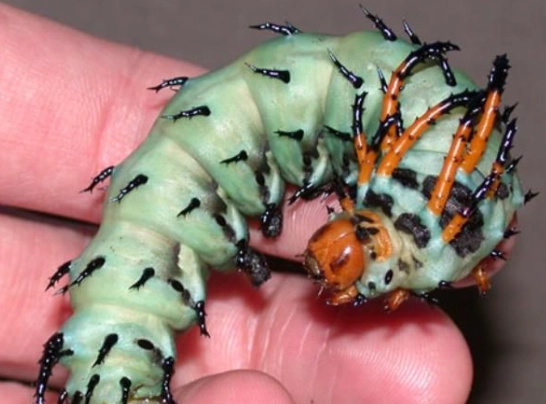
The Beginning: In early summer, a female royal walnut moth lays small, oval eggs on the leaves of host trees. She doesn't lay them in big clusters, usually just one or two per leaf. You'll almost never see these eggs; they're too small and well-camouflaged.
The Growing Phase: The tiny caterpillar that hatches doesn't look much like the final product. It's small, brownish, and has small bumps. Over the next few months, it goes through several molts (called instars), growing larger and greener each time. It spends all its time eating. And eating. And eating. Its favorite foods are the leaves of trees in the walnut family (black walnut, butternut) and the hickory family (shagbark, pignut). I've also seen them on sweet gum, persimmon, and sumac, which is a point many field guides miss.
The Final Act: By late August or September, it reaches its full, monstrous glory—the fifth instar. This is the stage everyone photographs. After a few weeks of gorging itself, the instinct to pupate kicks in. This is where a common mistake happens. People see a bright green caterpillar and assume it's sick or dying if it stops moving. Not necessarily.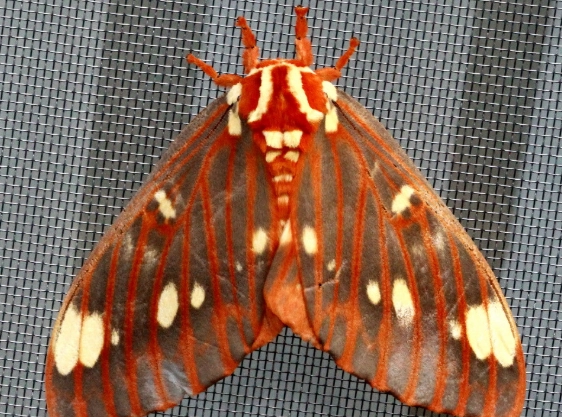
The caterpillar will stop eating. Its color might even dull slightly. Then, it does something surprising: it leaves the tree. It crawls down the trunk and wanders along the ground, sometimes quite a distance, looking for the perfect spot. This is risky—it's exposed to birds, cars, and curious humans. It's looking for soft soil. When it finds it, it burrows down several inches and forms a hard, dark brown chamber in the earth. Inside, it transforms into a pupa, where it will spend the entire winter and most of the following spring and summer.
The Grand Finale: After nearly 10 months underground, the adult royal walnut moth emerges, usually around June or July. It has no mouthparts and cannot eat. Its sole purpose as an adult is to mate and, for the female, to lay eggs. It lives for only about a week.
Where and How to Find Royal Walnut Moth Caterpillars
You don't find them everywhere. Their range is primarily the eastern United States, from New Jersey down to Florida and west to Texas and Nebraska. They're most common in deciduous forests, wooded suburbs, and parks where their host trees grow.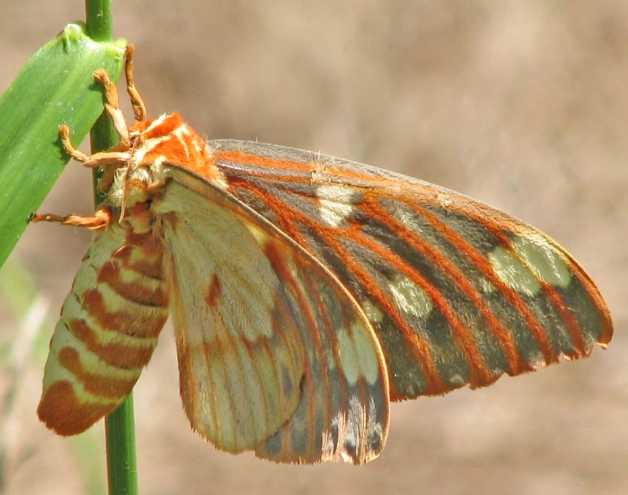
Here’s the practical, on-the-ground advice you won't find in a textbook:
| Host Tree | Key Features for Spotting | Best Time to Look |
|---|---|---|
| Black Walnut | Look for compound leaves and round, green walnut fruits. Check the undersides of leaves for feeding damage (large, irregular holes). | Late afternoon, when caterpillars are most active. |
| Shagbark Hickory | Distinctive shaggy, peeling bark. Caterpillars often rest on the trunk or larger branches during the day. | Early morning, when they might be moving to a daytime resting spot. |
| Pecan (in the South) | Similar leaf structure to hickory. Check younger trees or low-hanging branches. | Mid-August to late September. |
| Sweet Gum | Star-shaped leaves and spiky "gumball" seed pods. A less common but confirmed host. | Focus on trees at the forest edge or in sunny clearings. |
The single best time to look is from mid-August through September. Go for a walk in a wooded area after a few dry days. Don't just stare up into the canopy. Look at the ground at the base of these trees. You might see their distinctive, pellet-like droppings (frass) first—it looks like small, dark brown cylinders. Then scan the trunk and lower branches. I've had the most luck on shagbark hickories near old fence lines.
And if you see one on the ground, walking purposefully? It's not lost. It's a fifth instar looking for a place to dig. That's a special sighting.
Are Hickory Horned Devils Dangerous or Poisonous?
This is the million-dollar question, the core user fear, and the source of so much misinformation. Let's be crystal clear.
No, hickory horned devils are not poisonous. They do not have urticating (stinging) hairs like some caterpillars. They do not secrete irritants. Their horns and spines are not venomous. They are physically incapable of harming you.
I've handled them (gently, with clean hands) to move them off a trail and onto a tree. The sensation is strange—the horns are soft and bendable, the body is firm and cool. It might curl its head back in a defensive posture, which looks terrifying, but it's all show. It can't bite you in any meaningful way.
The confusion comes from two places. First, its close cousin, the io moth caterpillar, is covered in painful, venomous spines. People see spikes and lump all caterpillars together. Second, its appearance is so aggressively anti-predator that our brains scream "danger!" It's one of nature's most successful bluffs.
What to Do If You Find One: A Step-by-Step Guide
So you've found one. Here's exactly what to do, from a practical, leave-no-trace perspective.
1. Pause and Observe. Don't immediately reach for it. Watch what it's doing. Is it munching on a leaf? Resting on a branch? Marching across your driveway? Its behavior tells you what it needs.
2. Get Your Photos. This is a once-in-a-season find for most people. Take pictures from different angles. Get a close-up of the head and horns. Include something for scale, like your hand (not touching it) or a leaf. This helps with identification later and is just cool to have.
3. Assess the Situation.
- If it's safely on its host tree: Leave it alone. It's exactly where it needs to be.
- If it's crossing a path, road, or driveway: This is the main scenario where intervention is helpful. It's vulnerable to being stepped on or run over.
- If it's in your garden on a non-host plant: It's probably just passing through. It won't eat your tomatoes or flowers.
4. How to Move It (If Necessary). If you need to move it off a road, find a sturdy leaf or a small, flat piece of bark or cardboard. Gently slide the edge under the caterpillar. Let it crawl onto the "lift." Don't pick it up with your fingers if you can avoid it. Carry it to the base of the nearest appropriate tree (walnut, hickory, etc.) and place the leaf against the trunk. It will climb up on its own.
5. What NOT to Do. Do not put it in a jar "to show the kids." Do not try to keep it as a pet without serious research and preparation. Do not move it to a "better" forest miles away—you might be taking it away from its pupation site or introducing it to an area without the right trees for the next generation.
The best practice is almost always non-interference. These creatures have been following this lifecycle long before we showed up.
Beyond the Caterpillar: The Stunning Royal Walnut Moth
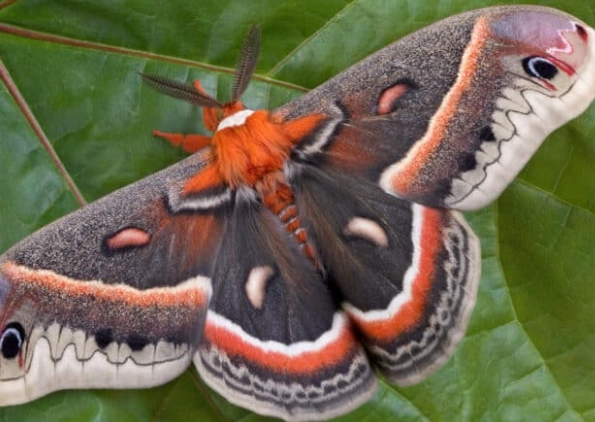
We focus on the caterpillar because it's so dramatic, but the adult moth is a masterpiece in its own right. It's large, with a wingspan of 4 to 6 inches. The wings are a gorgeous, velvety gray, overlaid with intricate patterns of orange, cream, and yellow. The body is orange with yellow stripes. It looks regal—hence the name.
Seeing one is a rare treat. They're nocturnal and don't come to lights as reliably as other giant silk moths. Your best chance is to find one resting on a tree trunk or the side of a building in the morning. They are completely harmless and cannot sting or bite.
Their brief adult life is a poignant reminder of the urgency of their mission. All the energy stored during that summer of frantic eating as a caterpillar is now being used in one final, beautiful act of reproduction.
Common Myths and Misconceptions Debunked
Let's clear up some persistent fiction.
Myth 1: "They're incredibly rare." Not really. They're locally common. If you have the right trees in the right area, you might see several in a season. Their populations fluctuate year to year. You just don't see them often because the caterpillar stage is brief and the moth is nocturnal.
Myth 2: "The horns can stab you and inject venom." Already covered, but worth repeating: false. They're soft. It's a costume.
Myth 3: "They're a major garden or forest pest." No. A single caterpillar eats a lot, but they are never present in large enough numbers to defoliate a healthy tree. The tree will grow new leaves. According to entomologists at institutions like the University of Florida, they are considered a minor, occasional feeder, not a pest of concern.
Myth 4: "If you see one on the ground, it's sick or looking for water." The most likely reason a fifth instar is on the ground is that it's seeking a pupation site. It's a natural, necessary part of its journey. It's not thirsty (caterpillars get moisture from leaves) and probably not sick.
Your Questions Answered
I think a hickory horned devil is eating my prized walnut tree. What should I do?
First, confirm it's actually causing damage. A few large holes in leaves are normal and won't hurt a mature tree. These caterpillars are solitary. If you have one, you might have two or three on a whole tree—not an army. The tree will easily survive. The value of hosting such a unique and spectacular native insect far outweighs the cosmetic leaf damage. My advice? Consider it a privilege and let it be. Removing it won't protect your tree but will end a fascinating life cycle.
Can I raise a royal walnut moth caterpillar at home?
You can, but it's a major commitment, not a weekend project. You need a constant supply of fresh leaves from its specific host tree, a large, well-ventilated enclosure cleaned daily, and a deep container of soil for pupation that must be kept cool and moist (but not wet) for almost a year. It's a fantastic educational project, but be prepared for the long haul. Many people successfully raise them and release the adult moths. Detailed rearing guides are available from lepidopterist societies.
If I find one, should I move it to a safer spot?
"Safer" is a human concept. The only time moving is clearly beneficial is if it's in immediate physical danger—like the middle of a busy sidewalk or road. Move it to the base of the nearest suitable tree, not miles away. If it's crawling on the ground in a forest or your yard, it's probably doing exactly what it's supposed to do (looking for soil). Moving it then might disrupt its natural pupation behavior.
How can I tell if a caterpillar is about to pupate?
The signs are subtle. It will stop eating and may become less active. Its bright green color might fade slightly to a duller, bluish-green. The most telling sign is behavior: if it starts wandering relentlessly, especially off its host plant and on the ground, it's almost certainly in the "pre-pupation wander" phase. This is a critical time—don't interfere unless it's headed for certain doom (like a swimming pool).



Comments
Leave a Comment