You reel in a nice-looking snapper. You go to clean it, pry open its mouth, and instead of a tongue, you see a pale, bug-like creature staring back at you. It's not a nightmare. It's Cymothoa exigua, the tongue-eating louse. This crustacean doesn't just hitch a ride; it performs a functional organ replacement that would make a sci-fi writer jealous. The fish lives on, using the parasite as a prosthetic tongue. It's one of the most bizarre and specific parasitic relationships in the ocean.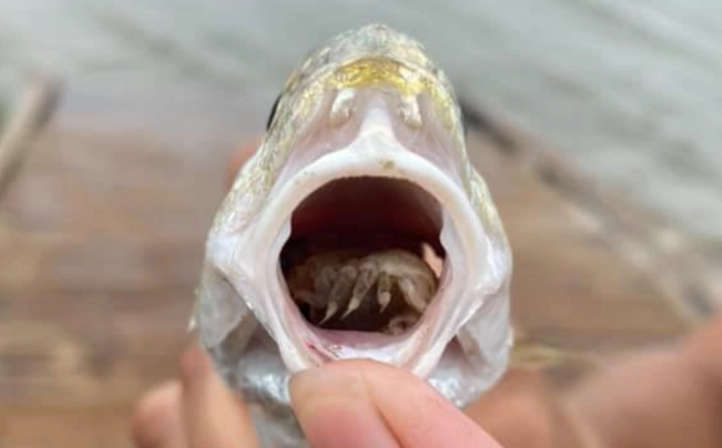
I've been studying marine parasites for over a decade, and this one still makes me shake my head in a mix of horror and admiration every time I see it. Most articles just call it "weird" and move on. But if you're an angler, a fish farmer, or just a curious soul, you need to know more than that. You need to know how it happens, which of your favorite fish are targets, and what it really means for the ecosystem—and your dinner plate.
What's Inside This Deep Dive?
What Exactly is the Tongue-Eating Parasite?
First, let's clear up a common mistake. Calling it a "louse" is a bit misleading. It's not an insect. Cymothoa exigua is an isopod, a type of crustacean, making it a distant cousin of shrimp, crabs, and pill bugs. The term "tongue-eating louse" stuck because it's graphic and memorable, but "parasitic isopod" is more scientifically accurate.
These creatures are sex-changers. They all start life as males. When a juvenile male finds a suitable host fish, it enters through the gills and makes its way to the mouth. If it's the first to arrive and successfully attaches, it will transform into a much larger female. She can grow up to 3 cm long. Any later arrivals remain as smaller males, living in the gill chamber and mating with the female. It's a tiny, self-contained harem inside a fish's head.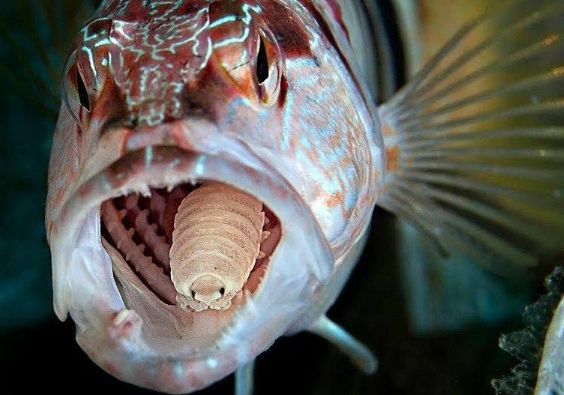
Quick Specs: The female Cymothoa exigua is the star of the show. She's the one that latches onto the tongue stump. Her body is segmented, creamy-white to light brown, and she uses her front claws (pereopods) to anchor herself firmly. She feeds on blood from the tongue's arteries or on mucus, not on the fish's food. That's a crucial detail many get wrong.
How Does the Parasite Execute Its Tongue Replacement?
The process isn't a single bite. It's a slow, methodical takeover. Let's break down this real-life horror movie scene step-by-step.
Step 1: The Infiltration
The tiny, free-swimming male isopod finds a host. It doesn't randomly bite. It specifically enters through the gill arches, a common entry point for many fish parasites. From there, it navigates to the buccal cavity—the mouth.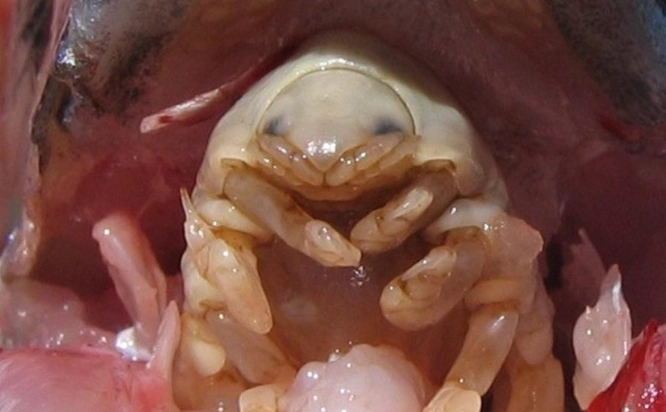
Step 2: The Attachment and Transformation
Once in the mouth, it attaches to the base of the tongue using its claws. If it's the dominant parasite in the location, hormonal triggers initiate its change to female. This transformation takes time, during which it starts its feeding.
Step 3: The "Eating" (It's More Like Starving)
Here's the subtle error most descriptions make. The isopod doesn't typically chew the tongue off in a frenzy. It attaches to the tongue and feeds on the blood supply. This constant drain of nutrients and physical damage causes the tongue tissue to atrophy—to waste away and eventually fall off. It's a process of starvation and necrosis, not consumption. The parasite severs the blood vessels, and the tongue simply degenerates.
Step 4: The Replacement
Once the original tongue is gone, the female isopod positions her own body into the exact spot. Her rear end aligns with where the tongue root was. The fish's muscles actually adapt and grasp onto the parasite. Studies, like those referenced in the Journal of Parasitology, suggest the fish can use the isopod to help manipulate food. The parasite becomes a functional, living prosthetic.
The fish doesn't die from this. It can live for years with its new "tongue." The parasite gets a steady food source (blood/mucus) and protection. From an ecological perspective, it's a brutally efficient adaptation.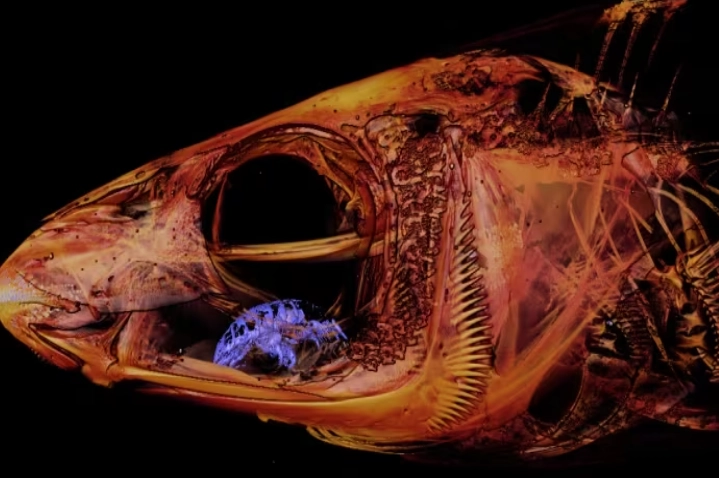
Which Fish Are Most at Risk from Cymothoa exigua?
This isn't a global plague. Cymothoa exigua has a known range, primarily in the Eastern Pacific, from the Gulf of California down to coastal waters of Ecuador and Chile. It's also been recorded in the Atlantic. It's host-specific but not to a single species. It prefers certain families of fish.
If you're fishing in these areas, here are the fish you're most likely to find hosting this peculiar tenant:
- Snappers (Family Lutjanidae): Particularly the spotted rose snapper (Lutjanus guttatus). This is one of its classic and most studied hosts.
- Drum Croakers (Family Sciaenidae): Fish like the black drum or spotted seatrout are common targets.
- Sea Basses (Family Serranidae): Some groupers and related fish can also be infected.
You won't find it on open ocean pelagic fish like tuna or marlin. It's a coastal, inshore parasite. The isopod's lifecycle depends on the fish's behavior and habitat overlapping with where the juvenile parasites are swimming.
A Note for Aquarists: This is a big one. There are documented cases, though rare, of similar tongue-eating isopods (different Cymothoa species) showing up in home aquariums via live feeder fish or newly acquired wild-caught specimens. Always quarantine new arrivals, especially wild-caught fish. The horror of finding one in a closed-system tank is real.
Can the Tongue-Eating Parasite Affect Humans?
This is the question everyone asks with a slight shudder. Let's be unequivocally clear.
No, Cymothoa exigua cannot infect humans. It is not a human parasite. Its biology, lifecycle, and attachment mechanisms are exquisitely adapted to specific fish hosts. It cannot survive in the human body, attach to a human tongue, or cause us any direct parasitic harm.
The only potential risk is indirect and relates to food safety, as with any parasite in fish meat.
- If you catch an infected fish, the parasite itself is not toxic. Removing the isopod and the area immediately around its attachment (which may have some tissue damage) is standard practice. The rest of the fish flesh is typically considered safe to eat if properly cooked.
- Cooking kills it. Thorough cooking (to an internal temperature of 145°F / 63°C) will destroy any parasites or bacteria, as recommended by food safety authorities like the NOAA Fisheries.
- The real issue is psychological. Finding one can be so off-putting that people discard a perfectly good fish. That's the true "cost" to humans—wasted food and a serious case of the heebie-jeebies.
From a conservation and fishery management perspective, high infestation rates in a local population could be a sign of environmental stress or high parasite loads, which is worth monitoring. Resources like FishBase often catalogue host-parasite relationships, helping scientists track these dynamics.



Comments
Leave a Comment