You’re raking leaves in the fall, and there it is—a creature so bizarre, so utterly alien-looking, you freeze. It’s bright green, as thick as your thumb, and covered in spiky black horns. Your first thought might be "giant alien caterpillar" or "run." But what you’ve actually found is one of North America's most impressive and misunderstood insects: the larva of the Regal Moth, famously called the Hickory Horned Devil. Despite its terrifying appearance, this caterpillar is a gentle giant, completely harmless to humans and a vital part of the eastern forest ecosystem. This isn't a pest you need to fear; it's a temporary spectacle, a living piece of natural art that transforms into a stunning, orange-and-gray moth.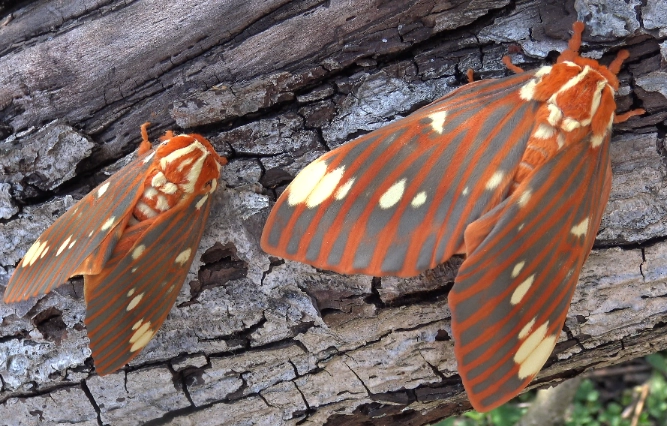
What's Inside?
What Exactly Is a Hickory Horned Devil?
The name "Hickory Horned Devil" refers specifically to the caterpillar (larval) stage of the Citheronia regalis moth. The adult moth is called the Regal Moth or Royal Walnut Moth. It's one of the largest moths native to North America, with a wingspan that can reach over 6 inches. They belong to the family Saturniidae, the giant silk moths, which includes other celebrities like the Luna and Cecropia moths.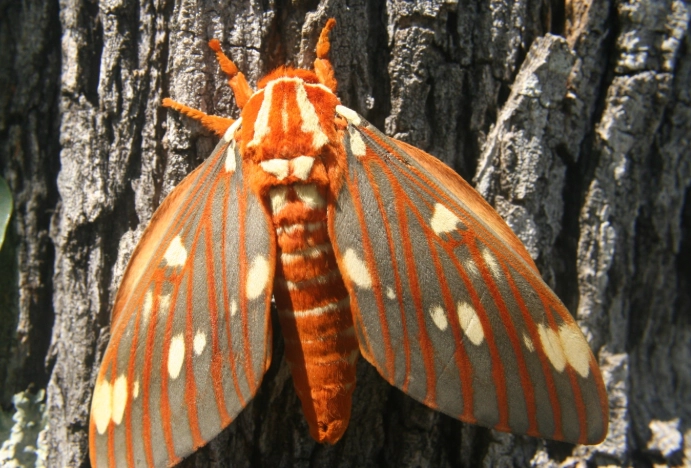
I remember the first time I saw one, not in a field guide, but clinging to the trunk of a black walnut tree. It was so still and so vividly colored, I thought it was a plastic toy someone had stuck there as a joke. That's the thing—they look utterly unreal. Their lifecycle is tied to deciduous forests, particularly areas with their host trees: hickory, walnut, butternut, sweetgum, and persimmon. They are not widespread pests but localized wonders.
From Monster to Majesty: Appearance at Both Stages
Let's break down the looks, because they couldn't be more different.
The Hickory Horned Devil (Caterpillar)
This is the stage that earns the dramatic name. A mature larva can be 5 to 6 inches long. Its body is a striking turquoise-green or sometimes a deep blue-green. The most prominent features are the long, black, curved "horns" protruding from the top of the thorax—these are harmless and flexible. Along the body, you'll find rows of shorter, black-tipped spines. The head is a coppery-orange color, which adds to its otherworldly look. Contrary to popular belief, those spines are not venomous or sharp enough to break skin. They’re a purely visual defense meant to scare off birds.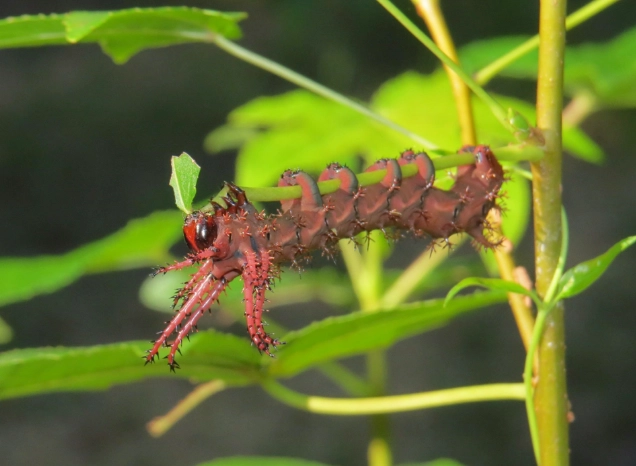
The Regal Moth (Adult)
The transformation is staggering. The adult moth is beautiful and subtle. Its wings are primarily a velvety gray, patterned with orange veins and spots. The hindwings have larger patches of bright orange and yellow. The body is fuzzy and orange-striped. Unlike the caterpillar, the adult moth has no functional mouthparts and cannot eat. Its sole purpose is to reproduce within its short 7-10 day lifespan.
| Feature | Hickory Horned Devil (Larva) | Regal Moth (Adult) |
|---|---|---|
| Size | Up to 6 inches long | Wingspan 4–6+ inches |
| Primary Color | Vivid turquoise-green | Velvety gray with orange |
| Key Markings | Black horns & spines, orange head | Orange veins, spots, and hindwing patches |
| Lifespan of Stage | ~4-6 weeks (feeding) | ~1 week (non-feeding) |
| Activity | Feeds on tree leaves, mostly nocturnal feeder | Nocturnal, flies to find mates |
The Complete Life Cycle Journey
This is where the magic and fragility of their existence become clear. The entire process is a race against time and predators.
1. The Tiny Egg: It starts with a tiny, oval egg laid by the female moth on the underside of a host tree leaf in summer. You'd likely never notice it.
2. The Growing Devil: The caterpillar hatches and begins eating. It goes through five distinct growth phases (instars). With each molt, it gets larger and its colors become more intense. Early instars look different—they are smaller, browner, and have forked tails, which they lose later. They are solitary and do minimal damage to large trees.
3. The Descent and Burial: This is a critical moment most people miss. In late summer or early fall, the fully-grown caterpillar stops eating. It does not spin a cocoon in the tree. Instead, it crawls down the tree trunk and across the ground to find soft soil. This is when people often find them on patios, driveways, or sidewalks—they're looking for a burial site. This vulnerable journey is why so many are picked up by humans or eaten by predators.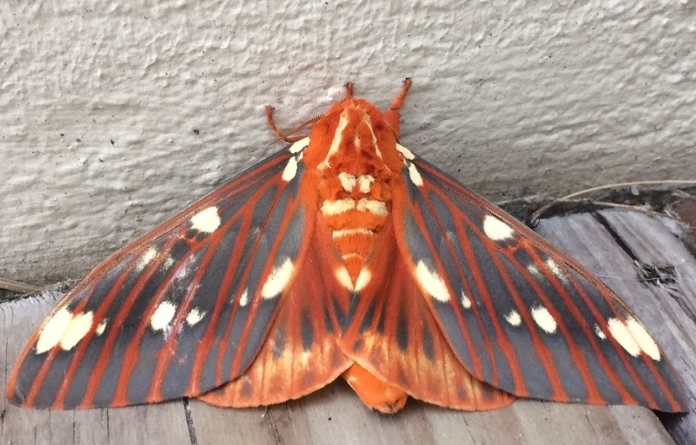
4. The Underground Pupation: It burrows into the soil and forms a tough, dark-brown chamber where it pupates for the winter. It will remain underground for 9-10 months, sometimes even for two winters if conditions aren't right.
5. The Emergence: The following summer, the adult Regal Moth digs its way to the surface, expands its wings, and takes flight under cover of darkness to begin the cycle anew.
A Common Mistake to Avoid: If you find a mature caterpillar wandering, the worst thing you can do is put it back high in a tree. It has finished feeding and is biologically programmed to find soil. The best action is to place it near soft, undisturbed soil at the base of a tree and let it do its thing.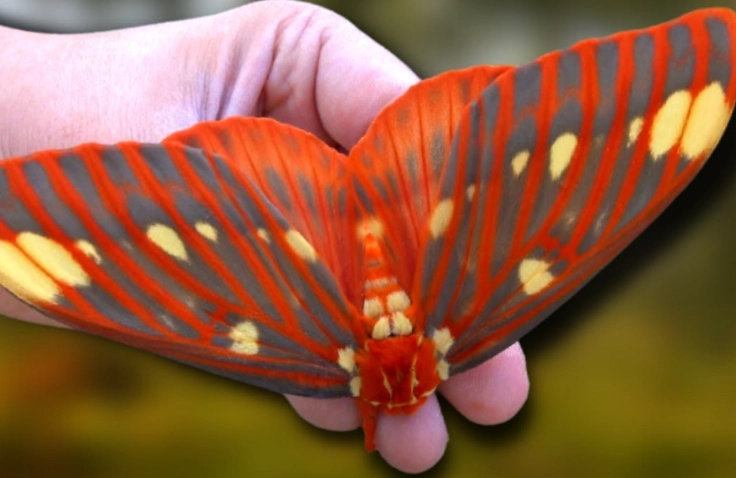
Where and How to Find Them
You can't just look anywhere. Their range is the deciduous forests of the eastern United States, roughly from New Jersey to Florida and west to Texas and Nebraska. They are most commonly reported in the Mid-Atlantic and Southeastern states.
- Prime Habitat: Mature woods with plenty of hickory, walnut, or sweetgum trees. Forest edges and suburban areas with these trees can also host them.
- Best Time for Caterpillars: Late August through October. Look on tree trunks and branches, but also keep an eye on the ground in September.
- Best Time for Adult Moths: June and July, after dusk. They are attracted to lights, so checking porch lights in rural or wooded suburbs is a good tactic. According to moth observation data aggregated by sites like iNaturalist, nocturnal light surveys are the most common way enthusiasts document them.
They are not "rare," but their populations are localized and can fluctuate year to year. Seeing one feels special because it's a brief, seasonal encounter.
The Human Relationship: Pest or Treasure?
This is a major point of confusion. Let's be clear: The Hickory Horned Devil is NOT a significant pest. Here’s why that matters for your garden decisions.
They are solitary feeders. You will never see an infestation that defoliates a tree like tent caterpillars or gypsy moths might. A healthy hickory or walnut tree can easily withstand the nibbling of a few of these caterpillars over a season. It's a natural, balanced part of the forest food web.
The real danger is that their fearsome looks lead to unnecessary killing. I've heard too many stories of people spraying them with insecticide out of fear, which is a tragic overreaction. They are a valuable food source for birds and other wildlife, and their presence indicates a healthy, pesticide-limited ecosystem.
In fact, they should be considered a treasure. They are a flagship species for native biodiversity and a powerful tool for sparking interest in entomology and conservation. Their dramatic appearance makes them perfect ambassadors for the insect world.
How to Observe and Photograph Them Responsibly
If you're lucky enough to find one, here’s how to enjoy the moment without harming it.
For the Caterpillar: Handle it gently, if at all. Support its entire body from underneath. It might curl its head defensively, but it won't bite. For photography, use natural light. A macro lens can capture the incredible detail of its spines and colors. Place it on a branch or leaf for a natural context shot, but remember—if it's walking on the ground, let it continue its mission after your photo session.
For the Adult Moth: Adults are often found resting near lights in the morning. They are very docile. You can carefully offer a finger for them to climb onto. Photograph them against a neutral background to highlight their intricate patterns. Avoid using a bright flash directly in their eyes.
Citizen Science: Report your sighting! Upload your photos with location data (approximate is fine) to platforms like iNaturalist or Butterflies and Moths of North America. This helps scientists track their distribution and population health.



Comments
Leave a Comment