I remember the first time I saw one. It wasn't in a tropical forest, but in a dusty university collection. Among rows of brown and beige shells, this one screamed for attention. Spirals of glossy black, white, and sometimes red, so perfect they looked painted on. This was my introduction to the candy cane snail, a creature that seems to defy the very idea of a snail being "dull." If you're here, you've probably seen a picture too, and you're hooked. Let's cut straight to it: the candy cane snail (Liguus virgineus, and its close relatives) is a tree-dwelling gastropod native to the Caribbean, celebrated for its stunning, striped shell. But there's so much more to the story than a pretty shell.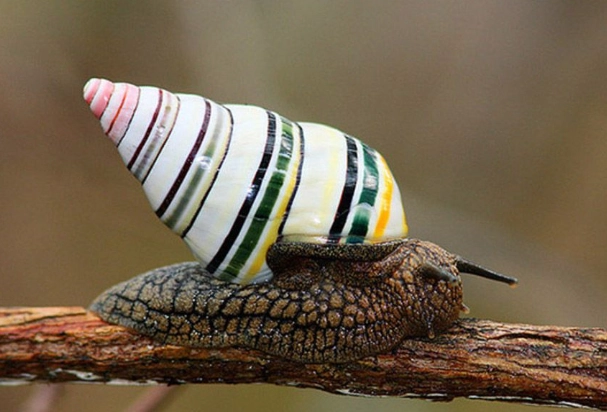
What You'll Find Inside
- What Exactly Is a Candy Cane Snail? (Unpacking the Basics)
- Where to Find These Living Rainbows (Habitat & Distribution)
- A Life in Color: Biology and Behavior of the Candy Cane Snail
- Are Candy Cane Snails Endangered? The Conservation Reality
- Spotting Candy Cane Snails: A Practical Guide for Enthusiasts
- Candy Cane Snail FAQs: Your Questions, Answered
What Exactly Is a Candy Cane Snail? (Unpacking the Basics)
Calling it just a "pretty snail" is like calling a Picasso just a painting. The candy cane snail belongs to a specific group of air-breathing land snails. They're often called tree snails because, well, that's where they live.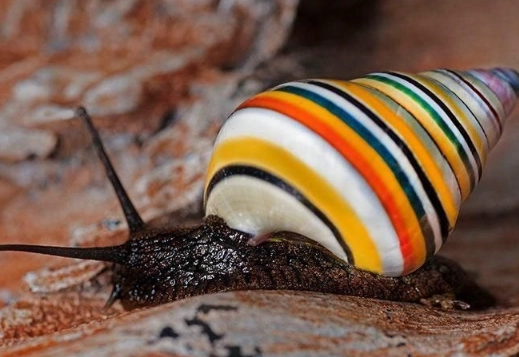
Quick Snapshot: Think of a medium-sized snail shell, about 1.5 to 2 inches tall when adult. The base color is usually a creamy white. Overlaid on that are bold, vertical stripes of black, brown, orange, or pink. No two patterns are exactly alike, but the contrast is always striking. The shell has a high, pointed spire—very different from the round garden snail shell you're used to.
Scientific Name and Family Tree
The most famous species is Liguus virgineus. But here's where it gets messy, even for experts. The taxonomy of these snails is a hot debate. Some scientists argue that the different color forms on different islands might be separate species or subspecies. You might see names like Liguus fasciatus or Orthalicus species thrown around. For us enthusiasts, the key takeaway is that "candy cane snail" often refers to this whole visually spectacular group within the family Orthalicidae.
The Shell: More Than Just Pretty Stripes
That iconic shell isn't just for show. Its high spire and thick structure are adaptations for a life clinging to trees, resisting drying out in the tropical sun. The glossy surface (the periostracum) helps repel water. And the colors? For decades, the assumption was that such bright colors in nature are a warning: "Don't eat me, I'm toxic." But with candy cane snails, the leading theory is actually camouflage.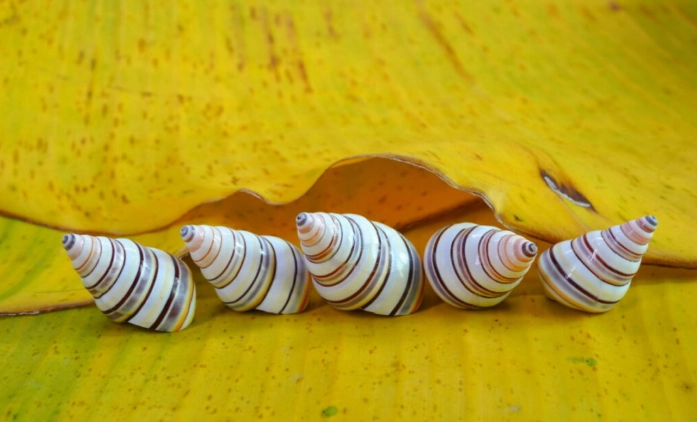
It sounds crazy, right? How can a bright white and black snail hide? In the dappled sunlight of a tropical hardwood forest, where light and shadow create a patchwork on the tree bark, a bold striped pattern can actually break up the snail's outline. From a few feet away, a bird might see a confusing pattern of light and dark, not a tasty snail.
Where to Find These Living Rainbows (Habitat & Distribution)
You won't find these in your backyard unless you live on a very specific set of islands. Their world is small and fragile.
The Caribbean Hotspot
Candy cane snails are icons of the Caribbean. Their stronghold is the island of Hispaniola (home to Haiti and the Dominican Republic). They're also found in Cuba, and there are isolated populations or similar species in parts of Florida (though many are introduced or endangered). In Haiti, they're known as "lambi mòn" (mountain conch), a name that hints at their elevated, forested homes.
Micro-Habitat: Life in the Trees
Forget the ground. These are arboreal specialists. They spend nearly their entire lives on the trunks and branches of specific trees in tropical dry forests and hammocks. They have a particular fondness for gumbo-limbo trees (Bursera simaruba), known for their peeling, coppery-red bark, and other native hardwoods. The bark provides not just a surface to cling to, but also their food: lichens, fungi, and algal films.
This specialization is their biggest strength and their greatest vulnerability. They can't just move to any tree. Lose the specific forest habitat, and you lose the snails.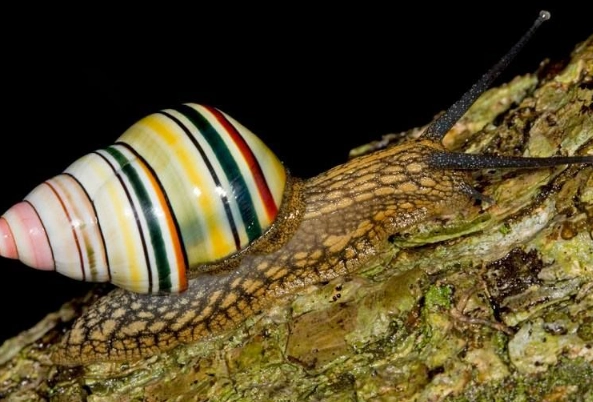
A Life in Color: Biology and Behavior of the Candy Cane Snail
So how does a creature this flashy actually live? They're surprisingly slow-paced, even for a snail.
Diet: What's on the Menu?
They are grazers, but not of your lettuce. Using their radula (a tongue-like organ with tiny teeth), they meticulously scrape microscopic lichens, fungi, and algae from the surface of tree bark. This diet is why they're so tied to mature, undisturbed forests—it takes time for these food sources to establish on the trees. A young, replanted forest won't support them for decades.
Reproduction: The Next Generation of Stripes
They are hermaphrodites, meaning each snail has both male and female reproductive organs. After mating, they lay small clutches of pearly white eggs in damp soil or hidden in leaf litter at the base of their host trees. The hatchlings, with tiny translucent shells, must then make the perilous journey up into the canopy to begin their arboreal life. Mortality at this stage is high.
One of the coolest things? The shell pattern is determined genetically. A baby snail's stripes are already programmed, growing in as the shell expands. They don't change color based on their environment.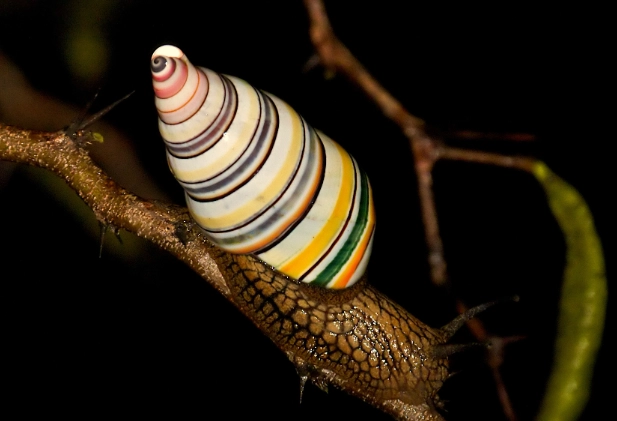
Are Candy Cane Snails Endangered? The Conservation Reality
This is the most critical part of the story. The short answer is: yes, many populations are under severe threat.
| Threat | Impact on Candy Cane Snails |
|---|---|
| Habitat Destruction | Deforestation for agriculture and charcoal production is the #1 threat. No trees means no snails. It's that simple. |
| Over-collection | Their beauty is their curse. For decades, shells were collected in huge numbers for the tourist trade and by shell collectors, devastating local populations. |
| Climate Change | Altering rainfall patterns and increasing droughts can dry out their fragile forest habitats, making it harder for them to stay hydrated and find food. |
| Invasive Species | Rats and other introduced predators find them easy, slow-moving meals. |
Conservation Efforts and How You Can Help
It's not all doom and gloom. In the Dominican Republic, some populations are now within protected national parks, like Parque Nacional Este. Local conservation groups and international bodies like the IUCN monitor their status.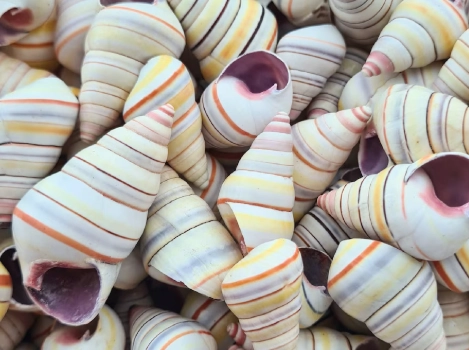
What can you do?
- Never buy shells collected from the wild. If you must have a specimen, seek out ones from sustainable, cultivated sources (which are rare) or old collection lots.
- Support ecotourism and conservation organizations in Haiti and the Dominican Republic that work to protect native forests.
- Spread awareness. The more people know these aren't just trinkets but fragile parts of an ecosystem, the better.
Spotting Candy Cane Snails: A Practical Guide for Enthusiasts
If you're planning a trip to the Caribbean with hopes of seeing one in the wild, here's the real-world advice you need.
Best Times and Conditions for Observation
They are most active and visible during and after rains. The moisture allows them to move without drying out. Early morning in a damp forest is prime time. During dry periods or the heat of the day, they "aestivate"—seal themselves to the tree bark with a layer of dried mucus and become incredibly hard to spot, looking like just another bump on a branch.
Ethical Wildlife Watching: Do's and Don'ts
- DO go with a knowledgeable local guide. They know the specific forest patches and can find them without disturbing the habitat.
- DO NOT pull them off the trees. You can damage their foot or the delicate seal they've made. Observe from a respectful distance.
- DO use your camera's macro lens. This is where you'll get stunning detail without intrusion.
- DO NOT take the shells, even if you find a dead one. In many areas, this is illegal, and it removes calcium from the forest ecosystem that other creatures need.
A good guide might take you to a spot in the Dominican Republic's Parque Nacional del Este, where with patience, you can see several clinging to the smooth bark of a gumbo-limbo, looking for all the world like fallen Christmas decorations.
Candy Cane Snail FAQs: Your Questions, Answered
Finding a candy cane snail in the wild is a moment of pure magic. It's a reminder of nature's boundless creativity and its profound fragility. It's not just a snail; it's a striped sentinel, telling us about the health of an entire forest ecosystem. See it, photograph it, marvel at it. But always let it stay where it belongs.


Comments
Leave a Comment