You're raking leaves under a hickory tree when something hits the ground with a soft thud. It's not a pinecone. It's a creature that looks like it crawled out of a fantasy novel—vivid green, covered in menacing black-tipped spikes, with a set of curved red horns near its head. Your first thought might be, "Is that thing from around here?" and your second, "Should I run?" Let's talk about the hickory horned devil, the caterpillar of the regal moth, and why finding one is a rare treat, not a threat.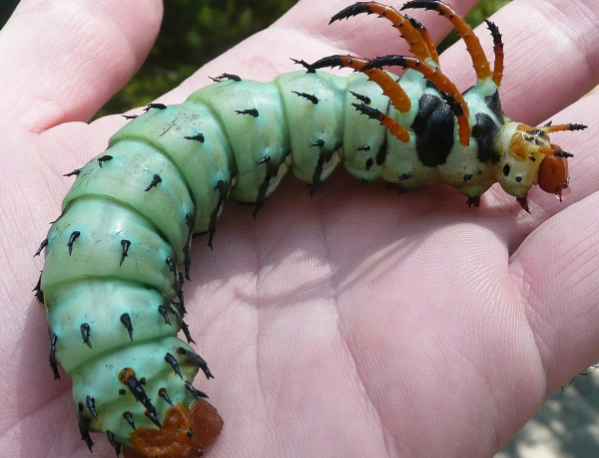
What's Inside This Guide
Spotting the Hickory Horned Devil: A Visual Identification Guide
This isn't your average, fuzzy caterpillar. The hickory horned devil (Citheronia regalis) is North America's largest caterpillar by mass, and its appearance is unmistakable once you know what to look for. I've seen a few over the years, and even I do a double-take every time.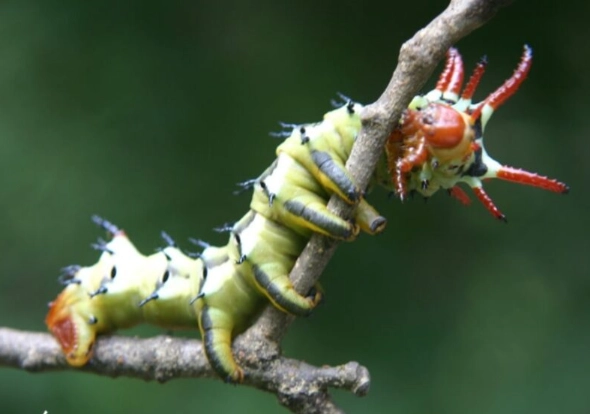
The most common mistake is confusing it with the tomato hornworm or the tobacco hornworm. Those are smooth, green, and have a single "horn" on the rear. The hickory horned devil is in a different league entirely.
Key Features to Look For
Color and Size: It's a striking, almost electric green. A mature one can be as thick as your thumb and over 5 inches long—truly impressive. Early stages (instars) are smaller and can be more brownish.
The Horns: This is the namesake feature. It has four curved, red horns on the second and third segments behind its head, each tipped in black. They're flexible, not rigid. On its actual head, it often has two smaller, blue or black horns. The blue ones are a fantastic giveaway.
The Spines: Rows of smaller, black-tipped spines run along its back and sides. They look fierce but are more for show than combat.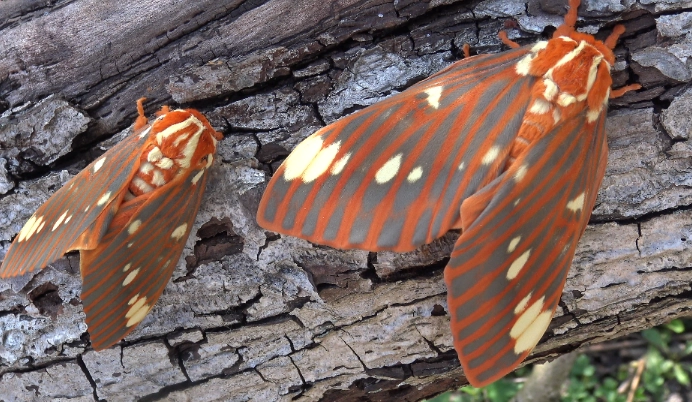
Pro Tip from the Field: Don't just look up in the trees. In late summer and early fall, the fully-grown caterpillars descend from the canopy to find a place to burrow and pupate. This is when most people find them—crossing a driveway, on a sidewalk, or on the ground in a garden. If you see a giant, spiky green "worm" marching purposefully across the earth, it's likely on this final journey.
| Feature | Hickory Horned Devil | Common Look-Alikes (Tomato/Tobacco Hornworm) |
|---|---|---|
| Body Texture | Covered in numerous black-tipped spines | Smooth, with faint diagonal lines |
| Horns | Multiple red & black horns on thorax; small head horns | Single prominent horn on the rear |
| Primary Color | Vibrant green | Green, often with white markings |
| Common Host Plants | Hickory, walnut, pecan, sweetgum, persimmon | Tomato, tobacco, pepper, eggplant |
| Typical Season Found | Late summer to early fall (Aug-Oct) | Mid-summer to early fall |
From Caterpillar to Regal Moth: The Complete Lifecycle
Finding the caterpillar is the dramatic middle act of a fascinating story. The adult, the regal moth, is just as stunning—large, with beautiful orange and gray wings. But you rarely see it. They're nocturnal and don't eat; their only job is to mate and lay eggs.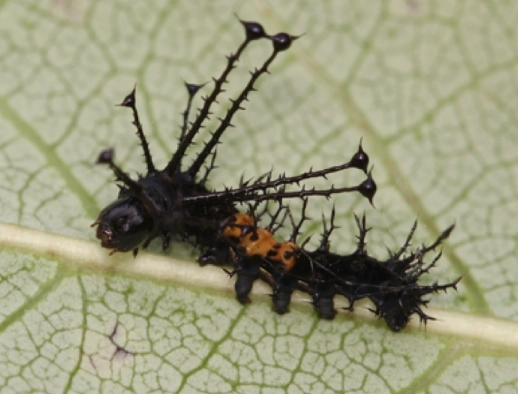
Here’s the yearly cycle, which explains why sightings are special:
1. The Egg Stage: In early summer, a female moth lays small, oval eggs on the leaves of a host tree. She chooses hickory, walnut, or pecan preferentially, but will use sweetgum or persimmon if needed.
2. The Caterpillar's Feast: The tiny caterpillars hatch and begin eating. They go through several molts (instars), growing larger and changing color slightly with each stage. They spend almost their entire larval life high in the tree canopy, which is why we don't see the small ones. They're perfectly camouflaged against the leaves.
3. The Descent and Pupation: This is the part you might witness. Once fully grown in late summer or fall, the caterpillar stops eating. It crawls down the tree—this is its most vulnerable time—and finds soft soil. It burrows several inches down and forms a tough, dark-brown chamber called a pupal cell.
4. The Long Wait: This is the kicker. It spends the winter and the entire following summer as a pupa underground. It only emerges as an adult moth the next summer, two years after the egg was laid. Some may even stay dormant for two winters. This long lifecycle means populations are never huge, making each sighting a genuine event.
Are Hickory Devil Horned Caterpillars Dangerous? Understanding the 'Sting'
This is the million-dollar question. With all those horns and spines, it looks like it could deliver a sting worthy of its name. The truth is more about psychology than poison.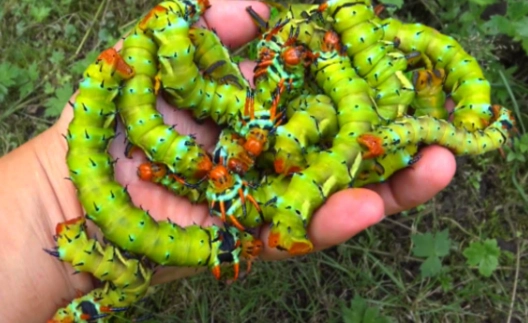
Short answer: No, it is not venomous or poisonous.
The spines are not connected to any venom gland. They are a pure defense mechanism—a bluff. To a bird or other predator, this thing looks painful to eat. It's the insect equivalent of a porcupine's quills or a pufferfish's inflation.
However—and this is the nuance most basic guides miss—the spines can cause minor mechanical irritation. They are sharp. If you press the caterpillar firmly against your skin or handle it roughly, the spines might prick you. For most people, this feels like a slight prickling or itching sensation, similar to handling coarse fiberglass insulation or a stiff-bristled brush. It might leave tiny red marks that fade quickly.
Who should be extra cautious? Individuals with very sensitive skin or specific insect allergies might have a stronger reaction. It's always wise to observe, not handle, if you have known sensitivities. The risk is extremely low, but it's not zero for everyone.
Compare this to a true stinging caterpillar like the puss caterpillar (asp) or the saddleback caterpillar, which have venomous hairs that cause immediate, intense pain. The hickory horned devil is a gentle giant in comparison, relying entirely on its scary costume.
What to Do If You Find a Hickory Horned Devil (or Get 'Stung')
So you've found one. Here’s a practical, scenario-based guide.
Scenario 1: It's on a tree or plant in your yard.
Celebrate! You have a healthy, native ecosystem. This caterpillar is not a pest. It will not defoliate your tree like gypsy moths might; there are never enough of them to cause damage. The best action is to take a photo, show the kids, and let it be. It's a free, walking natural history lesson.
Scenario 2: It's crossing a path or driveway where it might get stepped on or run over.
You can gently move it. Use a large leaf or a flat piece of cardboard to scoop it up. Don't use your bare hands if you're concerned about the spines, though I've carefully moved smaller ones by hand without issue. Place it near the base of a suitable tree (hickory, walnut, etc.) or in a sheltered, leafy area. It will reorient itself.
Scenario 3: You or a child touched it and feels a prickling sensation.
Don't panic. Wash the area with soap and cool water. A cold compress can help. If itching develops, an over-the-counter hydrocortisone cream or oral antihistamine should relieve it. I've never heard of a severe reaction from this species.
Scenario 4: You want to raise it to see the moth emerge.
It's possible but requires commitment. You need a steady supply of fresh leaves from its host tree. The setup needs to be kept clean and humid. Most importantly, you must provide a deep container of soil for it to burrow into when it's ready to pupate. The pupa will then need to be kept cool (but not freezing) over the winter, and then warm again to simulate spring. It's a long-term project, but incredibly rewarding if you succeed.
Your Hickory Horned Devil Questions Answered
Finding a hickory horned demon is a rare and exciting event. It's not a monster; it's a miracle. A miracle of camouflage, of transformation, and of the complex web of life in our own backyards. The next time you see one, you'll know exactly what you're looking at—and you can impress your friends with your knowledge of one of nature's most impressive caterpillars.





Comments
Leave a Comment