The first time I saw a rhinoceros iguana at a reptile expo, I was struck by its prehistoric, almost armored appearance and its calm, observant demeanor. It looked less like a pet and more like a dinosaur that had stepped out of a documentary. That initial awe is what draws many people to Cyclura cornuta, but it’s also where the biggest mistakes begin. This isn't a pet you buy on impulse. Owning a rhinoceros iguana is a major project, a decade-spanning commitment that demands specific knowledge, significant space, and a deep respect for the animal's wild nature. If you're considering one, or just fascinated by these incredible lizards, this guide cuts through the basics to give you the detailed, practical advice you actually need.
Jump to a Section
What is a Rhinoceros Iguana?
Native to the Caribbean islands of Hispaniola (Haiti and the Dominican Republic), the rhinoceros iguana is a robust, ground-dwelling lizard. Its name comes from the three horn-like protrusions on the snout of males, which are used for display and combat. They're one of the larger members of the Cyclura genus, a group often called rock iguanas.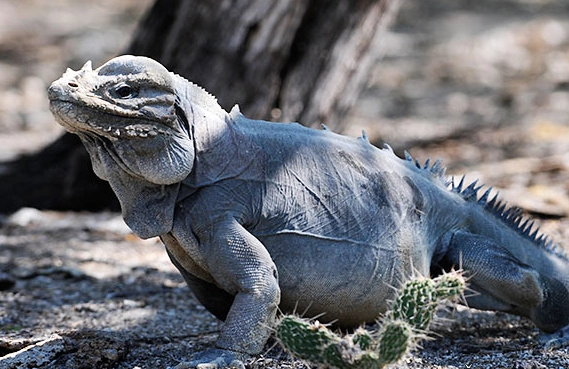
In the wild, they're classified as Vulnerable by the IUCN, primarily due to habitat loss and predation by introduced species. This makes responsible captive breeding programs important, and you should only ever purchase a captive-bred animal from a reputable breeder. Wild-caught specimens are stressful for ecosystems and often come with a heavy parasite load and immense stress.
Quick Facts: Adults typically reach 2 to 4.5 feet in total length (nose to tail tip) and can weigh between 10 and 20 pounds, with males being significantly larger and bulkier than females. Their skin is a stony gray, brown, or olive, providing perfect camouflage in their rocky, dry-forest habitats.
Rhinoceros Iguana Care Requirements
This is where most prospective owners fail in their planning. You cannot house an adult rhinoceros iguana in a standard glass aquarium or a moderately-sized reptile cage. Thinking in terms of a “tank” is your first mistake. You need to think in terms of a room or a custom-built enclosure.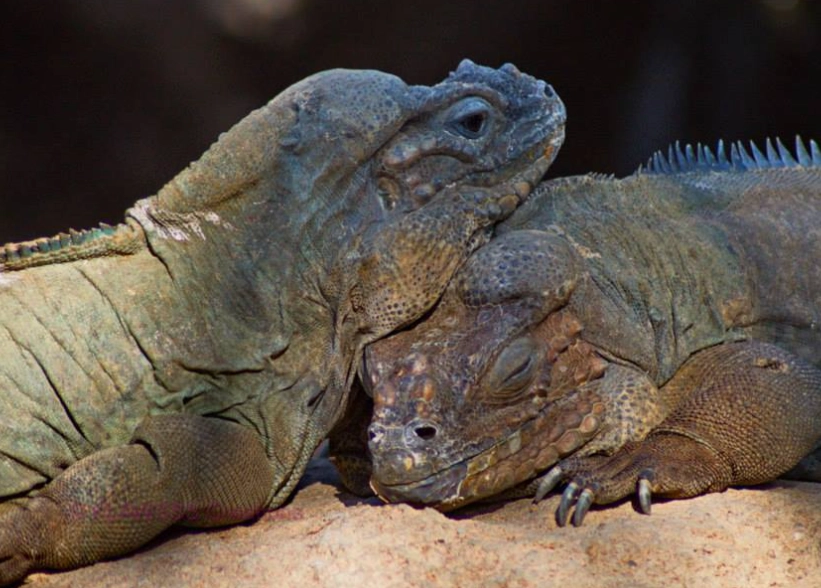
Enclosure Size: The Non-Negotiable
For a single adult, the absolute minimum enclosure size is 8 feet long by 4 feet wide by 4 feet tall. And that's a minimum. Many experienced keepers and organizations like the Association of Zoos and Aquariums recommend much larger. For a pair, you need to double the floor space. The height is less critical than the length and width, as they are primarily terrestrial, but they will appreciate climbing structures.
Here’s a breakdown of space needs as they grow:
| Life Stage | Minimum Enclosure Dimensions (L x W x H) | Notes |
|---|---|---|
| Hatchling/Juvenile (up to 18") | 4' x 2' x 2' | A good start, but they grow fast. Plan the adult space now. |
| Sub-Adult (18" to 30") | 6' x 3' x 3' | The interim home. Construction of the final enclosure should be underway. |
| Adult | 8' x 4' x 4' (Absolute Minimum) | This is the commitment. Custom wood/PVC/plywood builds or dedicated rooms are standard. |
Heating, Lighting, and Humidity
Rhinoceros iguanas are heliotherms—they bask in the sun to regulate their body temperature and metabolism. Your enclosure must replicate this.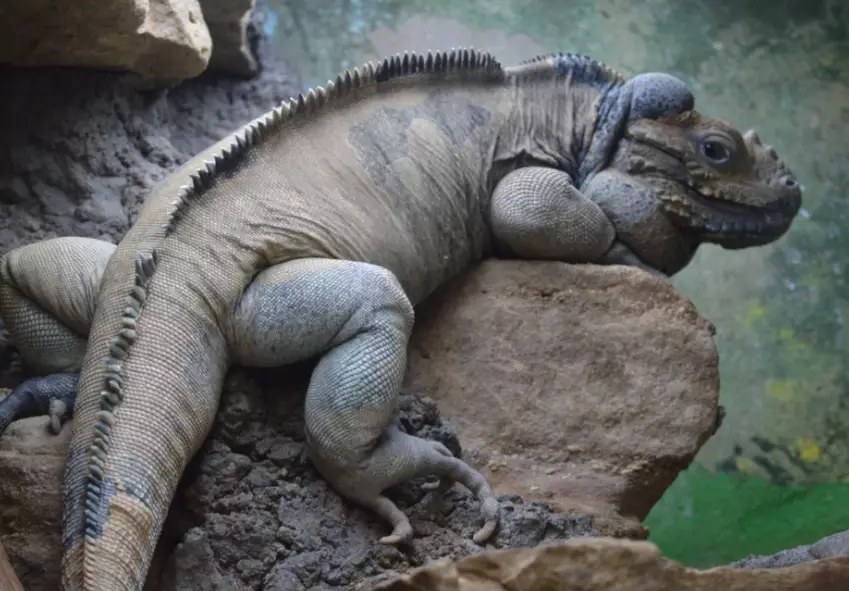
- Basking Spot: Create a focused basking area under a high-wattage halogen or mercury vapor bulb where the surface temperature (measured with an infrared temp gun) reaches 110-120°F (43-49°C).
- Ambient/Cool Side Temperature: The rest of the enclosure should have a gradient down to 75-80°F (24-27°C). Nighttime temps can drop to 70-75°F (21-24°C).
- UVB Lighting: This is not optional. They require high levels of UVB (10.0 or 12% T5 HO tubes are best) to synthesize vitamin D3 and metabolize calcium. The bulb should span 2/3 of the enclosure length and be replaced every 10-12 months, even if it still lights up. UVB output decays long before the bulb dies.
- Humidity: Aim for 60-70% humidity. This can be achieved with a large water bowl, occasional misting, and a moisture-retaining substrate in part of the enclosure. They also need a humid hide box filled with damp sphagnum moss for shedding.
The Substrate Debate: Avoid loose particulate substrates like sand or mulch for juveniles, due to impaction risk. For adults, a deep mix of topsoil, play sand, and cypress mulch can work, allowing for natural digging behaviors. However, many keepers opt for easier-to-clean solid substrates like sealed plywood or vinyl flooring with separate dig boxes. There's no perfect answer, but hygiene is paramount.
Rhinoceros Iguana Diet and Feeding
Forget the image of an iguana eating lettuce. Rhinoceros iguanas are primarily herbivorous as adults, but their diet needs to be diverse and nutrient-dense. A poor diet is the fastest route to metabolic bone disease (MBD), a crippling and often fatal condition.
The Core Principle: 80-90% of the diet should be a variety of chopped, dark leafy greens and vegetables. 10-20% can be fruits and flowers. Animal protein (like insects or rodent pinkies) should be offered very sparingly, if at all, for adults—perhaps once a month. Juveniles may accept more insects, but the focus should quickly shift to greens.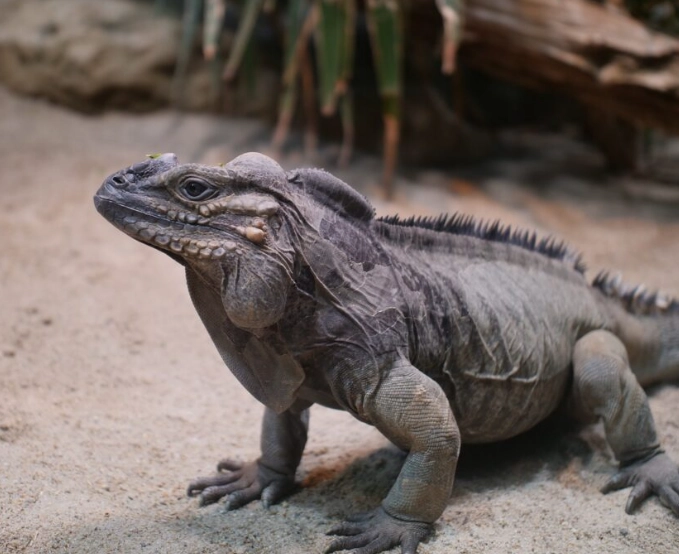
Staple Foods (Feed Daily): Collard greens, mustard greens, dandelion greens, turnip greens, escarole, endive, bok choy, shredded butternut squash, green beans, snap peas.
Occasional Foods (Feed 1-2 times per week): Bell peppers, carrots, cactus pads (nopales), hibiscus flowers and leaves, mango, papaya, berries, figs.
Foods to Avoid or Limit: Iceberg lettuce (no nutritional value), spinach and beet greens (high oxalates), broccoli/cabbage (can cause gas), avocado (toxic), high-phosphorus fruits like bananas.
Every meal should be dusted with a high-quality calcium powder (without D3 if using proper UVB, with D3 if not). A multivitamin supplement should be used 1-2 times per week.
Rhinoceros Iguana Health and Behavior
Understanding their behavior is key to preventing health issues and building a safe relationship.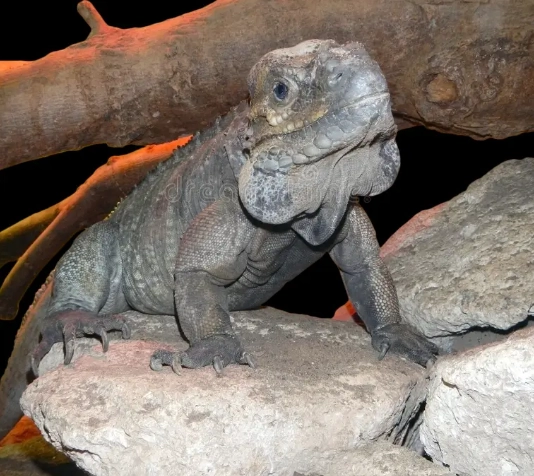
Are They Aggressive?
They are not “aggressive” in the sense of seeking conflict. They are defensive and territorial. A threatened rhinoceros iguana will puff up its body, extend its dewlap, hiss, and may whip its powerful tail or bite. The bite is a serious injury risk. This behavior is usually triggered by fear, improper handling, or invasion of their space.
With consistent, gentle, and respectful interaction from a young age, they can become quite tame. But “tame” doesn't mean cuddly. It means tolerating your presence and handling without stress. Always approach from the side, not above (like a predator), and support their entire body.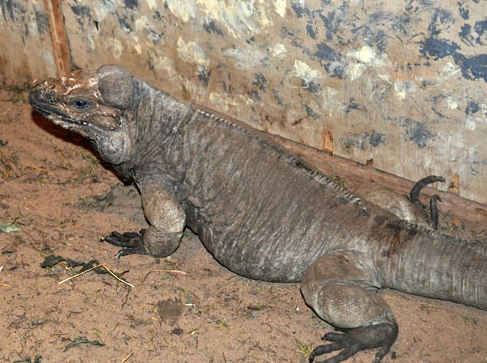
Common Health Issues to Watch For
- Metabolic Bone Disease (MBD): The big one. Symptoms include soft or swollen jaw, bowed legs, tremors, and difficulty moving. Caused by incorrect calcium/phosphorus balance and lack of UVB. Prevention through proper diet and lighting is 100% effective.
- Respiratory Infections: Bubbly mucus in nose/mouth, wheezing, lethargy. Often caused by incorrect temperatures or humidity.
- Parasites: Even captive-bred animals can have them. Annual fecal exams by a qualified exotic/reptile veterinarian are essential. Find this vet before you get the iguana.
- Egg Binding (Females): Mature females will lay eggs even without a male. They need a proper deep, moist nesting area. Failure to lay eggs is a life-threatening emergency.




Comments
Leave a Comment