You've seen the pictures. Striking ball pythons in shades of charcoal, slate gray, and pure white, devoid of the yellows and browns we associate with the species. That's the axanthic morph. It's more than just a pretty face—it's a specific genetic switch that removes yellow pigment, creating a living grayscale photograph. But here's where most guides stop. They'll tell you it's recessive and walk away. Let's dig into what that really means for you as a keeper or breeder, the subtle differences the internet glosses over, and the real-world decisions you need to make.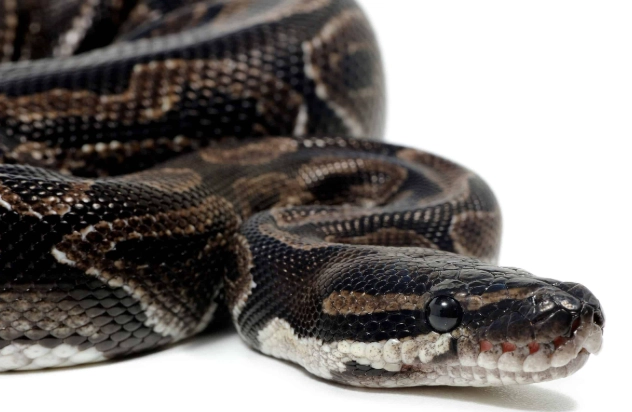
What You'll Find Inside
Axanthic Genetics Demystified (It's Not Magic)
At its core, axanthism is a hypomelanistic condition. That's a fancy word for "reduced black pigment," but in practice, it's the absence of xanthophores—the cells that produce yellow and red pigments (pteridines and carotenoids). The animal's black melanin is still present, which is why you get grays, blacks, and whites instead of albino-like paleness.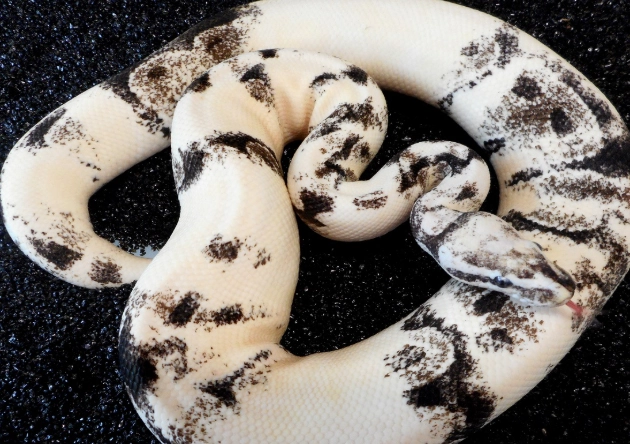
The crucial part everyone needs to understand: axanthic is a recessive trait. Think of genes as light switches. A normal ball python has its "yellow pigment" switch in the ON position. The axanthic mutation is like finding the switch and flipping it to OFF.
Quick Genetics Refresher: Every snake gets two copies of every gene—one from mom, one from dad. For a recessive trait like axanthic to be visible (phenotype), the snake needs both copies to be the "OFF" version. If it has one "ON" and one "OFF," the "ON" copy overrules, and the snake looks normal. This normal-looking snake is called a heterozygous carrier, often written as 100% Het Axanthic in ads.
Now, the complication most beginners aren't told: there isn't just one "axanthic" gene. There are multiple, incompatible lines. The main ones in ball pythons are VPI, Joliff, and Jolliff. They look similar but are mutations on different parts of the genome. Breeding a VPI axanthic to a Joliff axanthic will produce all normal-looking babies (double heterozygous carriers), not visual axanthics. This has burned more than a few new breeders who just bought "an axanthic" without asking for the line.
The Visual Spectrum of Axanthic
Not all axanthics are created equal. The base color can range from a cool, steely gray to a deep, almost black charcoal. The pattern, usually black, can be crisp and high-contrast or slightly muddled. Age plays a huge role. Many axanthics, particularly VPI line, are born with incredible black-and-white contrast that softens as they mature, sometimes introducing a faint brown or cream tint. This isn't a flaw or impurity—it's just how the morph ages. A Joliff line animal might hold onto a cleaner gray scale longer. When you're looking at potential purchases online, always ask for pictures of the parents to see how the colors held up.
It's Not Just About Color: Phenotype and Animal Health
One of the biggest quiet debates in reptile circles is whether morphs linked to color genes can have other physical effects. For axanthic, the consensus is that it's a color-only mutation. I've worked with axanthic colubrids and pythons for over a decade, and I've never seen a pattern of health issues directly tied to the axanthic gene itself. Their size, appetite, shedding, and lifespan should be identical to a wild-type animal given the same care.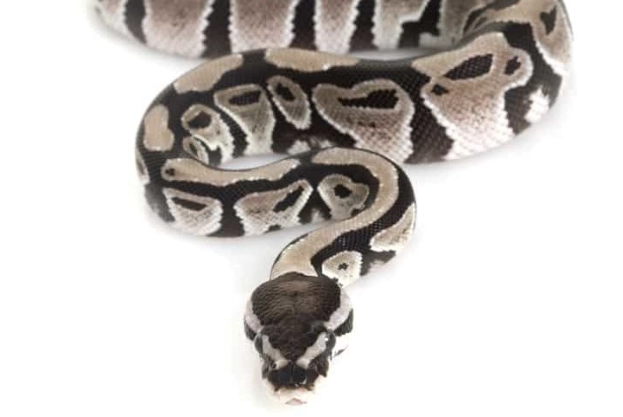
That said, the lack of yellow can sometimes make other things more apparent. A small scar, a patch of stuck shed, or even the sheen of a healthy scale might look different under gray-scale. It doesn't mean they're less healthy; you're just perceiving it differently. This is a good reminder to judge an animal's health by its body condition, alertness, and feeding response, not just its colors.
Care Myths and Realities for Axanthic Animals
Let's bust the main myth right away: axanthic animals do not require special care. Full stop. The care sheet for a normal ball python is the care sheet for an axanthic ball python.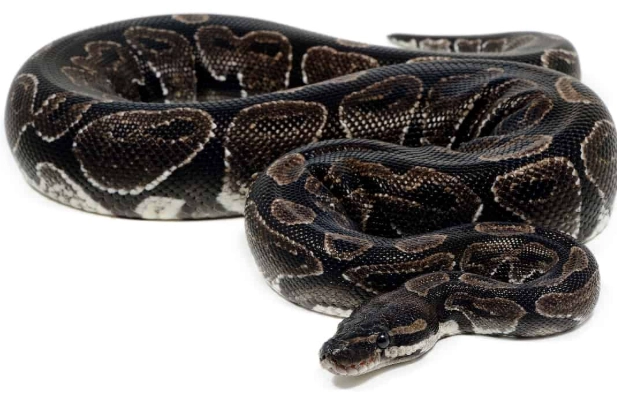
| Care Aspect | Axanthic Ball Python | "Normal" Ball Python | Note |
|---|---|---|---|
| Temperature Gradient | 88-92°F (31-33°C) hot side | 88-92°F (31-33°C) hot side | Identical. Heat is for digestion, not color. |
| Humidity | 60-70% | 60-70% | Critical for clean sheds for all morphs. |
| Enclosure Size | Based on snake length | Based on snake length | A 4ft snake needs the same space, yellow or not. |
| Diet | Appropriately sized rodents | Appropriately sized rodents | No evidence of different nutritional needs. |
I once heard a seller claim axanthics needed "lower light to prevent fading." That's nonsense. Provide a proper photogradient with hides so the animal can self-regulate, just like you should for any reptile. Their color is in their DNA, not dependent on their lightbulb.
The real care implication is for you. A gray-scale snake on gray aspen bedding can be surprisingly hard to find during enclosure cleanings! Consider using a substrate with a bit of contrast, like coconut husk or cypress mulch, just for your own sanity.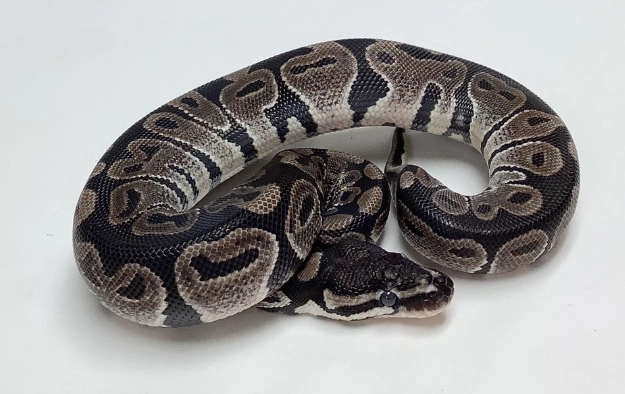
The Axanthic Breeding Deep Dive: A Step-by-Step Framework
This is where the rubber meets the road. Breeding axanthics isn't complicated, but it requires patience and meticulous record-keeping.
Step 1: Know Your Line and Goal. Are you breeding to produce more visual axanthics? Or are you trying to create a combo morph, like an Axanthic Pied or Axanthic Clown? Your starting animals will be different. For visual babies, you need at least one visual axanthic parent. For combos, you need to start breeding the axanthic gene into the other morph line years in advance—a multi-project.
Step 2: Selecting Your Breeders.
- Option A (The Guarantee): Breed a visual axanthic to a visual axanthic of the same line. Result: 100% of the offspring will be visual axanthics. Simple, but you're only working with one morph.
- Option B (The Proven Het Route): Breed a visual axanthic to a 100% Het Axanthic. Result: Statistically, 50% visual axanthics, 50% 100% Hets. You need to trust the seller's word on the het, or buy from someone who bred it themselves.
- Option C (The Gamble & Long Game): Breed two 100% Het Axanthics together. Result: Statistically, 25% visual axanthics, 50% 100% Hets, 25% normals with no gene. The visual babies are a great payoff, but you'll have to raise up the hets for a year or more before you can prove them out by breeding.
The #1 Breeder Mistake I See: Not keeping offspring separate and perfectly labeled. If you breed two hets and get a clutch of eight babies, four will look normal. Two of those four are het, two are not. If you mix them up, you've lost years of potential breeding time. Use a foolproof tagging system from day one.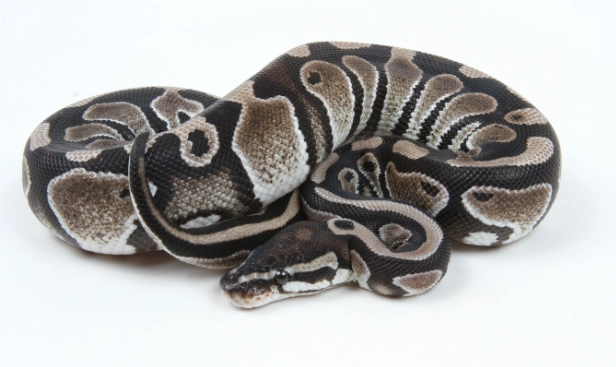
Step 3: The Incubation and "Proving Out" Wait. Axanthic babies often hatch looking unmistakably different—silvery with black markings. But sometimes, especially in combo morphs, it can be subtle. Compare siblings side-by-side. The axanthics will lack the warm undertones. This is where reference photos from the breeder you bought from are invaluable.
Let's talk about a real scenario. Say you buy a beautiful male Mojave ball python that's listed as "possible het axanthic." That means one of its parents was axanthic or het, but it hasn't been proven. The only way to know is to breed it to a visual axanthic female. If you get any visual axanthic babies in the clutch, you've proven your male is a het. If the whole clutch looks normal, he's not. This "proving out" process is the backbone of recessive morph breeding and can take multiple breeding seasons.
Case Study: The Axanthic Spider Combo Project
A few years back, I wanted to see how the axanthic gene interacted with the Spider morph (which has a neurological wobble). I started with a visual Spider female and a visual Axanthic male. The first-generation (F1) babies were all normal-looking 100% Het for both genes. I raised a pair of those hets. When bred together, the clutch yielded a statistical mix: normals, Spiders, Axanthics, and the target—Axanthic Spiders. The combo animal was stunning, a gray spiderweb pattern. Importantly, the axanthic gene did not amplify or lessen the Spider wobble; it was independent. This two-generation project is typical for creating recessive/dominant combos.
Your Axanthic Questions, Answered
The world of axanthic reptiles is a fascinating dive into genetics and aesthetics. It's a morph that rewards a detail-oriented approach, both in appreciation of its subtle beauty and in the planning required to work with it successfully. Whether you're a keeper drawn to their monochromatic elegance or a breeder plotting out genetic lines, understanding the mechanics behind the missing yellow pigment is the first step to truly mastering it. Remember, always buy from reputable breeders who can provide lineage information, and prioritize the animal's health over its color every single time. The best axanthic is a thriving one.


Comments
Leave a Comment