You're gliding over a coral reef, the sun cutting through the blue in shimmering columns. Then you see it. A hulking, blue-green shape, almost the size of a coffee table, methodically crunching on a coral head. That's Bolbometopon muricatum, the green humphead parrotfish. It's not just another colorful reef resident. This fish is a keystone species, a living bulldozer, and its survival is directly tied to the health of the entire coral ecosystem. Forget the clownfish—this is the reef's true MVP, and its story is one of biology, ecology, and an urgent need for protection.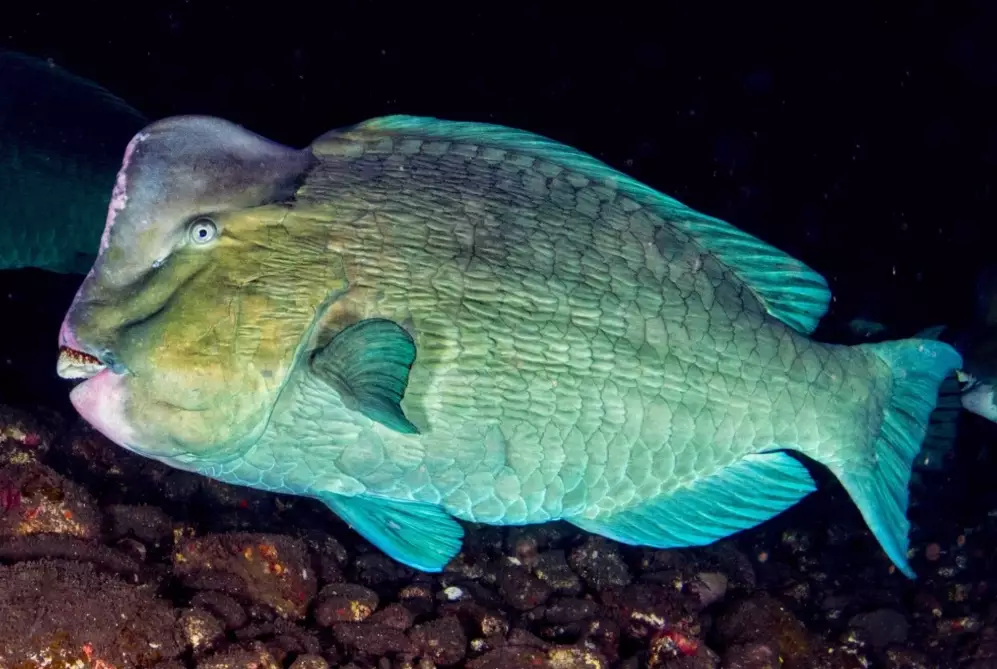
What's Inside?
Biology & Identification: Spotting the Giant
Let's get the basics straight. The green humphead (or bumphead) parrotfish is the largest of all parrotfish species. I've seen them in Palau that made me do a double-take—they're that big.
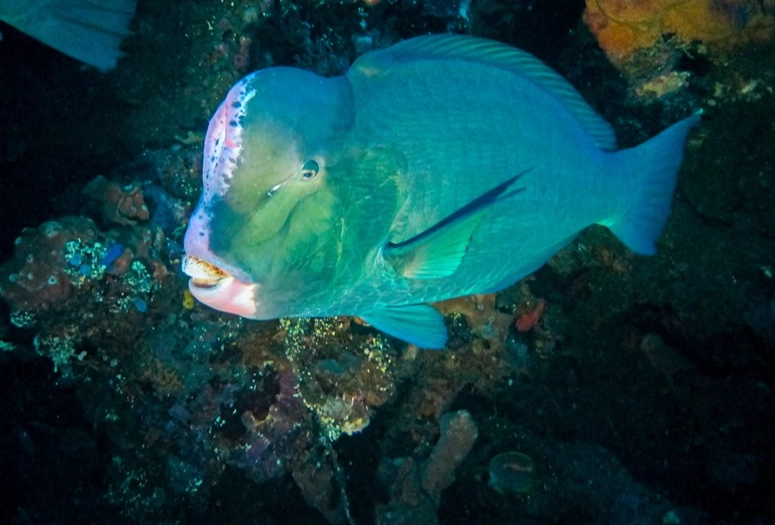
Adults typically reach 1.3 meters (over 4 feet) and can weigh more than 46 kg (100 lbs). Their most distinctive feature is the prominent, bulbous forehead (the "hump") that develops with age. Juveniles lack this and are a mottled brown, easily confused with other species. The adult coloration is a uniform grayish-green to blue-green, sometimes with a pinkish tinge to the face. The eyes are small and set high, and the mouth looks like a parrot's beak—because it basically is. It's a fused dental plate, incredibly strong and constantly growing.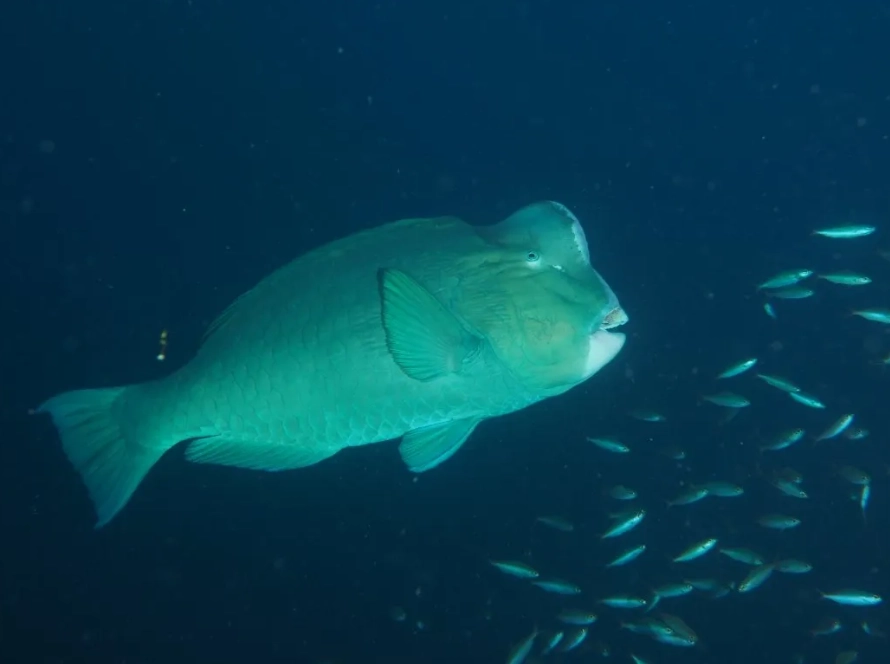
Quick Facts at a Glance
Scientific Name: Bolbometopon muricatum
Max Size: 1.3 m, 46+ kg
Lifespan: Up to 40 years (slow growing)
Key Habitat: Outer reef slopes, lagoon reefs, channels
Geographic Range: Indo-Pacific, from the Red Sea to the Pitcairn Islands.
Conservation Status: Vulnerable (IUCN Red List)
One thing most generic articles miss? The sound. When a school of them is feeding, you can hear it from meters away. It's a loud, persistent crunching and scraping. That sound is the sound of the reef being shaped.
Behavior & Lifecycle: From School to Harem
Their social structure changes dramatically with age. Juveniles are solitary and cryptic. But as they grow, they form schools. Not just small groups—I'm talking about aggregations of 50, 70, even 100+ individuals. Seeing a school of these giants moving over the reef is a breathtaking, humbling experience.
These schools are usually a mix of males and females. They roam together during the day, feeding. At night, they have a fascinating ritual. They return to specific, traditional sleeping sites—often in caves or under large coral overhangs. Here, they secrete a protective mucus cocoon around themselves, which is thought to mask their scent from nocturnal predators like moray eels.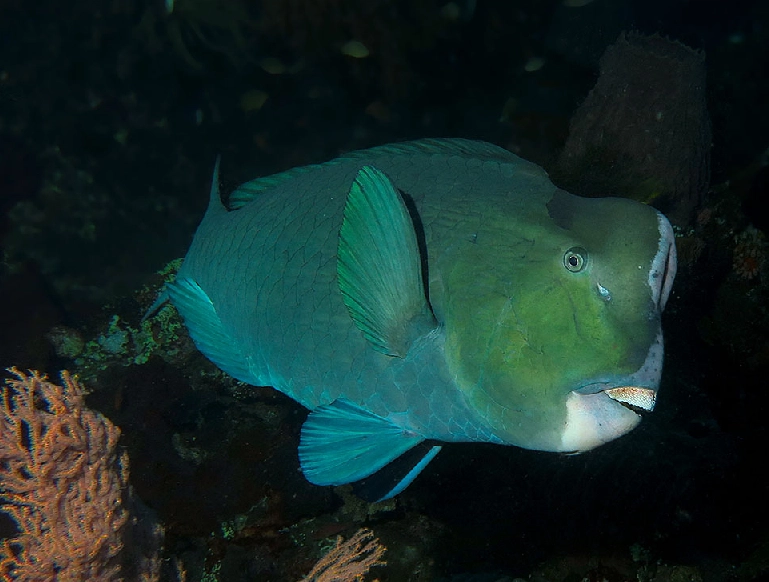
Sex and the Single Parrotfish
Here's where it gets weird and wonderful. Green humphead parrotfish are protogynous hermaphrodites. Most start life as females. As the population or social structure demands, the largest, dominant female can undergo a sex change to become a male. This male, often called a "supermale," will then lead a harem of females. This adaptability ensures reproductive success even if males are scarce.
Spawning usually happens around the full moon. The supermale will court females, and they release eggs and sperm into the water column in a brief, upward rush. The planktonic larvae then drift for weeks before settling onto a reef.
The Ultimate Ecological Engineer
This is the core of why this fish matters so much. Its ecological role is twofold, and both parts are non-negotiable for a healthy reef.
First, it's a bioeroder and sand-maker. Its diet consists primarily of live coral polyps. It uses that powerful beak to bite directly into the coral skeleton. An adult can consume over 5 tons of coral per year. Now, this sounds catastrophically destructive. It's not. It's essential.
By grazing, it prevents fast-growing, branching coral species (like Acropora) from monopolizing the reef. This creates space and light for slower-growing, massive corals (like brain corals) to establish, increasing the reef's structural and biological diversity. After it digests the living polyps, it grinds the inedible calcium carbonate skeleton with pharyngeal teeth in its throat. What comes out the other end? Pure, fine, white sand.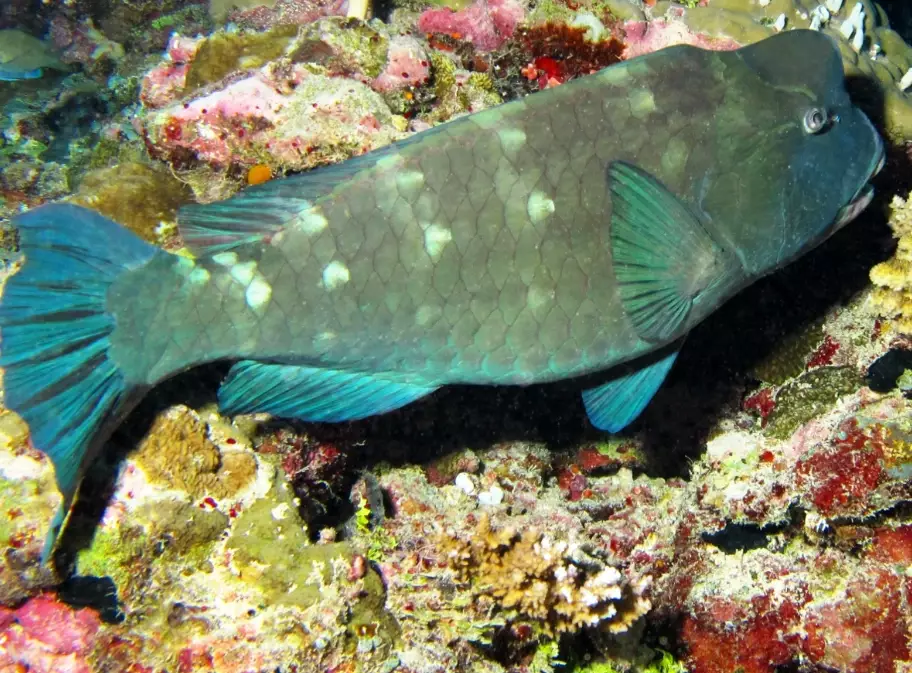
A single large humphead can produce up to 90 tons of sand per year. Let that sink in. The postcard-perfect beaches of the Maldives, Seychelles, and Hawaii? A significant portion of that sand started its journey through the gut of a parrotfish.
Second, it's a critical link in the reef's nutrient cycle. By cropping algae that compete with coral and by constantly turning over the reef substrate, it stimulates growth and health. It's the reef's gardener and construction crew rolled into one.
| Ecological Role | Mechanism | Outcome for the Reef |
|---|---|---|
| Bioerosion & Sand Production | Consumes live coral, grinds skeleton | Creates reef topography, produces beach sand |
| Algal Control | Grazes on algae growing on dead coral | Prevents algae from smothering live coral, allows new coral settlement |
| Space Creation | Removes fast-growing coral colonies | Promotes coral biodiversity and complex habitat structure |
| Nutrient Cycling | Excretion releases nutrients back into water | Fertilizes the reef, supporting plankton and other life |
Threats & Conservation: A Vulnerable Giant
Despite its importance, the green humphead parrotfish is listed as Vulnerable on the IUCN Red List. Populations have declined by more than 50% in many parts of its range over the last few decades. Why?
The primary threat is overfishing. Its large size, predictable behavior (those nightly sleeping aggregations), and tasty meat make it a prime target. Traditional night spearfishing and modern drive-net fishing are devastatingly effective against sleeping schools. They have no chance. The fish's life history works against it—it grows slowly, matures late (around 5-7 years), and lives a long time. This means it cannot reproduce fast enough to replace harvested individuals.
Secondary threats are the broader issues plaguing coral reefs: climate change-induced bleaching, pollution, and habitat destruction. A dead reef has no coral for it to eat.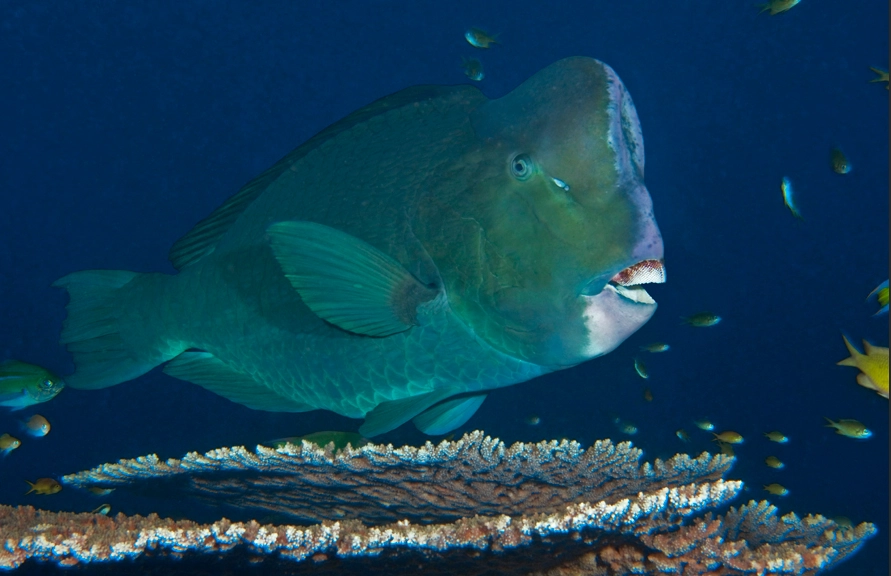
Conservation efforts are a patchwork. Some places have it good:
Palau has fully protected the green humphead parrotfish from fishing since 2006. The result? Schools are still a relatively common sight for divers. In parts of Australia's Great Barrier Reef, it's a no-take species. However, in much of Southeast Asia, enforcement is weak or non-existent.
Real conservation needs two things: strict, enforceable fishing bans and the protection of its critical habitats, especially known sleeping sites. As a diver, you can choose operators who advocate for marine protected areas and report any illegal fishing you might see.
Your Guide to a Diving Encounter
If you want to see one of these marvels, you need to plan your trip right. They're not everywhere.
Top Destinations to See Them:
- The Coral Triangle: The epicenter. Look at liveaboard trips in Raja Ampat (Indonesia), Tubbataha Reefs (Philippines), or Milne Bay (Papua New Guinea).
- Palau: Famous for its large, protected populations. Sites like Blue Corner and German Channel are renowned for sightings.
- Great Barrier Reef, Australia: More common on the outer reefs, especially north of Cairns. Ribbon Reefs are a good bet.
- Remote Atolls: The Maldives (especially the southern atolls), the Seychelles' outer islands, and parts of French Polynesia.
How to Act When You Find One:
Keep your distance. A slow, calm approach is key. Their eyesight isn't great, but they sense vibration. Don't block their path or interrupt their feeding. If you're with a school, hover at the edge and watch the spectacle. For photography, use natural light or a wide video light—a direct flash will startle them. Most importantly, perfect your buoyancy. Crashing into the reef behind them defeats the purpose of admiring the reef's architect.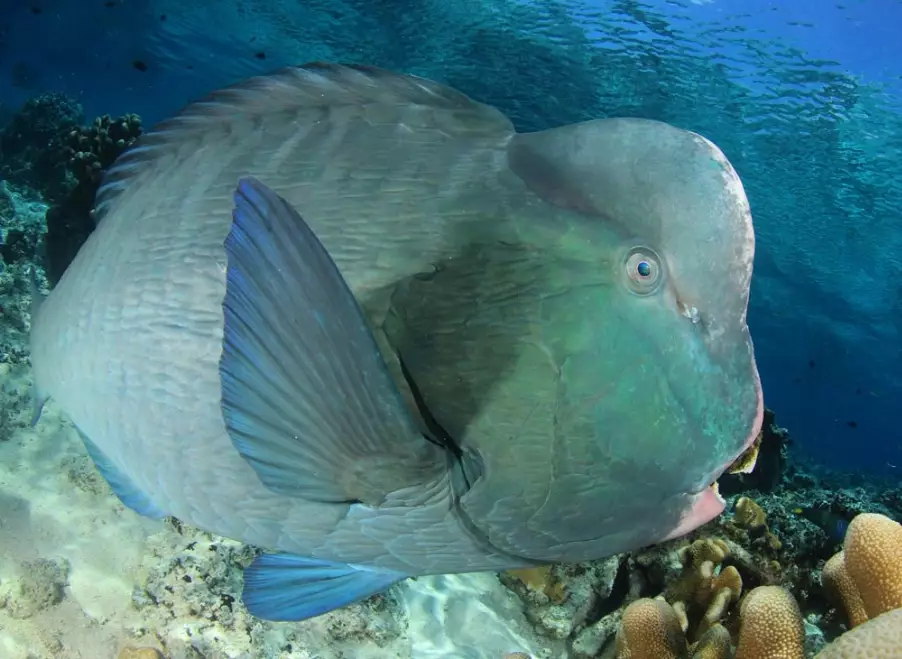
Your Questions, Answered
What does the green humphead parrotfish eat, and how does it affect the coral reef?
How big can a green humphead parrotfish get, and where is the best place to see one?
Why is the green humphead parrotfish listed as Vulnerable, and what are the main threats?
How can I responsibly observe a green humphead parrotfish while scuba diving?
 So next time you're on a tropical beach, take a handful of that soft, white sand. There's a decent chance a green humphead parrotfish helped put it there. They are a perfect example of how every creature in an ecosystem is connected, performing a job we often don't see or understand until it's gone. Protecting them isn't just about saving a single, impressive fish; it's about safeguarding the very foundation of the coral reef world.

Comments
Leave a Comment