The first time I saw one, I honestly thought someone had dropped breakfast into the aquarium. A perfect, yolk-yellow dome floating serenely, surrounded by a fringe of delicate, whitish tentacles. The fried egg jellyfish isn't just a clever nickname; it's a spot-on description for one of the ocean's most visually charming and biologically fascinating creatures. But here's the twist most casual articles miss: there isn't just one "fried egg jellyfish." There are two, and they're as different as chickens and ducks. This mix-up leads to a lot of confusion for aspiring jellyfish keepers and curious snorkelers alike.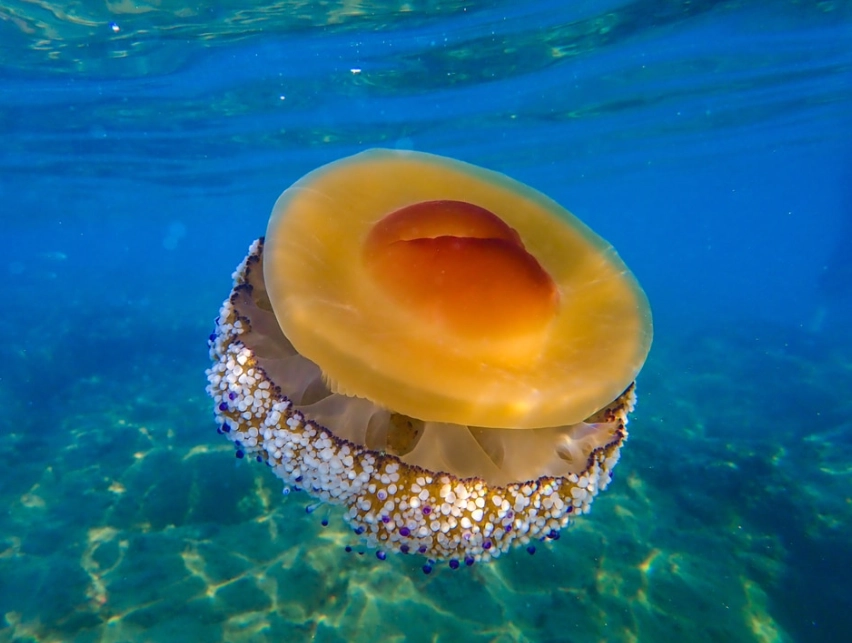
What's Inside?
Wait, There Are Two Types of Fried Egg Jellyfish?
This is the big one. If you're reading about care guides or planning a dive, you need to know which one you're dealing with. They live in different oceans and have totally different lifestyles.
| Feature | Phacellophora camtschatica (The "True" Fried Egg) | Cotylorhiza tuberculata (The Mediterranean "Fried Egg") |
|---|---|---|
| Size | Giant. Bell up to 60 cm (2 ft) wide. | Small. Bell up to 35 cm (14 in) wide. |
| Habitat | Cold waters of the Pacific & Atlantic (e.g., Puget Sound). | Warm Mediterranean Sea. |
| Appearance | Translucent white bell with a central, dense yellow gonad mass. | Flatter, opaque white bell with a bumpy, bright yellow center. |
| Sting | Very mild, often imperceptible to humans. | Very mild, but can cause irritation to sensitive skin. |
| Key Trait | Long, spaghetti-like tentacles (up to 6 meters!). A drifting predator. | Short, clubbed tentacles with blue/purple tips. Hosts symbiotic algae. |
See the problem? A care guide for the small, warm-water Cotylorhiza is useless for someone who finds a Phacellophora in a Pacific net. For the rest of this article, when I say "fried egg jellyfish," I'm primarily talking about the large, cold-water Phacellophora camtschatica, the one that occasionally drifts into public aquariums and captures imaginations. The Mediterranean version is a summer visitor you might snorkel with, but you're unlikely to find it for sale.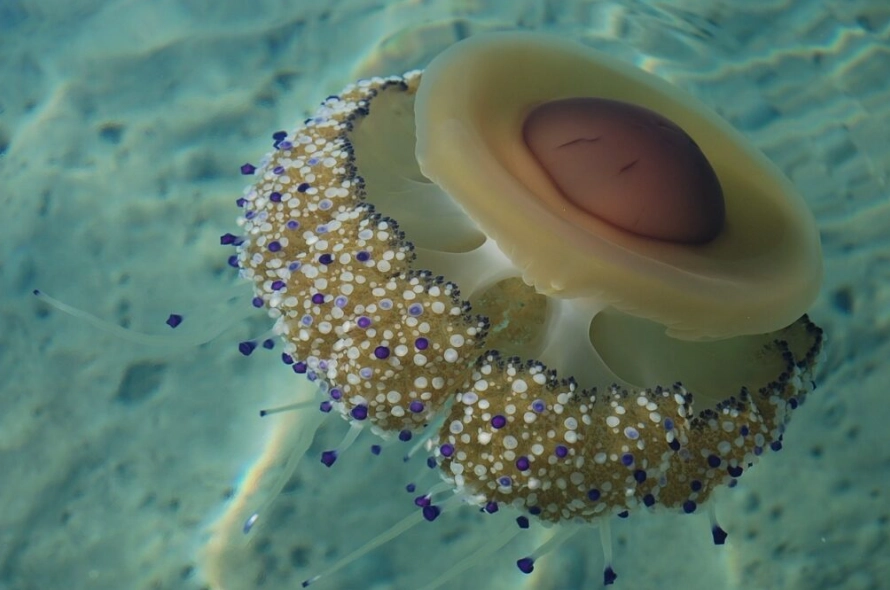
The Biology Behind the Beauty
That sunny-side-up look isn't for show. The yellow blob in the center of Phacellophora is its gonad – its reproductive organ. The clearer the bell, the more prominent the "yolk." It's a simple visual cue in the deep blue.
But here's a cool, underreported fact. Those incredibly long, fine tentacles aren't just for capturing prey like small fish and other jellies. They form a drifting "net." Smaller jellyfish, like hydromedusae, often get caught in this net. But instead of being eaten immediately, they sometimes become "parasitic hitchhikers," nibbling on the fried egg jellyfish's captured food. It's a bizarre, floating ecosystem.
Their life cycle is the classic jellyfish routine: polyp, strobila, ephyra, medusa. The polyps attach to hard surfaces like rocks or shells in cold, deep water, waiting for the right conditions to bud off tiny juvenile jellies (ephyrae) that grow into the majestic medusae we recognize.
Expert Note: A common misconception is that their mild sting means they're harmless. While true for us, their sting is perfectly adapted to immobilize their delicate zooplankton prey. It's a reminder that ocean toxicity isn't scaled for human perception.
Keeping a Fried Egg Jellyfish: A Realistic Guide
Let's be blunt. You will not successfully keep a fried egg jellyfish in a standard rectangular fish tank. Their delicate structure and need for a gentle, circular flow make them a specialist project. I've seen too many beautiful specimens get shredded against an intake filter or stuck in a corner.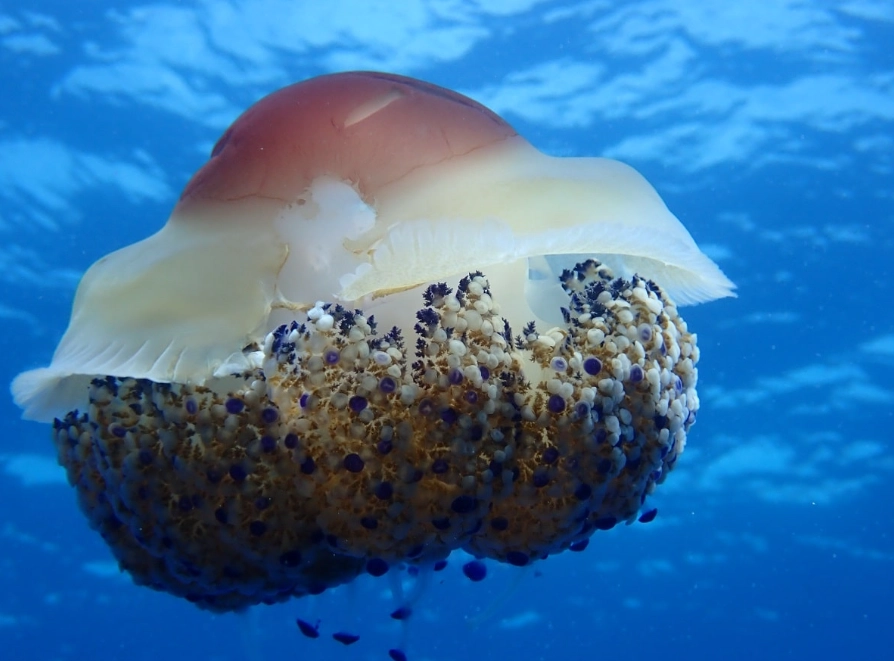
If you're determined, here's the non-negotiable setup:
- Tank Type: A kreisel or pseudokreisel aquarium. These are cylindrical or rounded tanks with a gentle, circular current that keeps the jellyfish suspended without letting them contact the walls or filters. Brands like Jellyfish Art or custom-built units are the starting point.
- Water Parameters: Cold water. Aim for 10-15°C (50-59°F). This requires a reliable chiller, which is a significant investment and energy cost. Salinity should be stable at natural seawater levels, around 1.025 specific gravity.
- Filtration: Extremely gentle. Sponge filters or fluidized bed filters with very low flow rates are best. The key is mechanical filtration to remove debris without creating suction hazards.
- Diet: This is the daily challenge. They eat live zooplankton – think baby brine shrimp (Artemia nauplii), rotifers, and copepods. You'll need to hatch and enrich these live foods regularly. Some may adapt to frozen Cyclops or finely chopped mysis shrimp, but live food is the staple.
Honestly? For 99% of people interested in a jellyfish tank, start with moon jellies (Aurelia aurita). They're more forgiving, tolerate slightly warmer water, and accept a wider variety of prepared foods. A fried egg jellyfish is a graduate-level project in marine husbandry.
The Cost of the Dream
Let's talk numbers, because nobody else does. A proper starter kreisel tank kit can run from $500 to over $1,500. The chiller? Add another $300-$800. Then you need the live food culture setup. The jellyfish itself, if you can find a reputable supplier (often through public aquarium connections), might cost $50-$150. Your monthly electricity bill for the chiller and pumps will be noticeable. It's a passion project, not an impulse buy.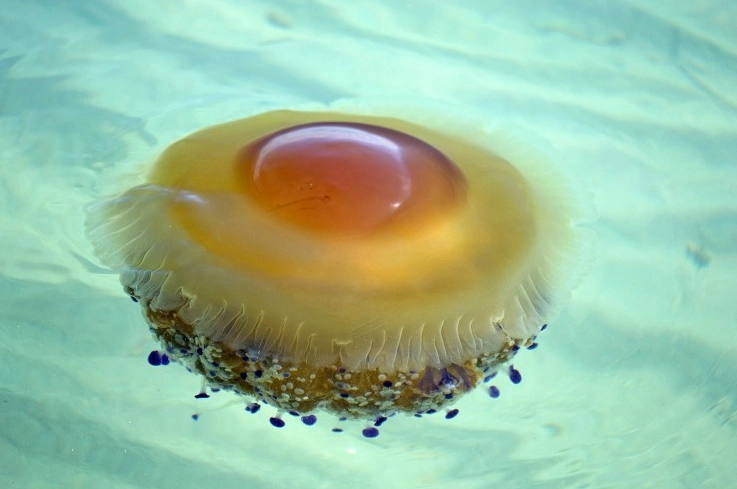
Where and When to See Them in the Wild
Since keeping them is tough, seeing one in the wild or in a professional exhibit is the way to go. They are seasonal and patchy, so luck plays a part.
For Phacellophora camtschatica (Pacific):
Your best bet is the cool, nutrient-rich waters of the North Pacific. Think the Salish Sea around Washington state and British Columbia, especially in late summer and early fall. They are pelagic, meaning they drift in open water, but can be pushed into bays and inlets. Keep an eye on local marine naturalist reports or ferry camera feeds. The Monterey Bay Aquarium Research Institute (MBARI) has captured stunning footage of them in the deep sea off California.
For Cotylorhiza tuberculata (Mediterranean):
This is the jellyfish you might swim with on a European holiday. They bloom in the warm, calm waters of the Mediterranean in late summer, often around August and September. Areas like the Adriatic Sea, the coast of Spain, and around Malta can see large, harmless aggregations. Snorkelers often encounter them.
Wild Encounter Tip: Even though their sting is mild, avoid touching your face or eyes after being in water with any jellyfish. If you're snorkeling, give them space. Their bodies are 95% water and are easily damaged by fins or clumsy hands. Observe, don't interact.
Guaranteed Sightings: Public Aquariums
This is your surest bet. Many large aquariums with dedicated jellyfish galleries rotate in fried egg jellies when they can source them. It's worth calling ahead to check if they're on display.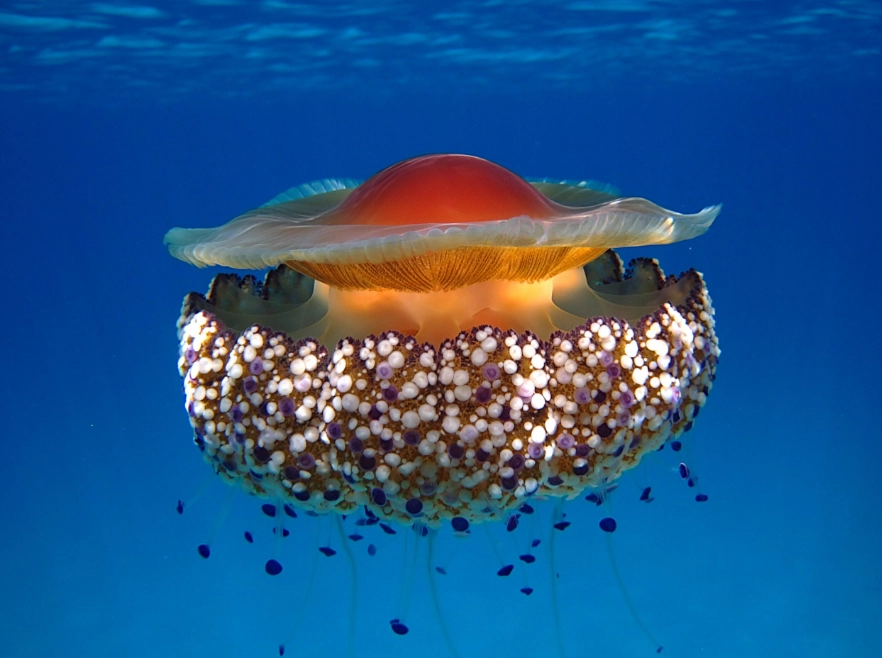
- The Monterey Bay Aquarium (California, USA): Often has them in their "The Jellies Experience" exhibit. They are masters of jellyfish husbandry. Address: 886 Cannery Row, Monterey, CA 93940. Check their website for hours and tickets.
- The Vancouver Aquarium (British Columbia, Canada): Located in the heart of their habitat, they frequently display local species like the fried egg jellyfish. Address: 845 Avison Way, Vancouver, BC V6G 3E2.
- Various Aquariums in Europe: Especially those along the Mediterranean, may display Cotylorhiza during bloom seasons.
Your Fried Egg Jellyfish Questions, Answered
They are considered one of the more challenging jellyfish for beginners. The primary hurdle is their need for a specialized, low-flow kreisel or pseudokreisel tank to prevent them from getting stuck. Their diet of zooplankton also requires more effort to source and prepare compared to feeding other jellyfish species like moon jellies. You're looking at a significant investment in equipment (tank, chiller) and daily maintenance. I'd recommend at least a year of success with easier jellies before attempting one.
First, don't panic. Their sting is very mild for humans. Rinse the area with seawater, not fresh water, as fresh water can make any remaining stinging cells (nematocysts) fire. Carefully remove any visible tentacle fragments with tweezers or the flat edge of a credit card. Soak the area in hot water (as hot as you can tolerate without burning, around 45°C or 113°F) for 20-45 minutes. This heat deactivates the venom proteins. For the Mediterranean species, some guidelines recommend vinegar after the seawater rinse. Monitor for severe allergic reactions like difficulty breathing, chest tightness, or swelling away from the sting site—if these occur, seek medical attention immediately.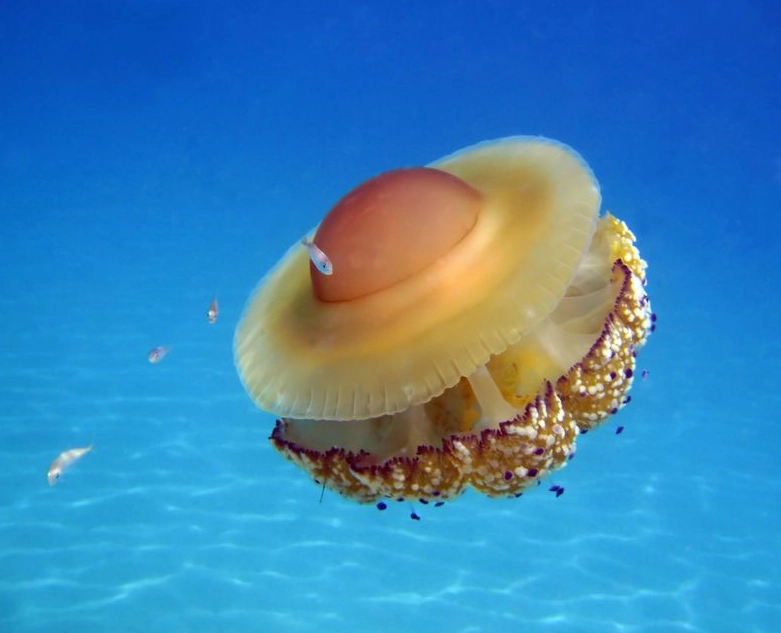
Your guaranteed bet is a reputable public aquarium with a dedicated jellyfish exhibit, like the Monterey Bay Aquarium or the Vancouver Aquarium. In the wild, sightings are seasonal and unpredictable. For the large Pacific species, plan a trip to the Pacific Northwest (e.g., Washington state, BC) in late summer and consider a guided kayaking or boating tour with a naturalist. For the smaller Mediterranean species, a late-summer snorkeling trip in a calm Mediterranean bay offers a chance. Always check with local dive shops, marine science centers, or community nature groups for recent sightings before planning a special trip solely for this purpose.
They're a reminder that the ocean holds wonders that defy our everyday expectations. Whether you admire them on a screen, behind thick aquarium glass, or as a fleeting, golden blur on a lucky dive, the fried egg jellyfish leaves an impression. Just maybe think twice before trying to make one your pet.



Comments
Leave a Comment