Forget the instinct to swat or shriek. If you pause for a second, really look, you'll find an alien world of breathtaking beauty right under your feet or hovering past your ear. I'm talking about insects. For over a decade, I've swapped a fear of creepy crawlies for a camera and a magnifying glass, and what I've found is a gallery of living art more diverse and stunning than any museum.
The common mistake? People think "beautiful bugs" means just butterflies. They're missing 99% of the show.
What's Inside This Guide
What Makes a Bug Beautiful?
It's not just about being pretty. Insect beauty is functional, a story written in color, shape, and light.
Iridescence is the big one. Think of a Blue Morpho butterfly. That shocking, electric blue isn't from pigment. It's structural color—microscopic scales on its wings that refract light like a prism. The color shifts as you move. It's a signal, a dazzler to confuse predators. Metallic beetles work the same magic.
Then there's mimicry. The Orchid Mantis doesn't just hide among flowers; it has evolved to become one. Its legs are petal-shaped, its color a perfect soft pink or white. This isn't casual camouflage. It's an aggressive lure, drawing in pollinators that think it's a meal. The beauty is a deadly trap.
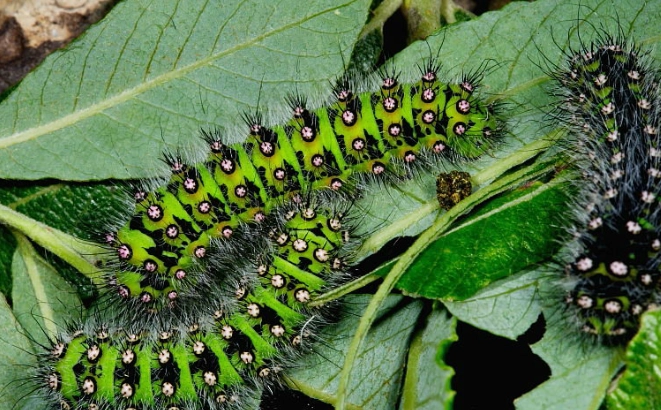
And we can't ignore pure, bold pigmentation. The bright oranges and blacks of a Monarch, the warning colors of many beetles and caterpillars (called aposematism). This beauty screams, "Don't touch me, I'm toxic." It's honest advertising.
Top Contenders for the Most Beautiful Bugs
Okay, let's talk about the headliners. These are the insects that consistently stop people in their tracks.
The Iridescent Show-Offs
Blue Morpho Butterfly (Morpho peleides). Central and South America. You don't just see this butterfly; you experience it. A flash of brilliant blue weaving through the rainforest understory, then gone as it closes its wings, revealing a cryptic brown underside. Seeing one in a butterfly house is cool, but watching a wild one patrol a sunlit trail is pure magic.
Rainbow Stag Beetle (Phalacrognathus muelleri). Australia. This isn't your dull, brown stag beetle. Its entire body looks like it's made of polished metal, shifting between green, gold, purple, and red. They're prized by collectors, which is a shame because watching one clamber over rotting wood in the wild is infinitely better.
The Masters of Disguise
Orchid Mantis (Hymenopus coronatus). Southeast Asia. The pinnacle of aggressive mimicry. I've spent whole afternoons staring at bushes in Malaysia, trying to spot them. Even when you know they're there, they vanish. Young nymphs look like tiny, precise pink orchids. It's unnerving and magnificent.
Dead Leaf Butterfly (Kallima inachus). Asia. With wings closed, it's a perfect, veined, brown leaf—complete with a fake "stem" (its tail) and spots resembling mold. Then it opens up to reveal a stunning splash of deep blue, orange, and white. It teaches you that beauty can be hidden, revealed only when it chooses.
The Jewel-Toned Gems
Jewel Beetles (Buprestidae). Global. This is a whole family of living gemstones. Their elytra (wing cases) look like they've been enameled in emerald, sapphire, and copper. The Chrysochroa fulgidissima from Japan is a classic, with green and purple stripes that seem to glow. They love sunbathing on tree trunks.
Rosy Maple Moth (Dryocampa rubicunda). Eastern North America. A moth that looks like it's made of strawberry and lemon sherbet. It's fluffy, softly colored in pink and yellow, and completely harmless. It shatters the stereotype that moths are drab. Finding one resting on a maple leaf feels like finding a piece of candy in the woods.
How to Find and Photograph Beautiful Bugs Yourself
You want to see this stuff for real. It's easier than you think, but it requires a shift in pace. Slow way, way down.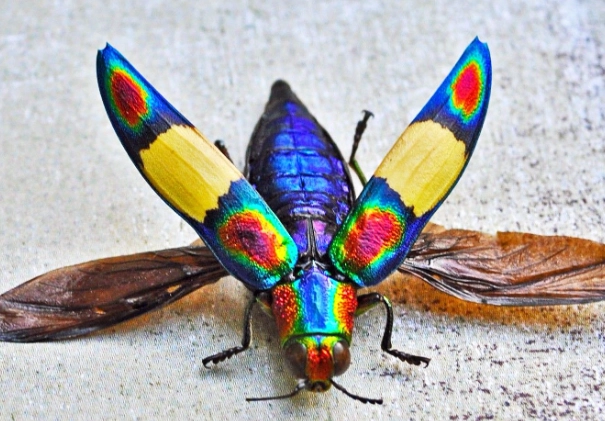
Gear: Start Simple
You don't need a $5000 setup. Seriously. A beginner's mistake is buying fancy gear before learning how to see.
| Tool | Beginner-Friendly Option | Why It Helps |
|---|---|---|
| Eyes & Patience | Your own, plus 15 minutes of stillness. | The most important equipment. Bugs appear when you stop moving. |
| Camera | Your smartphone. | Modern phone cameras are excellent for wider shots of butterflies, moths, and larger beetles. |
| Macro Lens | A clip-on macro lens for your phone ($20-50). | This is the game-changer. It lets you see and capture tiny details—the eye of a fly, the scales on a wing. |
| Magnifier | A simple 10x hand lens. | For pure observation. Lets you appreciate textures and structures without trying to photograph them. |
| Light | Natural, diffused morning light. | Avoid harsh midday sun. Overcast days are perfect for insect photography—no harsh shadows. |
The Hunt: Where and When
Time: Early morning is king. Insects are cold-blooded. At dawn, they're still cool, sluggish, and often covered in dew. A butterfly with dew on its wings isn't going anywhere fast. You can get close.
Place: Think like a bug. They need food, water, and shelter.
**Flower patches,** especially native wildflowers, are insect airports. Look for bees, flies, beetles, and of course, butterflies.
**Rotting logs and leaf litter** are cities of life. Gently roll a log (and put it back!) to see ground beetles, centipedes, and stunning fungi.
**Near water—**pond edges, streams. Dragonflies, damselflies, water beetles. The colors on some damselflies are unreal.
Move slowly. If you see a bug, don't lunge. Crouch down slowly. Your shadow will scare it off faster than your hand. Get low, often at their level.
A Quick Photo Workflow
1. Spot your subject. Approach like you're trying not to scare a cat.
2. Get your phone ready. If using a clip-on lens, attach it before you approach.
3. Tap on the insect on your screen to lock focus. If it's too close and blurry, back up a tiny bit.
4. Hold your breath and tap the shutter. Burst mode can help.
5. The goal isn't a perfect museum shot. It's to capture the moment, the texture, the life.
Remember, every failed photo is a lesson in insect behavior. Why did it fly? Did your shadow fall on it? Did you vibrate the leaf it was on?
Your Questions on Beautiful Bugs Answered
The world of beautiful bugs is an endless source of wonder. It asks only for your attention and a little patience. Put down the phone (except to take pictures!), get outside, and look closer. You might just find that the most dazzling art isn't in a frame, but on the wing.


Comments
Leave a Comment