In This Guide
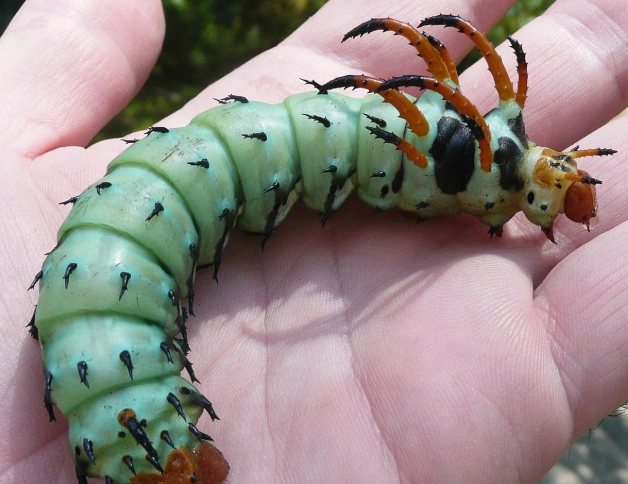
Let's talk about the emperor caterpillar. You've probably stumbled upon a photo of this chunky, vibrant green creature decked out in what looks like black polka dots and spiky red warning signs, and thought, "What on earth is that? Can I raise one?" Well, you're in the right place. I've been down that rabbit hole myself, and let me tell you, raising these guys from tiny caterpillars to majestic moths is one of the most rewarding (and occasionally frustrating) things you can do in your backyard or living room. This isn't just a dry scientific rundown; it's the guide I wish I had when I started.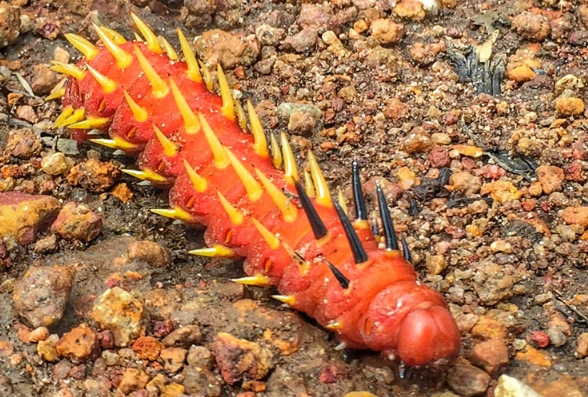
I remember my first batch. I ordered some eggs online, feeling a mix of excitement and sheer terror. What if I killed them? The responsibility felt huge. But watching that first tiny, black emperor caterpillar emerge and start munching was pure magic. We'll get into all of that, the good and the messy.
Meet the Star: The Emperor Moth Lifecycle
You can't talk about the caterpillar without understanding the whole story. The life of an Emperor Moth is a four-act play, and the emperor caterpillar is undoubtedly the main character for most of it.
From Tiny Egg to Voracious Eater
The story starts with eggs. Female Emperor Moths lay batches of eggs in rings around the stems of food plants. The eggs are a pale, creamy colour, turning darker as they develop. After about two weeks, out they come. The newly hatched emperor caterpillar is nothing like its final form. It's tiny, black, and covered in bristles. They stick together at first, munching side-by-side. This stage is critical – they're so small and vulnerable.
As they grow, they undergo a series of moults (instars). After the first moult, they start to show hints of green. With each subsequent moult, the iconic look develops: that bright apple-green body, the bold black spots (each with a tiny hair sticking out), and those four incredible, eye-like red and yellow markings along the back. Those aren't just for show. They're a classic example of scare tactics in the insect world. To a bird, they might look like the eyes of a much larger predator. It’s a brilliant piece of evolutionary design.
The Big Change: Pupation
After about a month of non-stop eating, the fully-grown emperor caterpillar gets the urge to wander. It stops eating, changes colour to a more purplish-brown, and starts looking for the perfect spot to pupate. This is where many first-timers panic. "It's dying!" Nope. It's just getting ready for its big transformation.
It spins a silken cocoon, usually among dense vegetation or in leaf litter on the ground. The cocoon is fascinating – it has a built-in "trap door" at one end, a clever valve system that allows the emerging moth to push its way out but is tricky for parasites to get into. Inside, the magic happens over the winter months. The caterpillar's body literally liquefies and reforms into the adult moth. If you're raising them, you'll need to provide a deep layer of peat-free compost or leaves in their enclosure for this stage.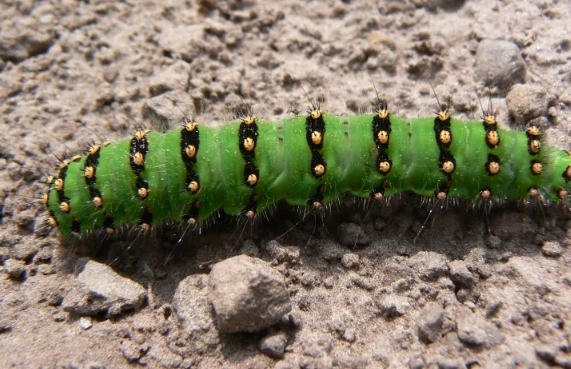
The Grand Finale: The Emperor Moth
Come spring, the adult Emperor Moth emerges. The males are the real show-stoppers. They are a beautiful rusty orange and brown with those huge, iconic eye-spots on all four wings. The females are larger but more subdued in colour, a soft grey. Here's a heartbreaking but crucial fact for the adult: they don't have functional mouthparts. They cannot eat. Their entire adult life, which lasts only about a week, is dedicated to finding a mate and reproducing. All that energy comes from the fat stores built up during their time as an emperor caterpillar. Talk about living on borrowed time.
How to Spot a Real Emperor Caterpillar
Not every green caterpillar is an emperor. Misidentification is common. Here’s your foolproof checklist for a genuine Saturnia pavonia caterpillar:
- Colour: Vivid, almost fluorescent apple-green. Not dull, not yellowish.
- Markings: Rows of clear, jet-black spots. Each spot has a single, short black hair (seta).
- The "Eyes": Four large, unmistakable projections along the back. They are bright red or orange with black centres, looking like glaring eyes. No other common UK caterpillar has this.
- Size: When fully grown, they are substantial – about 2 inches (5-6 cm) long and pleasingly plump.
- Texture: The skin has a slightly granular, not smooth, appearance.
If you see a caterpillar that's green with black spikes or lots of long hairs, it's something else. Those four eye-spots are the true giveaway. I once got excited about a green caterpillar on my willow, only to find it was a sawfly larva upon closer inspection. A bit disappointing!
The Emperor Caterpillar Care Manual: A Step-by-Step Guide
Alright, the practical stuff. You want to raise them. Here's exactly how, based on my own trial and error (mostly error at the start).
Setting Up Your Caterpillar Nursery
You don't need fancy equipment. A well-ventilated plastic container, a large mesh pop-up cage, or even a large, clear plastic storage box with lots of small air holes punched in the lid will work. The key is ventilation. Stagnant, humid air is a killer, leading to fungal diseases. I prefer mesh cages because the airflow is perfect.
Line the bottom with plain kitchen paper or newspaper. Do not use soil or compost at this stage – it makes it impossible to see frass (caterpillar poop) and clean up, and can harbour mites. Clean the enclosure every day or two. Seriously. Frass accumulates quickly and can make them sick. It's the least glamorous part of the job.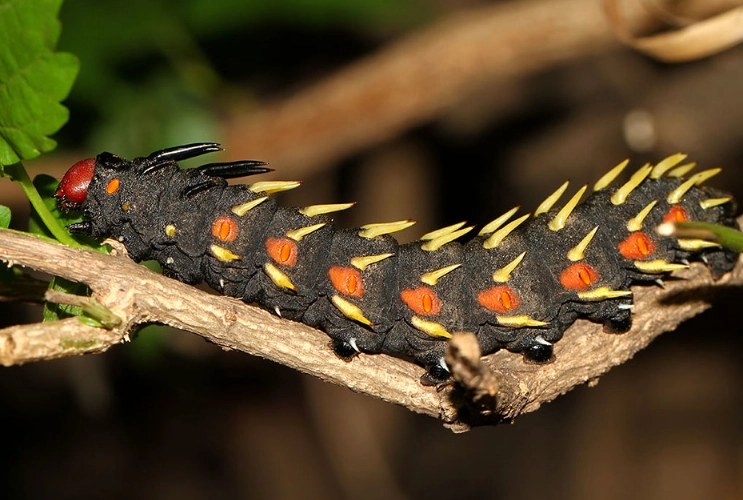
The Most Important Question: What Do Emperor Caterpillars Eat?
This is non-negotiable. The emperor caterpillar has specific tastes. They are polyphagous but have favourites. Offering the wrong food is the fastest way to fail.
| Food Plant | Notes & Suitability | My Personal Experience |
|---|---|---|
| Heather (Calluna vulgaris) | The absolute favourite in the wild. High success rate. | Can be tricky to find fresh year-round. Small-leaved heather works best. |
| Bramble / Blackberry (Rubus fruticosus) | Excellent, readily available choice. Very reliable. | My go-to plant. Easy to forage. Caterpillars grow fast on it. |
| Hawthorn (Crataegus monogyna) | Another top-tier, highly acceptable food source. | Leaves can be a bit tough for the very small caterpillars. |
| Willow (Salix spp.) | Readily eaten, especially sallow/pussy willow. | Great if you have a tree. Potted willow can be grown. |
| Raspberry | A garden-friendly alternative to bramble. | Works very well. Similar to bramble. |
| Apple, Cherry, Plum | Sometimes accepted, but not always reliable. | I've had mixed results. Use as a last resort. |
A few golden rules for food:
- Freshness is everything: Never give wilted or dry leaves. Change the food daily.
- Pesticide-free: This is paramount. Never collect food from roadsides, commercial farms, or gardens that might have been sprayed. Your own garden or a trusted woodland is best.
- Wash gently: A quick rinse and shake dry to remove dust or potential tiny pests.
- Stems in water: For larger setups, put stems in small jars or water tubes (plug the top with cotton wool so caterpillars don't fall in and drown). This keeps the leaves fresh for longer.
I lost a few early caterpillars because I was lazy with food changes. They'd start on a perfect leaf, but by day two, the edges would dry out and they'd stop eating. Lesson learned the hard way.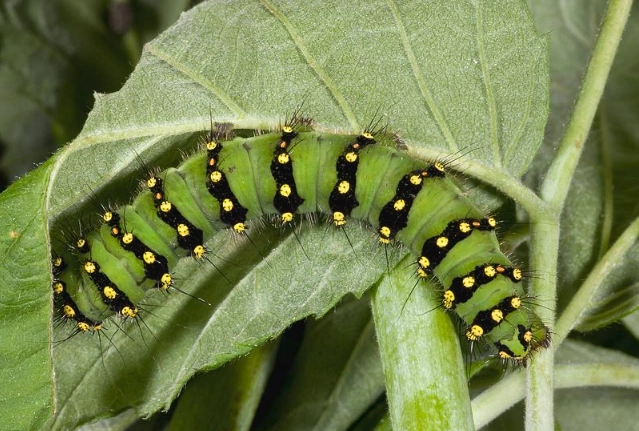
Navigating the Moults
Before an emperor caterpillar moults, it will stop eating, become still, and often attach its rear end to a leaf or the side of the enclosure with silk. It might look dead. Don't touch it! This process is exhausting and vulnerable for them. Just ensure humidity is decent (not wet) and leave it be. After a day or so, it will shed its old skin and emerge looking brighter and larger. It will often eat its old skin for the nutrients. After a moult, they are ravenous.
Preparing for Pupation
When your emperor caterpillar reaches full size and starts roaming, it's time. Replace the paper lining with a deep (at least 4-6 inches) layer of slightly damp (not wet) peat-free compost, coco coir, or crumpled, slightly moist paper towels. They will burrow into this to spin their cocoon. Move the enclosure to a cool, sheltered spot outside, like a shed or unheated garage, to experience natural winter conditions. This period of cold is essential for their development; it's called diapause.
Your Emperor Caterpillar Questions, Answered
Are emperor caterpillars poisonous?
No, they are not poisonous. Those dramatic red "eyes" are pure bluff. However, the hairs on the black spots can be mildly irritating to very sensitive skin, like a tiny splinter. It's always best to wash your hands after handling any caterpillar, but you don't need to be afraid of them. I handle mine gently with no issues.
Where can I buy emperor caterpillar eggs or larvae?
They are available from specialist insect breeders and some online biological suppliers. Always choose a reputable source that breeds their stock sustainably, rather than collecting from the wild. A good breeder will provide clear care instructions. Do your research on the seller first. I've had great experiences with small-scale hobbyist breeders on dedicated forums who are passionate about conservation.
Why is my emperor caterpillar not moving/eating?
Don't panic immediately. First, check: Is it preparing to moult? Is the food fresh and the right type? Is the enclosure clean and well-ventilated? If all seems well and it's been inactive for more than two days, it might be sick. Unfortunately, caterpillar rearing has a natural attrition rate. Isolate it from others to prevent potential spread of disease.
Can I release the adult moths?
This is a big one. Only if you are within the native range of the species. The Emperor Moth (Saturnia pavonia) is native across the UK and much of Europe. If you live there and reared them on locally sourced food, releasing the moths in a suitable habitat (heathland, moorland, woodland edges) can be a wonderful contribution to local biodiversity. However, you must ensure the moths are strong and ready to fly. Release them at dusk on a calm, dry evening near appropriate food plants for the next generation. For authoritative guidance on UK moths and conservation, the UK Moths website is an excellent resource, as is the Butterfly Conservation page. If you are outside their native range (e.g., North America), releasing them is illegal and ecologically irresponsible. Enjoy them in captivity for their short adult lives.
The Bigger Picture: Why This All Matters
Raising an emperor caterpillar isn't just a cool hobby. It's a front-row seat to one of nature's most astonishing transformations. In a world where insects are declining, understanding and appreciating a native species like the Emperor Moth is a small act of connection. You become an advocate for them. You notice the right food plants. You care about pesticide use.
It teaches patience, responsibility, and the raw, unfiltered cycles of life and death. Sometimes, despite your best efforts, a caterpillar doesn't make it. That's hard, but it's part of the reality. And when you see that first male Emperor Moth pump up its wings, ready to fly off and find a mate, knowing you helped it get there… there's nothing quite like it.
So, if you're on the fence about giving it a go, start small. Source a few eggs or small caterpillars from a good breeder. Set up a simple enclosure. Find a reliable patch of bramble. Pay attention. Be meticulous with cleanliness. You might just find yourself utterly captivated by the journey of the humble emperor caterpillar.


Comments
Leave a Comment