Quick Navigation
- What Exactly Is a Darwin's Frog? Beyond the Weird Baby-Swallowing
- The Dad of the Year Award Goes To... The Male Darwin's Frog
- Why Is the Darwin Frog Disappearing? The Perfect Storm of Threats
- What's Being Done to Save the Darwin's Frog?
- Your Darwin's Frog Questions, Answered
- The Last Chirp? A Final Thought
Let's be honest, most frogs aren't exactly known for their parenting skills. They lay a bunch of eggs and hop away, leaving the kids to fend for themselves. It's a tough world out there in the pond. But then you have the Darwin's frog. This little guy from Chile and Argentina decided to rewrite the rulebook entirely. I remember first seeing a picture of one—it looked like a dead leaf with legs, which is cool enough. But then I read about what the males do, and my jaw literally dropped. They don't just guard the eggs. They swallow them. The tadpoles develop inside the father's vocal sac. Weeks later, he coughs up fully formed little froglets. I mean, come on. That's not just unusual; it's one of the most bizarre and brilliant reproductive strategies in the entire animal kingdom.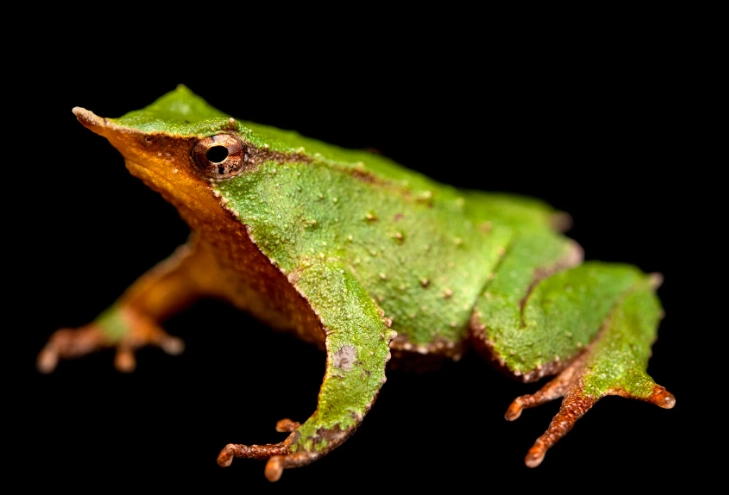
It sounds like something from a sci-fi novel, right? A living incubator frog. But it's real, and it's been fascinating biologists since Charles Darwin himself (yep, the frog's namesake) collected specimens during his voyage on the HMS Beagle. Sadly, that fascination is now tinged with urgency. Because the Darwin's frog is in deep, deep trouble. One of the two species might already be gone for good. Writing about this isn't just about sharing cool facts; it feels like documenting a race against time.
Here's the kicker: The Northern Darwin's frog (Rhinoderma rufum) hasn't been seen in the wild since around 1981. The Southern Darwin's frog (Rhinoderma darwinii) is still hanging on, but its future is precarious. This isn't just another story about a cute animal. It's a case study in extinction, uniqueness, and the fragile balance of ecosystems.
What Exactly Is a Darwin's Frog? Beyond the Weird Baby-Swallowing
Before we get lost in the reproductive madness (we'll get there, I promise), let's set the scene. What are we actually talking about? Darwin's frogs are tiny. We're talking 2.5 to 3.5 centimeters (about an inch) long. They belong to the family Rhinodermatidae, which is a fancy way of saying they're in a family all their own—they're that unique. Their most famous feature, besides the whole vocal sac nursery thing, is their shape. They have a pronounced, fleshy proboscis—a little snout—that gives them a triangular, leaf-like appearance.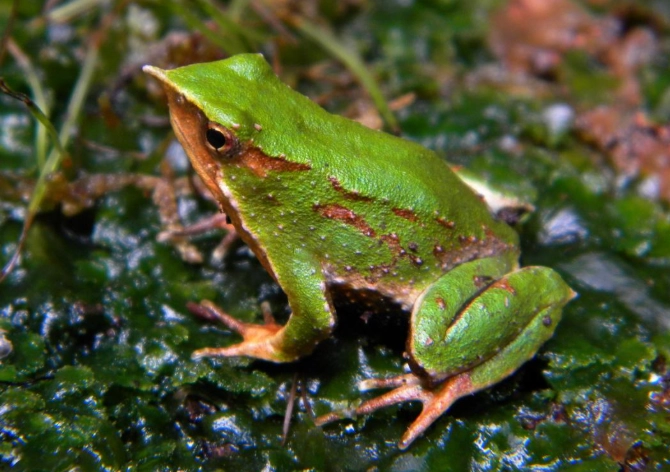
And that's no accident. Camouflage is their first line of defense. On the forest floor, nestled among damp leaves and moss, they are virtually invisible. This is a frog of the temperate rainforests, a world of constant drizzle, towering trees, and thick undergrowth. It's a specific and shrinking world.
Their behavior is pretty cryptic too. They're diurnal, active during the day, which is odd for many frogs. They don't have a loud croak. Instead, the male Southern Darwin's frog makes a faint, bell-like chirping sound to attract mates. It's a subtle whisper in a noisy world. I find that detail oddly poignant. A quiet, hidden frog doing something extraordinary in secret.
The Two Species: A Tale of Similarity and Loss
It's crucial to talk about them separately because their stories diverge dramatically. This table breaks down the key differences, and looking at it, the status column is just heartbreaking.
| Feature | Southern Darwin's Frog (Rhinoderma darwinii) | Northern Darwin's Frog (Rhinoderma rufum) |
|---|---|---|
| Status | Endangered (IUCN Red List) | Critically Endangered (Possibly Extinct) (IUCN Red List) |
| Last Confirmed Sighting | Still present in fragmented populations | Circa 1981 |
| Size | Slightly smaller (22-28 mm) | Slightly larger (28-32 mm) |
| Coloration | More variable, often with greens and browns | Typically more uniform, reddish-brown |
| Vocal Sac Incubation | Yes (tadpoles develop fully inside) | Believed to be similar, but less documented |
Looking at that "Possibly Extinct" label for the Northern species is a gut punch. It's a permanent reminder of what we stand to lose. The IUCN Red List is the global authority on conservation status, and their assessment is stark. The Southern Darwin's frog's populations are declining fast. The main cause? We'll get to that, but it's a familiar and depressing list.
The Dad of the Year Award Goes To... The Male Darwin's Frog
Okay, let's dive into the good stuff. The reproductive strategy. It's so outlandish that it raises a million questions. How does it even work? Let's walk through it, step by step.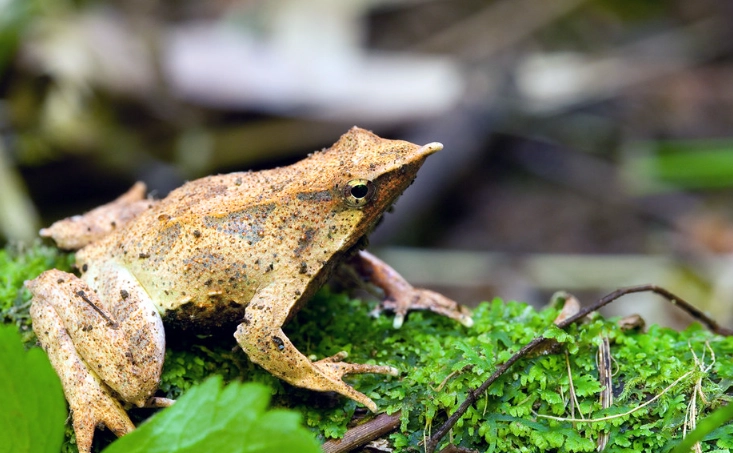
It starts like a typical frog romance. The male calls. A female approaches, and they mate. She lays about 30-40 eggs on the damp forest floor, and the male fertilizes them. He then guards them for two, maybe three weeks. This is where things get weird. Just as the embryos inside the eggs are starting to wiggle, the male does something incredible. He leans over the clutch, and one by one, he picks up the eggs with his mouth and swallows them.
Now, before you imagine a horrific scene, he's not eating them. He's not sending them to his stomach. He has a special trick. The eggs are maneuvered into his huge vocal sac—the same sac he uses to call for mates. This isn't a simple pouch; it's a complex, highly vascularized chamber that lines much of his lower body. Once the eggs are safely inside, the male seals the deal. The eggs hatch into tadpoles right there in the sac.
Imagine carrying your kids in your throat for weeks. Talk about a close bond.
But here's the real magic. The tadpoles aren't just passively sitting there. The lining of the vocal sac secretes a nutritious fluid, a kind of "frog milk," that the tadpoles feed on. They absorb nutrients directly through their skin. They don't need to eat algae or detritus. Dad provides a full-service, all-inclusive nursery. For the next 50 to 70 days, the male goes about his business—hopping, hiding, surviving—with a belly full of developing offspring.
Finally, when the tadpoles have absorbed their tails and developed into perfect miniature frogs (a process called direct development, skipping the free-swimming tadpole stage), the male... well, he regurgitates them. He gives a few convulsive gulps, and out pop tiny, fully-formed Darwin's froglets, ready to face the world. Then the cycle can begin again.
A sobering thought: This incredible adaptation might also be a vulnerability. The father invests an enormous amount of energy and time into a single brood. He can't eat much during this period. If something happens to him—a disease, a predator, habitat destruction—you don't just lose one frog. You lose an entire generation he was carrying. The stakes for each individual Darwin's frog are astronomically high.
Why Evolve Such a Crazy Strategy?
It's the million-dollar question. Nature doesn't do things without a reason, even if the reason seems bonkers to us. The leading theory is all about protection. The forest floor of their native habitat is a dangerous place for gelatinous frog eggs and helpless tadpoles. They're snacks for insects, other frogs, and all sorts of predators. By moving the developing young inside his body, the male Darwin's frog provides a mobile, armored fortress. He also allows them to develop in a stable, nutrient-rich environment, free from the whims of drying puddles or fungal infections.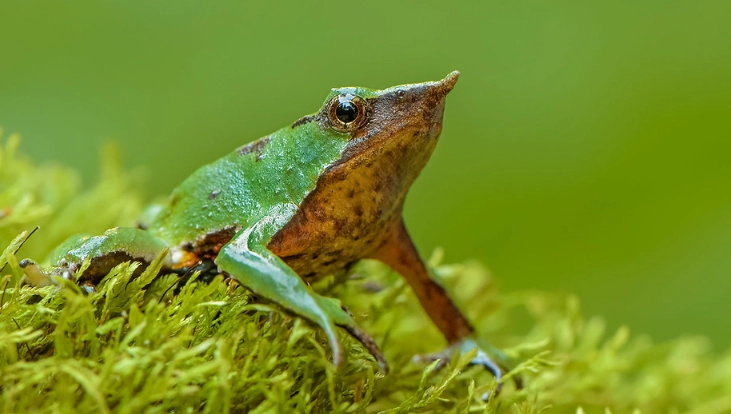
It's paternal investment on steroids. In the frog world, it's arguably the ultimate form of parental care. From an evolutionary perspective, it must have worked brilliantly for millions of years. Until humans showed up and changed the rules of the game.
Why Is the Darwin Frog Disappearing? The Perfect Storm of Threats
This is the hard part. The story of the Darwin's frog's decline isn't simple. There's rarely a single villain. Instead, it's a cascade of problems that have piled up, each one making the other worse. It's a classic, and tragic, scenario for amphibians worldwide.
The Top Threats to Darwin's Frog Survival:
- Habitat Loss and Fragmentation: This is the big one. The native temperate rainforests of Chile and Argentina are being cleared for agriculture, pine and eucalyptus plantations, and urban development. These frogs can't live in a pine plantation. It's a sterile environment for them. They need the complex, moist, native forest floor. When the forest is cut into little islands, populations become isolated, genetic diversity drops, and a single disaster can wipe out a whole group.
- Chytridiomycosis (The Amphibian Plague): This is the silent killer. A fungal pathogen called Batrachochytrium dendrobatidis (Bd for short) has devastated amphibian populations globally. The fungus attacks the skin, which frogs use to breathe and regulate water. It's often fatal. Darwin's frogs are horrifically susceptible. Research, like the studies compiled on AmphibiaWeb, a leading scientific resource, indicates chytridiomycosis is likely the primary driver behind the rapid decline and probable extinction of the Northern Darwin's frog, and a major threat to the Southern species.
- Climate Change: It alters the delicate moisture balance these frogs rely on. Drier conditions, unusual temperature swings, and changes in rainfall patterns can stress populations already on the edge. It can also potentially affect the fungus's spread and impact.
- Pollution: Runoff from agriculture and forestry can poison the small streams and damp microhabitats they need.
You see how it works? Loss of habitat pushes frogs into smaller areas, making them more crowded and stressed. Stress makes them more vulnerable to disease. A disease like chytrid then sweeps through the weakened population. Climate change throws another wrench into the system. It's a death spiral.
I've read accounts from herpetologists who surveyed known Darwin's frog sites only to find silent, empty forests. Not a single chirp. That haunting image stays with you. It's not theoretical. It's happening right now.
What's Being Done to Save the Darwin's Frog?
It's not all doom and gloom. The plight of the Darwin's frog has sparked action, though it's an uphill battle. The work is slow, difficult, and underfunded, but it's happening.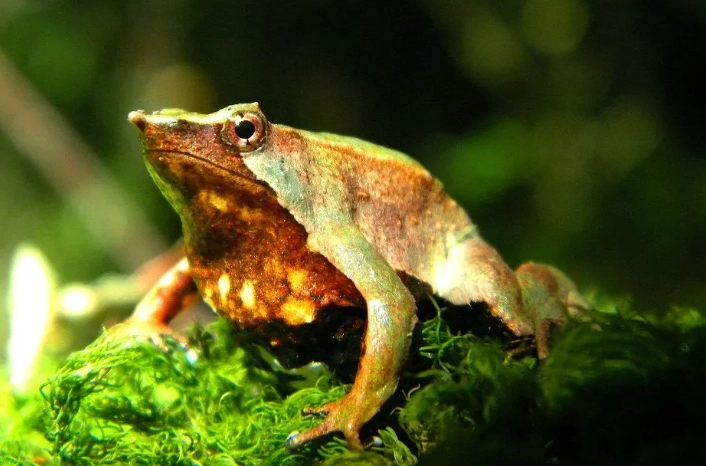
First, there's intensive field research. Scientists are desperately trying to map the remaining populations of the Southern Darwin's frog, understand its ecology better, and monitor for chytrid. Every new sighting is a piece of good news.
Second, and crucially, there are captive breeding programs. These are lifelines. Institutions like the Chilean National Zoo are working to establish assurance colonies—populations kept safe in controlled environments. The goal is twofold: to learn how to breed them reliably in captivity (which is tricky given their unique biology) and to someday have healthy frogs that can be reintroduced into protected, restored habitats.
But let's be real for a second. Captive breeding for conservation is incredibly hard. It's expensive, logistically complex, and success is never guaranteed. You're trying to replicate a specific, moist forest environment and a bizarre reproductive cycle in a tank. I have huge respect for the people doing this work, but it often feels like a desperate holding action while the real problem—habitat destruction—continues outside.
Third, there's habitat protection. Advocacy groups and scientists are pushing for stronger protections for the remaining native forests. Creating and properly managing protected areas is the single most important long-term solution. No amount of captive breeding will matter if there's no safe home to return the frogs to.
Can the Northern Darwin's Frog Be Found?
This is the ghost story in the Darwin's frog saga. Rhinoderma rufum is classified as "Critically Endangered (Possibly Extinct)." That "Possibly" is a tiny flicker of hope. There are still expeditions that go out looking for it, scanning the leaf litter in its historical range. Finding one would be a conservation miracle on par with rediscovering the Tasmanian tiger. It would provide a chance to study it, protect it, and maybe breed it. But with each passing decade, that hope dims. It stands as a stark warning for its southern cousin.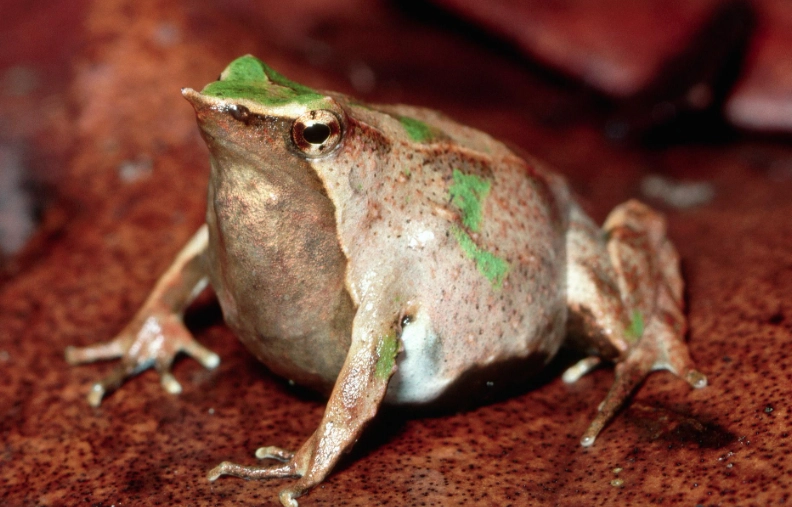
Your Darwin's Frog Questions, Answered
Where does the Darwin's frog live?
The Southern Darwin's frog is found in the temperate forests of southern Chile and adjacent parts of Argentina. Its range is now highly fragmented. The Northern species was found further north in central Chile. Think cool, misty, evergreen forests—a very specific and beautiful ecosystem.
Is the Darwin's frog poisonous?
No, there's no evidence they are poisonous. Unlike the famous poison dart frogs, Darwin's frogs rely almost entirely on camouflage (looking like a leaf) to avoid predators. They don't have bright warning colors, which is a pretty good clue they aren't toxic.
How does the male Darwin's frog know when to release the froglets?
This is a fantastic question, and science doesn't have a complete answer yet. It's likely a combination of hormonal cues from the developing young and physical stimuli. When the froglets are fully formed and ready to be independent, they probably start moving around more inside the sac. This movement, combined with the end of their developmental cycle, likely signals the father to let them go. It's a finely tuned biological clock.
What can I do to help Darwin's frogs?
You might be thousands of miles away, but you can help. First, educate yourself and others. Share articles like this. Talk about them. Awareness is the first step. Second, support reputable conservation organizations that work on amphibian conservation or habitat protection in South America, like the Amphibian Survival Alliance. They fund research and on-the-ground protection. Third, make sustainable choices. The wood products you buy, the paper you use—consumer demand drives deforestation. Choosing certified sustainable products helps reduce pressure on forests worldwide, including those in Chile.
It feels small, but a chorus of small actions can create real change.
The Last Chirp? A Final Thought
The Darwin's frog is more than just a biological curiosity. It's a testament to the incredible, unexpected creativity of evolution. It's a frog that defies our basic assumptions about parenthood and survival. And right now, it's a flashing red warning light for the health of our planet's ecosystems.
Losing the Darwin's frog wouldn't just be about losing a weird little animal. It would be like losing a masterpiece of natural engineering. It would be a silent, profound failure. The story of this frog is a tightrope walk between wonder and despair. We know enough to be amazed by it, and we know enough to see it slipping away.
The work to save it is hard. It's science, politics, finance, and sheer stubborn hope all mixed together. But if we can secure a future for the whispering, leaf-like frog that carries its young in its throat, we'll be saving a lot more than just a species. We'll be preserving a unique thread in the web of life, and proving that we can correct our course. Let's hope that the next chapter in the story of the Darwin's frog is one of recovery, not an obituary.

Comments
Leave a Comment