So you've seen a picture of this stunning lizard, all decked out in brilliant blue, and you're hooked. I get it. The first time I saw a male blue spiny lizard in full breeding color, it stopped me in my tracks. It wasn't just blue; it was a metallic, almost electric blue that seemed to glow from within, set against a backdrop of rough, spiky scales. It looked more like a miniature dragon than a typical backyard lizard.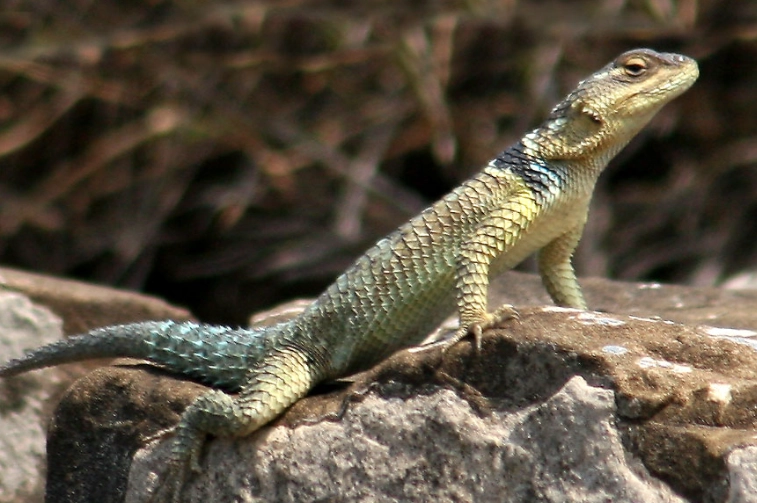
But here's the thing a lot of care sheets don't tell you right off the bat: that breathtaking blue? It's often seasonal, mostly for the males, and keeping that color vibrant in captivity is a whole different challenge. If you're thinking about caring for one of these fascinating creatures, or you're just obsessed with learning about them (like I was), you've come to the right place. We're going to dive deep into the world of Sceloporus cyanogenys, beyond the pretty pictures.
We'll talk about what they're really like to live with, the nitty-gritty of their care that makes the difference between a surviving lizard and a thriving one, and some of the less glamorous realities. Because honestly, they're not the easiest pet lizard out there, and I think it's only fair you know that upfront.
Meet the Blue Spiny Lizard: More Than Just a Pretty Face
Let's start with the basics. The blue spiny lizard (Sceloporus cyanogenys) is a member of the spiny lizard family, which is a pretty big group found throughout the Americas. The "spiny" part isn't just for show—those keeled scales on their back are actually quite pronounced and rough to the touch, giving them a unique, armored appearance. It's a great defense against predators.
They're native to a specific region. You'll find them in parts of southern Texas in the US and down into northeastern Mexico. They love rocky outcrops, canyon walls, and even hang around human structures like stone fences or building walls. They're sun-worshippers, diurnal (active during the day), and incredible climbers. Watching one scale a vertical rock surface with ease is a lesson in reptile athleticism.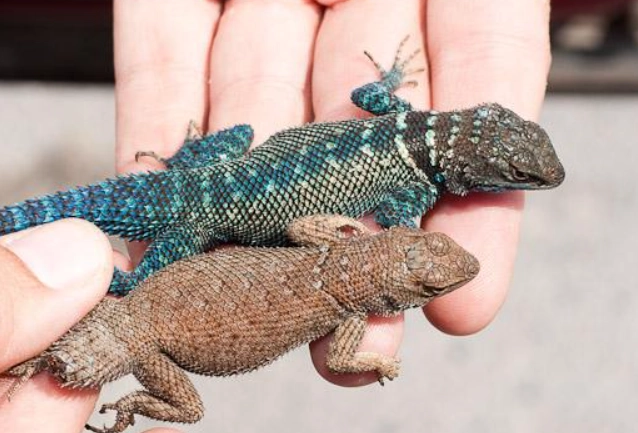
Quick ID Tips: How do you know it's a blue spiny lizard and not another similar species? Look for the spiny scales (obviously), a pattern of dark, wavy lines or chevrons across the back, and those large, rectangular scales on the underside. Males have two prominent blue patches on their belly and that signature bright blue coloring on their sides and throat, especially during breeding season. Females and juveniles are more modestly dressed in browns and grays, with hints of the pattern.
One of the most common questions I hear is, "Are they the same as the eastern fence lizard?" Nope. They're cousins, but different. The blue spiny lizard is generally stockier, has more dramatic spination, and that blue is on another level compared to the more subdued blues of some fence lizards. It's a common mix-up, though.
Setting Up the Perfect Home: It's All About the Rocks
If you're considering keeping one, this is the most critical part. Getting the habitat wrong is where most problems start. In the wild, these lizards are masters of a rocky, sun-baked environment. Your job is to recreate that essence in a box.
Enclosure Size and Type
Bigger is always better. A single adult blue spiny lizard needs space to climb, bask, and explore. A 40-gallon breeder tank is the absolute minimum I'd recommend, but a 50-gallon or larger front-opening terrarium is much better. The front-opening kind is crucial—reaching in from above makes you look like a predator and will stress them out constantly. Trust me, it's worth the extra investment for their peace of mind (and yours).
Height is important because they climb, but don't neglect floor space. They need room to move horizontally too.
Lighting and Temperature: Non-Negotiables
This isn't a snake you can keep in a tub with a heat pad. These lizards are heliothermic, meaning they regulate their body temperature by moving between sun and shade. You must provide a strong heat gradient.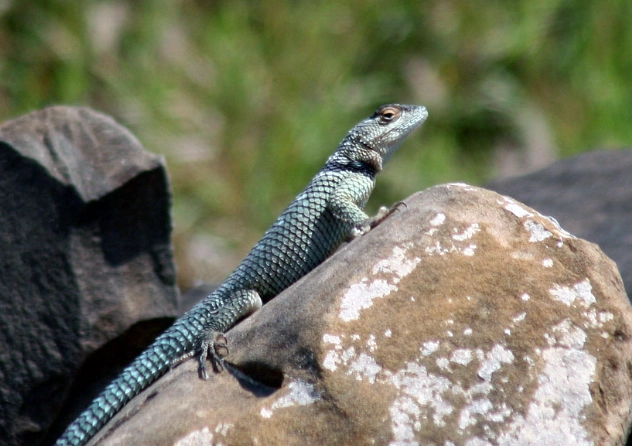
| Zone | Temperature Range | How to Achieve It | Purpose |
|---|---|---|---|
| Basking Spot | 95°F - 105°F (35°C - 40.5°C) | Focused basking lamp (halogen flood bulb works well) | Digestion, activity, overall metabolism |
| Warm Side | 85°F - 90°F (29°C - 32°C) | Ambient heat from basking lamp | General activity area |
| Cool Side | 75°F - 80°F (24°C - 27°C) | No direct heat source | Thermoregulation, retreat area |
| Nighttime | Can drop to 65°F - 75°F (18°C - 24°C) | All heat/light off. Use a ceramic heat emitter (CHE) if room gets too cold. | Natural temperature cycle |
That basking spot temperature is key. Too cool, and they can't digest properly. Too hot, and you risk burns or dehydration. Use a good digital thermometer with a probe right on the basking surface to monitor it.
Now, for UVB. This is the other absolute must. Blue spiny lizards need high levels of UVB light to synthesize vitamin D3, which allows them to absorb calcium. Without it, they will develop Metabolic Bone Disease (MBD), a painful and crippling condition. You need a linear fluorescent UVB tube (like a ZooMed ReptiSun 10.0 or Arcadia Desert 12%) that spans about half the enclosure's length. Mount it inside the screen top if possible, as mesh blocks a significant amount of UV. Replace the bulb every 6-12 months, even if it still lights up—the UV output degrades over time.
Light cycle: Aim for 12-14 hours of light during summer, scaling down to 10 hours in winter if you choose to simulate a seasonal cycle.
Substrate and Decor: Building a Canyon
Forget reptile carpet or plain paper towel for the long term. You want something that looks natural, holds some burrows, and aids humidity. A mix of topsoil, play sand, and a little excavator clay makes a great, diggable substrate. Keep it a few inches deep.
The decor is where you make it a home. Think ROCKS. Flat slate stones stacked securely to create a tall basking platform right under the heat lamp is perfect. They love to flatten themselves on warm stone. Provide multiple hiding spots—cork bark rounds, commercial reptile caves, and piles of rocks with crevices. Live or artificial hardy plants (like succulents or snake plants) can add cover and make it look great.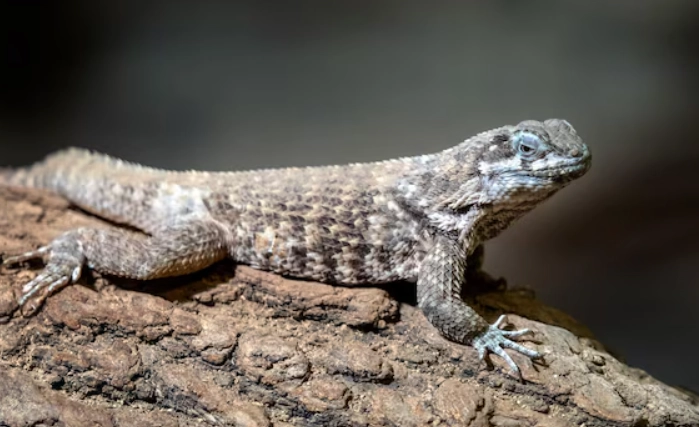
The most important rule with rock piles: make sure they are absolutely stable. A collapsing rock slide is a major hazard. I use a bit of aquarium-safe silicone to glue key rocks together into a stable structure.
What's on the Menu? Feeding Your Blue Spiny Lizard
Here's some good news: blue spiny lizards are primarily insectivores, and they usually have great appetites. They're not picky, which makes feeding straightforward.
Staple Diet: A variety of gut-loaded insects. "Gut-loading" means feeding your insects nutritious foods (like leafy greens, carrots, commercial gut-load) 24-48 hours before offering them to your lizard. This passes the nutrients on.
- Crickets: The classic. Good size, easy to find.
- Dubia Roaches: My personal favorite. More meat, less chitin, don't smell, can't climb smooth surfaces. A superior feeder if they're legal in your area.
- Black Soldier Fly Larvae (Nutrigrubs/Calciworms): Excellent calcium content, low maintenance.
- Locusts/Hopper Grasses: Great for larger adults.
Occasional Treats: Mealworms, superworms, waxworms (very fatty, use sparingly), silkworms. I've even seen them snatch the occasional tiny pinky mouse, but this is rare and not necessary.
How to Feed: Always, always dust the insects with a high-quality calcium powder (with D3 if your UVB is not top-tier, without D3 if you have excellent UVB) at almost every feeding. Once or twice a week, use a multivitamin powder instead. Offer as many appropriately-sized insects as the lizard will eat in a 10-15 minute period, every day for juveniles, every other day for adults. The insect should be no larger than the space between the lizard's eyes.
Do they eat greens? Not really. You might see them nibble on a bit of berry or flower petal rarely, but don't count on it for nutrition. Their diet is bugs, bugs, and more bugs.
The Not-So-Glamorous Side: Behavior and Handling
Let's be real. The blue spiny lizard is not a cuddly, handle-every-day pet like a bearded dragon can be. They are, by nature, skittish and fast. Their first instinct is to flee. If cornered, they may gape, puff up, or even try to bite (though their bite is more surprising than painful).
Handling should be infrequent and for necessary purposes only: health checks, enclosure cleaning, etc. When you do need to pick one up, be slow and confident. Scoop from below rather than grabbing from above. Support the whole body. They may scramble at first but often calm down once they realize they're not falling.
The goal is not a "tame" lizard that sits on your shoulder, but a "confident" lizard that isn't terrified in its home. You can build trust by moving slowly around the enclosure, offering food with long tweezers, and just spending time nearby so they get used to your presence. A blue spiny lizard that simply goes about its business—basking, hunting, exploring—while you're in the room is a happy lizard. That's the real reward.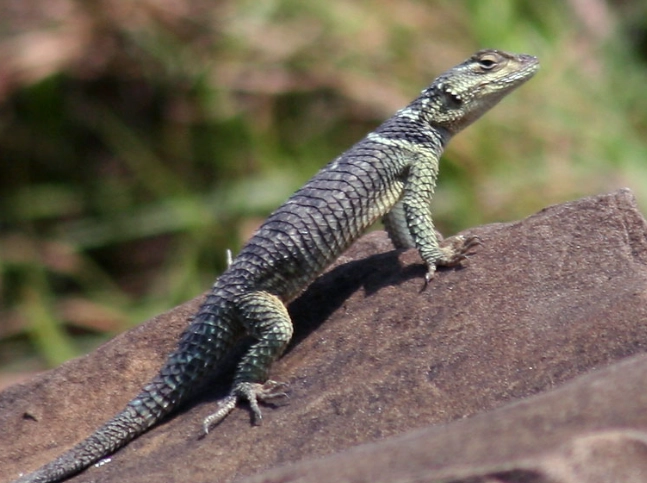
Warning on Cohabitation: I strongly advise against housing male blue spiny lizards together. They are territorial and will fight, sometimes to the death. Male-female pairs can work if the enclosure is massive, but be prepared for breeding and the stress it can put on the female. One lizard per enclosure is the safest, simplest rule for beginners.
Keeping Them Healthy: Common Issues to Watch For
With proper setup, these are hardy lizards. But problems arise from cutting corners.
- Metabolic Bone Disease (MBD): The big one. Signs include softening of the jaw ("rubber jaw"), tremors, difficulty climbing, swollen limbs, and fractures. Prevention: Correct UVB lighting and consistent calcium supplementation. No excuses.
- Parasites: Wild-caught individuals almost always have internal parasites. A vet visit for a fecal exam is a must. Captive-bred is always the better, healthier, and more ethical choice.
- Respiratory Infections: Wheezing, mucus around the nose or mouth, lethargy. Usually caused by temperatures that are too cool and/or humidity that is too high. Double-check your gradients.
- Dehydration/Shedding Issues: Unlike some desert species, they do need some ambient humidity (30-40%). A shallow water bowl is essential, and some will even drink from it. They also appreciate a light misting occasionally, especially when they are in shed (their skin looks dull and gray). Stuck shed, particularly on toes and tail tips, can constrict and cause loss of the digit. A humid hide box filled with damp sphagnum moss is a great addition.
Finding a good reptile vet before you have an emergency is one of the smartest things you can do.
Finding Your Blue Spiny Lizard: Wild-Caught vs. Captive-Bred
This is a major ethical and practical crossroads.
Wild-Caught (WC): Often cheaper and more readily available. But they come with huge baggage: stress from capture and transport, heavy parasite loads, difficulty acclimating to captivity, and you're depleting wild populations. Their survival rate long-term is significantly lower. I've had them, and it's a constant battle against stress-related issues.
Captive-Bred (CB): More expensive, harder to find. You might need to seek out specialty breeders at reptile expos or online through places like MorphMarket. But the benefits are enormous: they are accustomed to people and enclosures, generally parasite-free, healthier, and hardier. You're also supporting sustainable herpetoculture. The choice is clear if you ask me.
If you're looking for reputable information on responsible sourcing and care standards, the Reptiles Magazine website has a wealth of care guides and breeder directories. For scientific data and taxonomy, resources like the Reptile Database are invaluable.
Your Blue Spiny Lizard Questions, Answered
I've gotten a ton of questions over the years. Here are the ones that pop up constantly.
How long do they live? In the wild, probably 5-7 years. In captivity, with excellent care, 8-12 years is possible. That's a long commitment.
Are they good for beginners? I have to be honest here: not really. They are intermediate-level reptiles. Their strict UVB and high basking temperature requirements, combined with their skittish nature, make them less forgiving than a leopard gecko or corn snake. A dedicated beginner who does all their research can succeed, but be prepared for a steeper learning curve.
Why is my blue spiny lizard not blue? First, is it a female? Females are mostly brown/gray. Second, is it a male outside of breeding season? Males can fade to a more muted teal or grayish-blue. Third, and most importantly: stress, poor health, or incorrect temperatures can cause colors to dull. A happy, healthy, warm male in breeding condition is the bluest.
Do they hibernate/brumate? In the wild, they become less active during cooler winter months. In captivity, you can simulate a mild brumation by gradually reducing daylight hours and temperatures over a few weeks in late fall, keeping them cool (60-68°F) for 6-8 weeks, then slowly warming them back up. This is not necessary for pet health but can stimulate breeding behavior. Don't attempt it with a sick or underweight lizard.
Can they drop their tail? Yes! Like many lizards, they can autotomize (drop) their tail to escape a predator. The tail will regrow, but it will be shorter, darker, and lack the spiny texture. It's a stressful event for them, so avoid grabbing them by the tail.
Owning a blue spiny lizard is a unique experience. It's less about interactive play and more about creating a beautiful, functional slice of a rocky canyon and observing a truly remarkable animal thrive within it. The flash of blue when he turns just right under the lamp, the focused stalk of a cricket, the confident sprawl on a warm rock—these are the moments you do it for. It requires effort, attention to detail, and a respect for their wild nature. But if you're willing to provide that, Sceloporus cyanogenys is one of the most stunning and rewarding lizards you could hope to care for.
Just remember, start right. Get the big enclosure, invest in the proper lights, and find a captive-bred animal. Do that, and you'll be giving your blue spiny lizard the best shot at a long, healthy, and vividly blue life.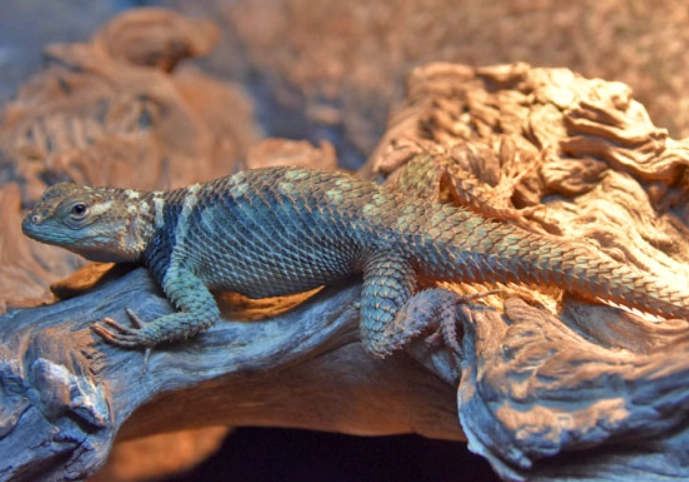
Comment