You're out in the garden, maybe checking on your prized roses or the first tomatoes of the season. There, on a leaf, sits a caterpillar. But not just any caterpillar – this one is a vibrant, almost luminous shade of ginger or orange. It stops you in your tracks. Is it a friend or a foe? Will it turn into a stunning butterfly or a voracious pest that decimates your plants overnight? The truth is, that flash of color is your first and best clue. The world of 'ginger caterpillars' is vast, and identifying them correctly is the difference between fostering a new pollinator in your garden or accidentally removing a beneficial insect.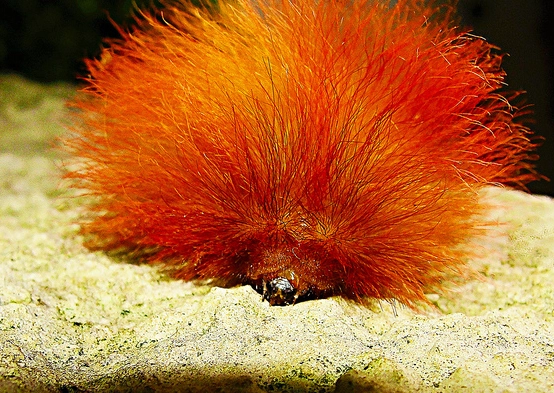
I've spent over a decade with my hands in the soil, not just as a gardener, but as someone obsessed with tracking these life cycles from egg to adult. The most common mistake I see? People panic. They see a brightly colored caterpillar and immediately reach for the insecticide spray. More often than not, that 'pest' is the future adult of a moth or butterfly that plays a crucial role in the ecosystem, even if it munches on a few leaves now.
What’s Inside This Guide?
How to Accurately Identify a Ginger Caterpillar
Let's cut through the noise. You don't need a Ph.D. in entomology to get this right. You need a system. A checklist that works when you're half-squinting in the bright afternoon sun or with just a phone camera. Forget the old field guides that tell you to count the number of prolegs (those fleshy legs at the back). In the field, with a moving subject, that's nearly impossible. Here's the system I use, and it's failed me fewer times than any book.
Color is a clue, not a conclusion. 'Ginger', 'ginger', 'orange' – these are all in the same broad family. The first step is to decide if the color is uniform across the entire body, or if it's just on specific segments.
Look for the 'texture' of the color. Is it a smooth, almost waxy ginger? Or is it a fuzzy, matte orange? This tells you about the caterpillar's potential defenses. Many fuzzy caterpillars have urticating hairs that can cause skin irritation. Smooth, waxy ones often rely on bright colors as a warning (aposematism) of being unpalatable or even toxic to predators.
Now, scan for patterns. Stripes, spots, bands. Run your eyes along the body. Are there dark stripes running along the length (longitudinal stripes) or are there spots in rows across each segment (transverse bands)? This pattern is often more reliable than color alone. A classic example is the comparison between two common 'ginger' caterpillars:
The Case of the Two 'Ginger' Imposters:
Last summer, a client sent me a frantic photo, convinced they had the dreaded 'Tomato Hornworm' (which is actually bright green and not ginger at all!). It was, in fact, the early stage of the Large White Butterfly (Pieris brassicae) caterpillar. From a distance, on a tomato leaf, both can appear pale. But up close, the difference is night and day.
Tomato Hornworms are solitary, large, and have a distinct 'horn' on their rear. They are also voracious eaters, often stripping a branch bare. The Large White caterpillar, on the other hand, is smaller, and you'll often find them in small groups munching away. They have a more velvety appearance. But the real kicker? The hornworm has a series of V-shaped markings along its side. The Large White has a more uniform dotted pattern. That's the kind of detail you train your eye to see.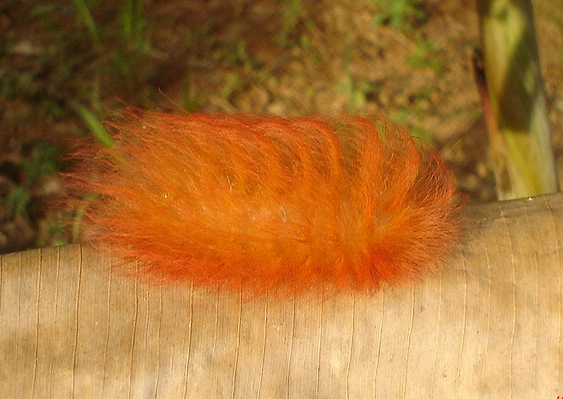
The Head Capsule: Your Secret Weapon
This is the part most beginners miss, and even some intermediate guides gloss over. The head of a caterpillar is often a different color or texture than its body. This isn't just for show. The color, shape, and even the presence of 'fake eyes' (ocelli) can be a dead giveaway to the family, and sometimes even the genus, of the moth or butterfly it will become.
Let me give you a concrete example from my own archives. I once misidentified a caterpillar as a 'ginger' version of the Peacock Butterfly. It was on a stinging nettle (the host plant gave it away somewhat). But the head was black and glossy, not the matte brown I expected. That, combined with a specific pattern of yellow dots I only noticed after reviewing my photos, keyed me into the fact that it was actually the caterpillar of the much rarer Red Admiral butterfly in an early stage where its colors were muted. The head capsule saved me from publishing an incorrect identification.
Here's my rule of thumb: If the head is a stark, contrasting black against a ginger body, you're often looking at a species in the Noctuidae family (the 'owlet moths', many of which are indeed garden pests). If the head is the same ginger color as the body but just slightly darker or lighter, and the body has fine hairs, you might be looking at something in the Arcitidae family (tiger moths, many of which are beneficial or neutral).
The Lifecycle: From Ginger Caterpillar to What?
This is the million-dollar question. That ginger caterpillar isn't going to stay a caterpillar forever. Understanding its lifecycle isn't just academic – it's practical. It tells you when it's most vulnerable, when it will pupate, and when you can expect the adult form.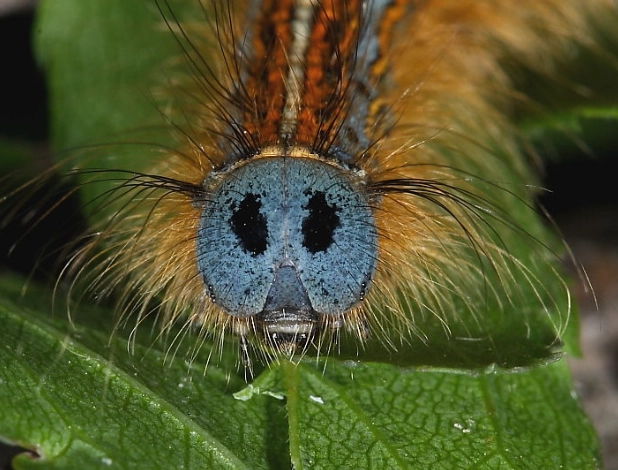
Most Lepidoptera (the scientific order that includes all butterflies and moths) follow a four-stage lifecycle: egg, larva (caterpillar), pupa (chrysalis or cocoon), and adult. The caterpillar stage is the eating and growing stage. It's the one you see. The length of this stage varies wildly.
Let's take two of the most common moths whose caterpillars are described as 'ginger':
- The Tiger Moth (Arctia caja): Its caterpillar is sometimes called the 'Woolly Bear' (though the classic Woolly Bear is black and orange). Some color forms can appear a pale, almost ginger-brown. This caterpillar is a generalist feeder, found on a variety of low-growing plants like dandelions, dock, and even nettles. Its lifecycle from egg to adult can take a full year, with the caterpillar stage overwintering.
- The Emperor Moth (Saturnia pavonia): This caterpillar is a stunner. Bright green with black bands and yellow spots, its early instars can sometimes appear with a more yellowish or orange-ish tinge depending on the light and individual variation. However, it is specifically a feeder on trees like willows and poplars. You won't find it on your garden tomatoes.
The point is, the plant you found the caterpillar on is often the single most reliable piece of data for identification, even more so than color. A ginger caterpillar on your tomato plant is almost certainly a pest (like the aforementioned Large White). A ginger caterpillar on a stinging nettle patch at the edge of your property is far more likely to be something interesting and worth watching.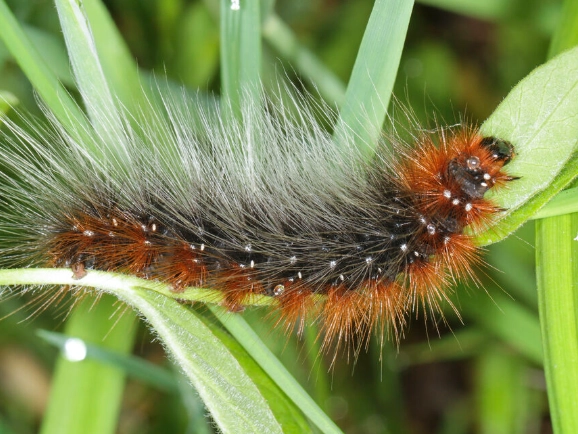
Where to Look: Habitat & Host Plants
Caterpillars are eating machines. They have very specific food plants, called host plants. Finding a ginger caterpillar is exciting, but knowing what to do with it starts with knowing what it's eating.
The 'ginger caterpillar' you find on your rose bush is likely a different species than the one you find on your milkweed. This isn't just trivial knowledge – it's critical for identification.
Here’s a quick reference table I’ve built over years of observation:
| Caterpillar Color & General Description | Likely Host Plants | Probable Moth/Butterfly & Notes |
|---|---|---|
| Pale, almost creamy ginger with fine, velvety hairs | Dandelion, Dock, Plantain (low-growing ‘weeds’) | Tiger Moth family – Often beneficial pollinators as adults. Many are generalist feeders. |
| Bright, ‘hot’ ginger or orange with bold black bands or spots | Nettle, Hop, Elm (specific, often tall plants) | Noctuidae family (‘owlet moths’) – Many are common garden visitors. Some are pests, some are neutral. |
| Dull, earthy ginger-brown with a waxy or smooth appearance | Cabbage, Broccoli, Kale (Brassica family plants) | Cabbage White butterfly – A very common pest in vegetable gardens. The caterpillar is more lime-green, but early instars can appear yellowish. |
| Fuzzy, dense ginger hair coverage | Oak, Willow, Poplar (deciduous trees) | Saturniidae family (Emperor moths, etc.) – These are often the large, spectacular moths. Their caterpillars are usually not major pests and can be fascinating to raise. |
This table is a starting point. The real secret I’ve learned is that many moths are nocturnal. You’re more likely to find their caterpillars during the day resting along a stem or the underside of a leaf, not actively feeding. Butterflies, being diurnal, often have caterpillars that are more exposed. But even this isn’t perfect. The best strategy is to gently nudge the leaf. If the caterpillar drops to the ground and curls into a tight ball, it’s likely a moth species. If it tries to crawl away or rears up in a defensive posture, you might have a butterfly larva. It’s a small behavioral trick, but it works.
Garden Impact: Friend or Foe?
So, you’ve identified your ginger caterpillar. Now what? The gut reaction is often “kill it!”. But hold on. Let’s reframe the question. Is it causing actual, measurable damage? Or is it just eating a few leaves?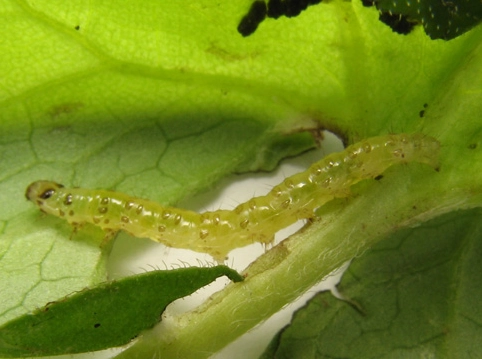
Here’s a non-consensus opinion from someone who’s raised hundreds of these: The overwhelming majority of ‘ginger caterpillars’ you find in a healthy, diverse garden are either neutral or beneficial. That’s right. I said beneficial. Even the ones that munch on leaves.
Think about it. A caterpillar is an eating machine. It’s turning plant material into insect biomass. That insect, when it becomes an adult moth or butterfly, is then a potential pollinator. It’s part of the food web, attracting birds and other predatory insects. Removing them all in a panic depletes your garden’s natural resilience.
The real ‘foes’ are usually specific. The Large White caterpillar I mentioned earlier? It can defoliate a young brassica plant. That’s a problem. A single caterpillar on a mature, established plant? Probably not. The key is tolerance and balance.
My personal rule, which I rarely see mentioned, is the ‘10% rule’. If less than 10% of the leaf surface is eaten, I don’t intervene. I’ve found that this level of grazing can actually stimulate new growth in some plants. It’s a hard pill to swallow for a neat-freak gardener, but it’s true.
Safe Handling & Common Look-Alikes
This is the part everyone gets nervous about. And they should. You should never handle a caterpillar with your bare hands if you can avoid it. Many species have defenses.
The golden rule: When in doubt, don’t touch it. Use a leaf or a stick.
But let's talk about look-alikes. This is where most online guides fail. They’ll show you two clearly different caterpillars. In the real world, the differences are subtle. Here’s the classic mistake I see people make year after year:
They confuse the early instars of the Large White (which is pale, almost creamy yellow with fine black dots) with the later instars of the Small White (which is a more vibrant green with a yellow stripe). But in the garden, on a green leaf, in dappled light, both can look… well, ginger-ish. The difference is in the texture and the head. The Large White has a velvety texture. The Small White has a more waxy, smooth appearance. And the head of the Large White is black, while the Small White’s is a lighter, almost greenish-brown.
Another common misidentification is between a truly ‘ginger’ caterpillar and one that is merely yellowish because it’s about to molt. A caterpillar’s color can fade or change before a molt. If you’re unsure, the safest bet is to simply observe and photograph. Do not move it to a ‘better’ location. You risk separating it from its food source.
Three Steps to Safe Observation:
- The Phone Zoom: Get close with your camera’s zoom function first. Don’t stick your face right in.
- The Leaf Lift: If you need to move it, find a large leaf from the same plant. Gently slide the leaf under the caterpillar. Let it walk onto the leaf itself.
- The Relocation (Only if Absolutely Necessary): If you must move it (say it’s in the middle of a walkway), move the entire leaf, with the caterpillar on it, to a nearby, safe spot on the same plant type.
I once made the mistake of moving what I thought was an ‘unhealthy’ ginger caterpillar off a plant. It was actually a perfectly healthy final instar that was simply preparing to pupate in a sheltered spot I hadn’t seen. It died because I removed it from its microclimate. Lesson learned.
A Note on ‘Ginger’ in Different Regions: What you call a ‘ginger’ caterpillar in the UK might refer to the larva of the Six-spot Burnet moth (which is black and yellow, not ginger). In North America, ‘ginger’ might commonly describe the early stages of the Eastern Tiger Swallowtail caterpillar, which is green with black bands. This regional variation is why I stress pattern over color.
So, the next time you see that flash of ginger in your garden, take a breath. Reach for your phone, not your spray. Use the system I’ve laid out. You’ll be amazed at what you find, and you’ll be contributing to a much larger story than just saving a few leaves. You’ll be saving a piece of your local ecosystem.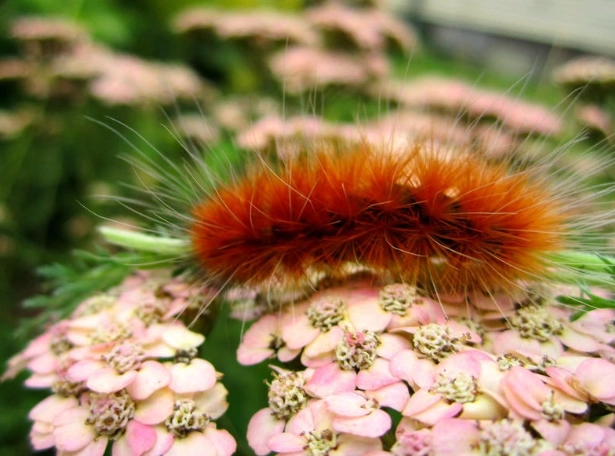
Comment