Quick Guide
- Meet the Original: The Hawaiian Happyface Spider
- Beyond Hawaii: When Other Spiders Get in on the Act
- The Viral Life of the Smiley Face Spider Meme
- What If You Find One? Safety and Ethics
- The Spider with a Smiley Face and Arachnophobia
- Separating Fact from Fiction: A Quick Comparison
- Your Questions Answered: The Smiley Face Spider FAQ
- The Bigger Picture: Why We Care
You're scrolling through your phone, maybe on a break from work, and you see it. A picture of a spider. But not just any spider. This one has a perfect, almost cartoonish smiley face on its back. A big, yellow, beaming smile. Your first thought is probably, "No way. That's photoshopped." I thought the exact same thing when I first stumbled across one of these images years ago. It looked too good, too cheerful to be a real creature. I mean, since when do spiders come with built-in emojis?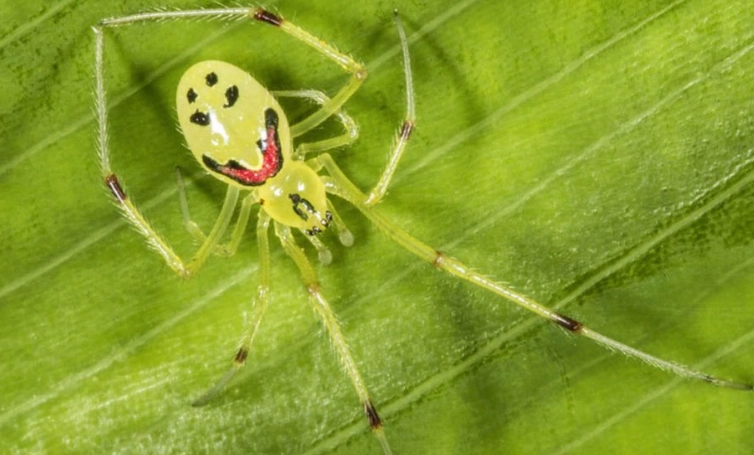
But here's the thing. It is real. Well, mostly. The internet has a way of blending reality with creative editing, but at the heart of this viral trend is a genuine biological marvel. The desire to search for "spider with a smiley face" comes from a mix of curiosity, disbelief, and a little bit of delight. We're wired to recognize faces—it's called pareidolia—so when nature seems to wink at us with a grinning arachnid, we have to know more. Is it a friendly spider? Is it dangerous? Why on earth would it evolve to look like that?
Let's unravel this web together. I've dug into the science, sifted through the memes, and even talked to a few folks who've had unexpected encounters with these patterned critters. This isn't just a list of facts; it's a deep dive into why this particular natural oddity has captured our collective imagination and what it really means when you find a spider with a smiley face staring back at you.
Quick Reality Check: The most famous "smiley face spider" is a real species called Theridion grallator, aka the Happyface Spider. It's native to Hawaii. However, many images online are of other spiders with fortuitous markings or are digitally altered. The core phenomenon, however, is 100% natural.
Meet the Original: The Hawaiian Happyface Spider
If there's a celebrity in the world of amusingly marked arachnids, it's the Happyface Spider (Theridion grallator). Found on a few Hawaiian islands, this tiny spider is the real deal. The markings on its translucent abdomen can include patterns that look shockingly like a smiling human face, complete with eyes and a wide grin. Sometimes it looks cheerful, other times surprised, or even a bit grumpy.
I find it hilarious that evolution in Hawaii, of all places, came up with this. You have stunning landscapes, vibrant culture, and then this little spider that looks like it rolled out of a cartoon studio.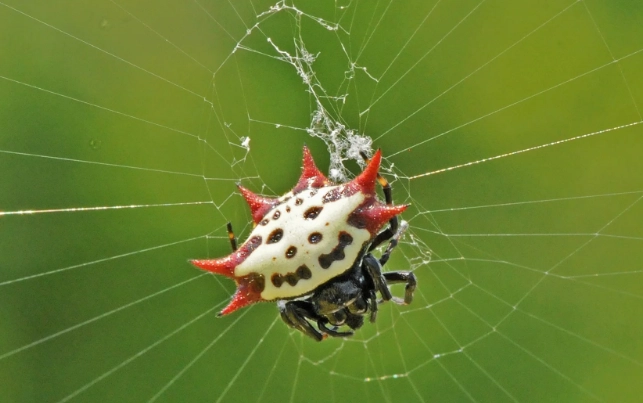
Why Does It Have a Smiley Face?
This is the million-dollar question. Scientists don't believe the spider is trying to look like a smiley face for our benefit. That's our human perception projecting onto it. The leading theory is that these complex, high-contrast patterns serve as camouflage. How? By breaking up the spider's outline against the dappled light and shadows of the forest underleaf. Think of it like military camouflage—disruptive patterns that make the shape harder to recognize.
Another theory suggests it might be a form of startle coloration. A bird pecking at a leaf might get a sudden "face" staring back, causing a moment of hesitation that gives the spider a chance to escape. It's less "hello!" and more "BOO!"
What's truly fascinating is the variation. Not every Theridion grallator has a perfect smiley face. Some have abstract blobs, lines, or even patterns that resemble other things. This variability itself might be a key to its survival, preventing predators from learning a single, recognizable "look" for a tasty spider.
Beyond Hawaii: When Other Spiders Get in on the Act
Here's where the internet expands the legend. The Hawaiian Happyface Spider is the poster child, but it's not the only spider that can accidentally sport a cheery visage. I've seen photos of garden orb-weavers, common house spiders, and even crab spiders where the natural patterns on their backs can, with a little imagination, form smiley faces, frowny faces, or skulls.
This is pure pareidolia in action. We see the Virgin Mary in a toast stain, a man in the moon, and yes, a smiley face on a spider's back. The spider isn't doing it on purpose; our brain is completing the pattern. This is a crucial point that often gets lost in the viral posts. Searching for "spider with a smiley face" might lead you to a truly patterned Theridion grallator, or it might lead you to a common spider where the lighting, angle, and a bit of luck created an illusion.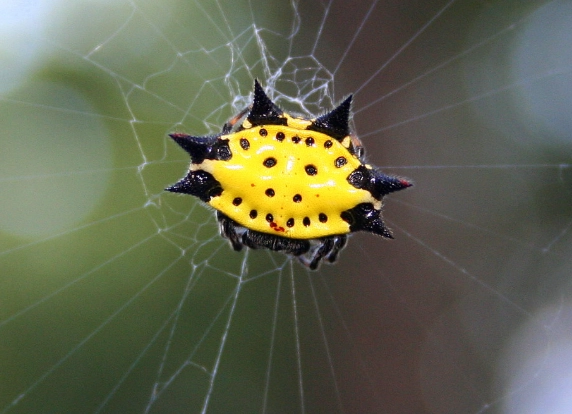
So, is your local garden spider secretly a comedian? Probably not. But it's fun to look.
The Viral Life of the Smiley Face Spider Meme
Let's be honest. Most of us haven't been to the Hawaiian rainforests. We know about the spider with a smiley face because the internet delivered it to us, wrapped in a meme. It's a perfect internet subject: cute, weird, slightly unbelievable, and instantly shareable. It taps into a few key online trends:
- Nature is Amazing: Content that showcases strange, beautiful, or funny natural phenomena always does well.
- Humor and Relatability: A spider that looks like an emoji is inherently funny. It subverts our expectation of spiders being "scary."
- Debunking/Fact-Checking: Posts often spark comments like "FAKE!" which leads to engagement and shares as people prove it's real.
I've noticed the meme cycle. First comes the astonishing picture. Then comes the "Is this real?" phase. Then the educational posts from science pages. Then the merchandise (yes, you can buy plushies). It's a full cultural lifecycle for a tiny invertebrate.
This virality has a weird side effect, though. It can create a distorted view. People might start thinking these are common pets or can be found everywhere. Which leads to the next, very important point.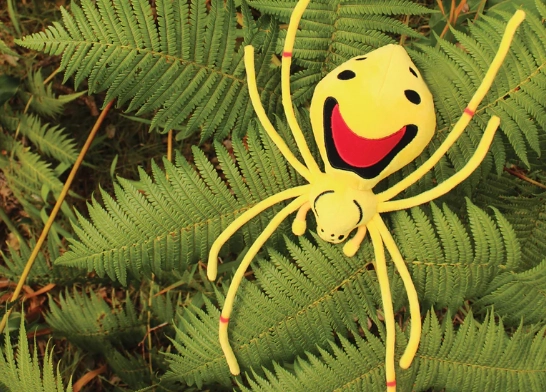
What If You Find One? Safety and Ethics
Say you're in Hawaii and you're lucky enough to spot a genuine Happyface Spider. Or maybe you're in your backyard and see a spider with markings that make you do a double-take. What should you do?
First, the Happyface Spider is considered harmless to humans. Its venom is not medically significant. But this is a general rule: never handle a spider you cannot positively identify. Just because it has a cute pattern doesn't mean it's friendly (though most spiders are far more interested in flies than in you).
Second, and this is my personal soapbox moment, don't try to catch it or take it home. The Happyface Spider has a very specific habitat. Its survival is tied to the delicate ecosystems of the Hawaiian islands. Removing it is unethical and likely illegal. Even with other spiders, they play a crucial role in controlling insect populations. The best practice is to observe, appreciate, maybe take a photo from a respectful distance, and let it go about its business of being an amazing little creature.
The Spider with a Smiley Face and Arachnophobia
This is a fascinating angle that doesn't get talked about enough. Could a spider with a smiley face actually help people with a fear of spiders? Exposure therapy is a common treatment for phobias, and it often starts with non-threatening images or representations.
Think about it. If your first conscious thought about a spider is "Hey, that one looks happy!" instead of immediate dread, it creates a cognitive crack in the fear wall. It personalizes the spider in a non-threatening way. It becomes an individual with a "face," rather than an anonymous symbol of fear.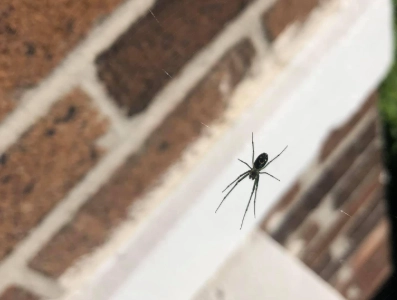
I'm not saying a single meme will cure arachnophobia. That's a serious condition that requires professional help. But I've read comments from people who said seeing the happyface spider was the first time they could look at a spider without panic. It acted as a gateway. They started with the "cute" one, then slowly learned more about spider behavior, and their fear began to lessen. That's a pretty powerful side effect for a viral internet trend.
It reframes the narrative from "spiders are monsters" to "spiders are diverse, and some are surprisingly whimsical."
Separating Fact from Fiction: A Quick Comparison
To clear things up, let's look at the two main sources of "spider with a smiley face" content side-by-side.
| Feature | The Real Happyface Spider (Theridion grallator) | Internet Meme / Coincidental Pattern |
|---|---|---|
| Origin | Endemic to specific Hawaiian islands. | Global; any spider with fortuitous markings. |
| Pattern Consistency | Highly variable, but often includes face-like elements (eyes, mouth). | Pure chance. A one-off alignment of spots and lines. |
| Intentionality | Evolved pattern for camouflage/defense. | No biological intent. Human pareidolia. |
| Danger to Humans | Considered harmless. | Depends entirely on the actual species. Assume caution. |
| Rarity | Locally common in its habitat, but geographically rare. | Relatively common as a *perceived* phenomenon. |
This table isn't about debunking the fun. It's about adding a layer of understanding. Both columns are valid reasons why someone might search for this topic. One is looking for hard science, the other for a fun, shared human experience of seeing shapes in nature.
Your Questions Answered: The Smiley Face Spider FAQ
After reading hundreds of comments and forum posts, here are the most common questions people have about the spider with a smiley face.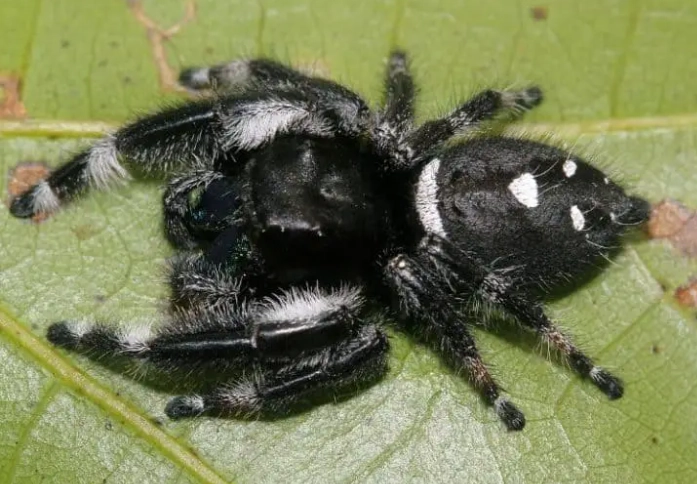
The Bigger Picture: Why We Care
So why have I, and likely you, spent time reading and thinking about a spider with a smiley face? It's a trivial thing in the grand scheme, right? Maybe not.
In a world that often feels overwhelmingly serious or negative, stumbling upon a natural example of what looks like pure joy is a gift. It's a reminder that the world is still full of surprises. It bridges the gap between the cold, mechanistic view of nature (survival of the fittest) and our human desire for narrative and connection. We can't help but anthropomorphize it, and in doing so, we engage with the natural world on a more emotional level.
It also highlights the power of curiosity. That initial "Is this real?" impulse drives learning. It leads people to discover concepts like mimicry, camouflage, island biogeography, and pareidolia. A silly picture of a spider becomes a gateway to real science. Organizations like the Xerces Society for Invertebrate Conservation understand that connecting people emotionally to insects and spiders is the first step toward caring about their preservation.
Finally, it's a shared joke with the universe. A little, eight-legged punchline written in genes and pigments. Whether it's the authentic, variable grin of the Hawaiian Happyface Spider or a lucky pattern on a backyard orb-weaver, the sight makes us pause, smile back, and share the moment. And in today's world, that simple connection—to nature and to each other through a shared "wow"—is anything but trivial.
Nature doesn't make mistakes, only adaptations we sometimes misread as smiles.
So next time you see that image pop up in your feed, you'll know the story. You'll know about the real spider with a smiley face in Hawaii, working hard under its festive disguise. You'll understand the psychology of why we love it. And maybe, just maybe, you'll look a little closer at the spiders in your own garden, wondering what secret patterns they might be hiding.
Comment